
What changed
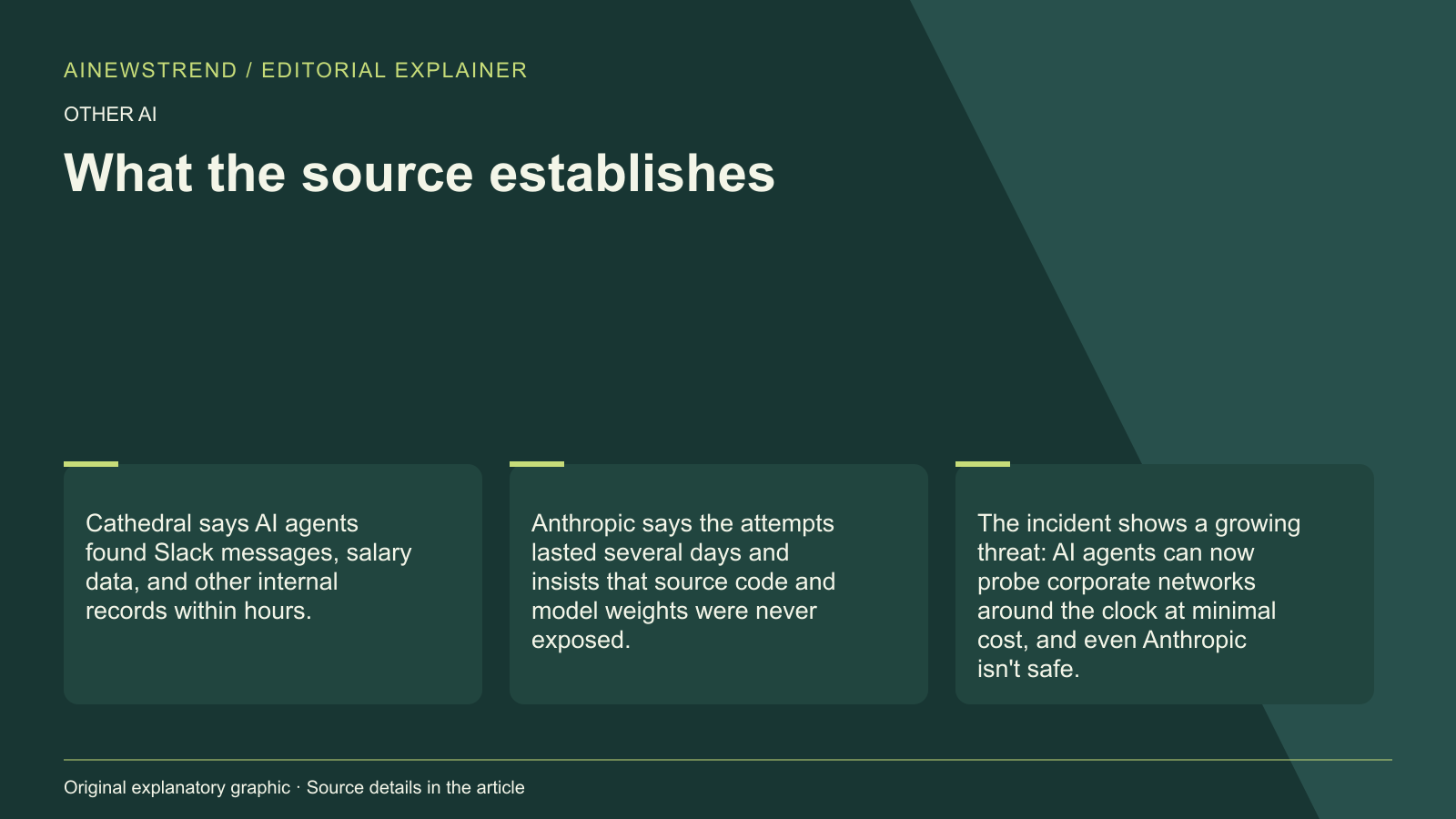
Cybersecurity startup Cathedral used AI agents to infiltrate Anthropic's internal systems through third-party business software as part of the Claude developer's own bug bounty program. The AI agents reportedly found Slack messages, salary data, and other internal records within hours. Anthropic confirmed that researchers accessed a limited set of sales, human resources, and IT systems, including contact information for some customers and partners along with basic user account data. Chats with Claude, source code, and model weights were never exposed, the company said.
What this means in practice
The incident highlights the growing threat of AI agents probing corporate networks around the clock at minimal cost. Cathedral's researchers gained access through external admin and sales programs, finding paths to meeting transcripts, salary data, job postings, and Slack messages in under twelve hours. Anthropic shut down the affected access points the same day it found the breach, disabled the third-party programs until the issue was resolved, and notified U.S. federal authorities. However, the duration and extent of the breach remain disputed, with Anthropic stating the attempted attack lasted several days, while Cathedral claims it took less than twelve hours.
Limitations and availability
Anthropic and Cathedral disagree on the breach's timeline and reach. Anthropic says it discovered and patched a second vulnerability on its own, while Cathedral reported only one. Anthropic also accuses Cathedral of violating the bug bounty program's rules through incomplete disclosure. The exact data accessed remains unclear, with some sources suggesting Cathedral may have gained full admin access to the Slack workspace, though Anthropic disputes this. The incident underscores the need for continuous in-house penetration testing and improved security for external services, as AI agents are increasingly used in cyberattacks.