
What changed
A WIRED investigation found that apps like Viefur, which appear to be pet portrait generators, are part of a network that secretly creates explicit deepfake images and videos. These apps, often disguised as everyday services, load a hidden web interface allowing users to generate explicit content using uploaded photos. The network includes apps with titles like 'bedroom rape' and 'threatening knife', where a man holds a knife to a woman's neck.
What this means in practice
The apps operate by checking user data such as location and language upon download, then deciding whether to show benign content or load the explicit deepfake interface. Users can upload images to be added to sexual scenes and purchase 'diamonds' to generate images. The network's scale is vast, with over 500 linked domains and apps, many of which are hosted on Chinese servers and use Chinese code and comments. The apps have been downloaded over 350,000 times collectively, with some rated suitable for all age groups.
Limitations and availability
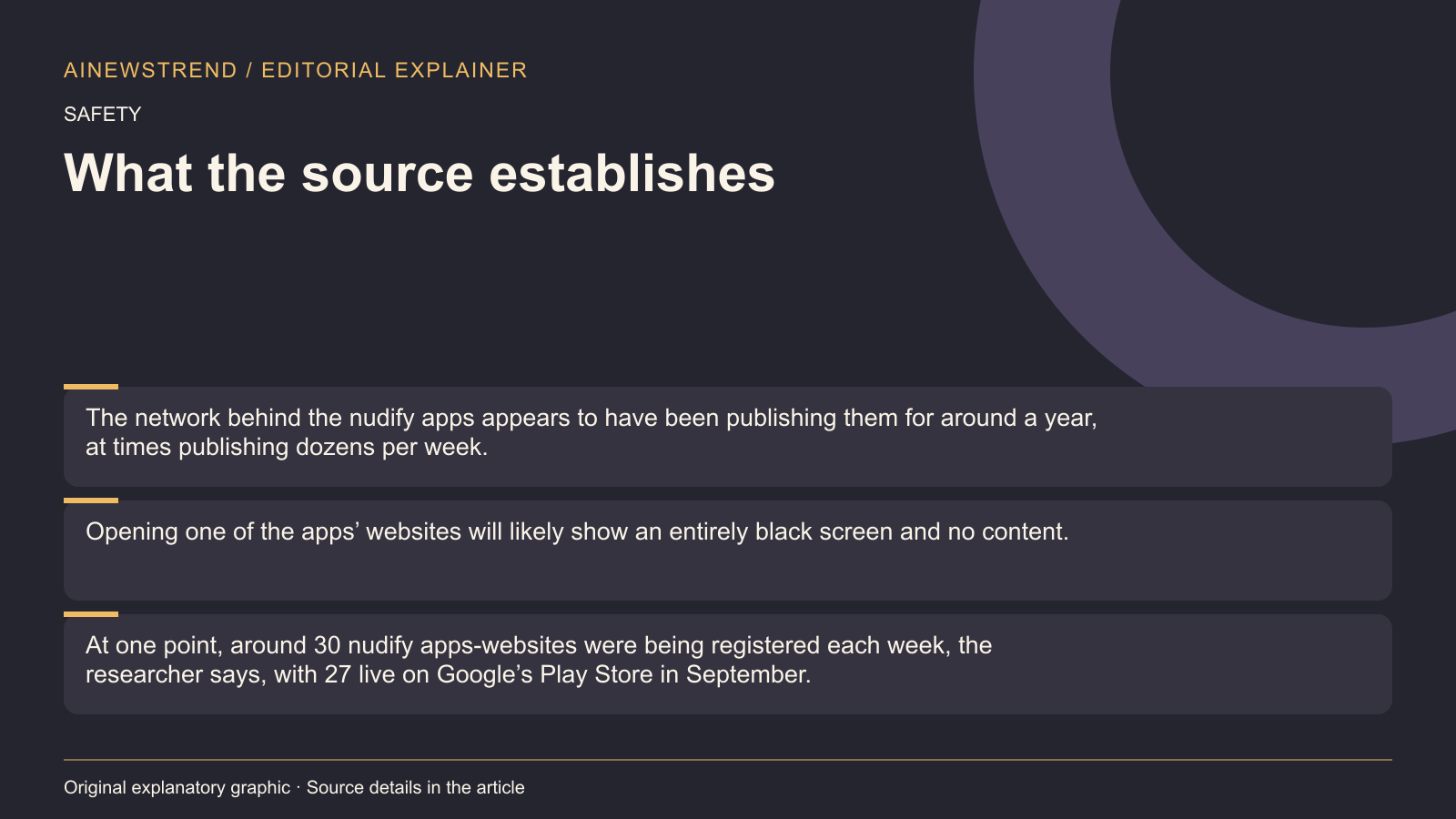
The network appears to have been publishing apps for around a year, with dozens released weekly. Apps like DiffAI, which was downloaded over 100,000 times, were removed from the Play Store after being reported. Apple and Google have removed many of these apps, citing violations of their policies against harmful deepfake content. The apps and domains are run by Chinese developers and a Hong Kong entity, KeLing Technology Limited, though the company did not respond to requests for comment. The network's exact size and operational details remain hidden, with the developers using fake names and obscure developer identities to avoid detection.