
What changed
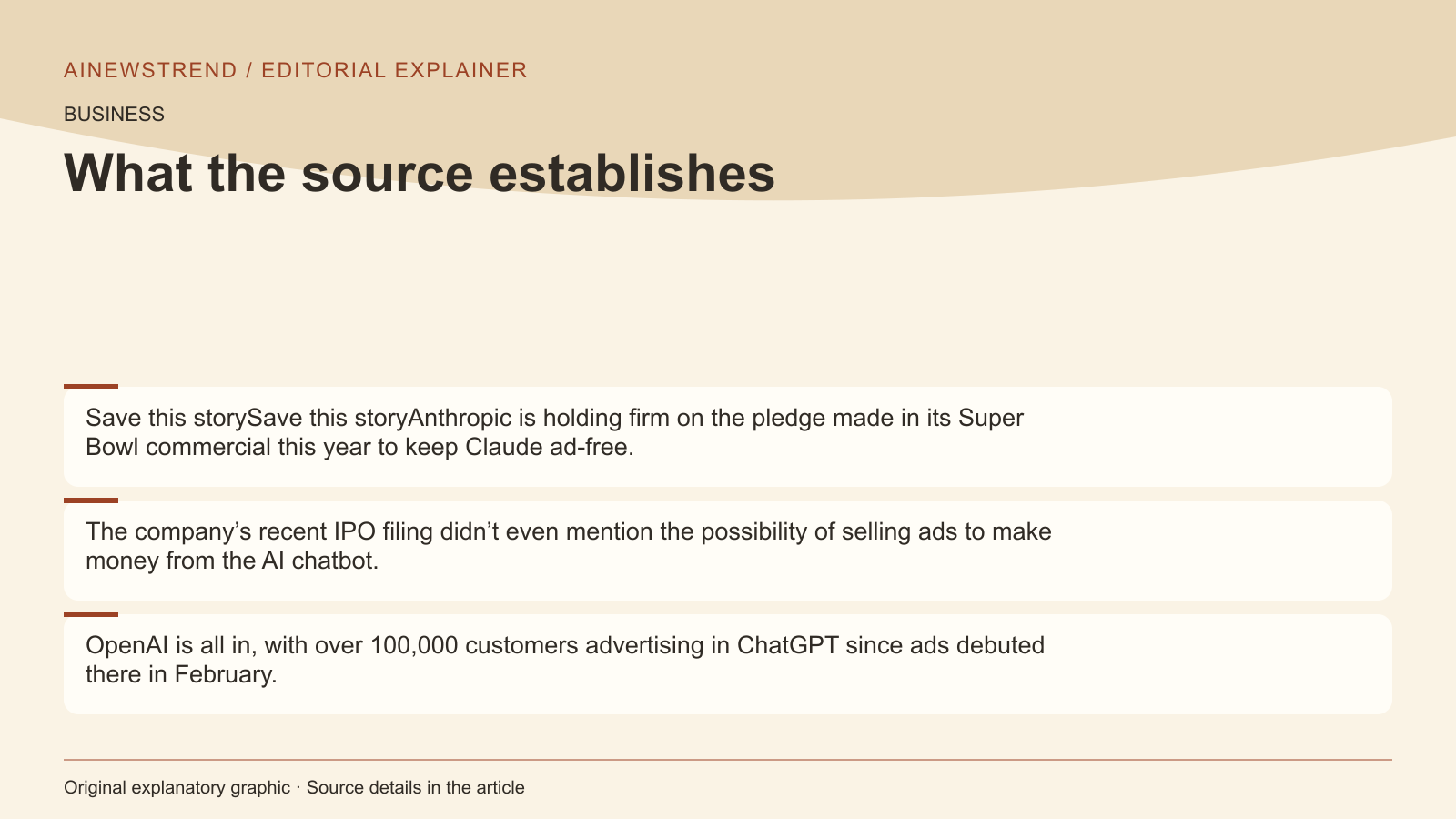
Anthropic has reaffirmed its commitment to keeping its Claude chatbot ad-free, as stated in its recent IPO filing, which did not mention advertising as a revenue stream. Meanwhile, the broader chatbot industry is increasingly turning to ads to cover the high costs of AI response generation. OpenAI has over 100,000 advertisers using ChatGPT since ads launched in February, and Google expanded its ad presence in AI Mode to 10 additional countries.
What this means in practice
Ads are becoming a critical revenue source for niche chatbot platforms that lack the venture capital or revenue of major AI labs. Koah Labs, an ad tech company, works with over 200 apps, including DeepAI and Liner, and claims that AI-generated ad copy results in double the clicks compared to human-written ads. Koah also notes that its ads are grounded in product details provided by advertisers, reducing the risk of AI hallucination. However, some industries, like pharmaceuticals, prefer human oversight due to regulatory constraints.
Limitations and availability
Koah’s ad performance is around 3 percent click-through rate, comparable to Google’s mature ad system. The company anonymizes user data and stores it in a de-identified manner, though it does not provide further details on data handling. Advertisers face challenges in balancing user engagement with brand safety, as dull or intrusive ads could drive users away. Koah also highlights that chatbots allow for more context-aware ad targeting, leveraging longer user prompts and conversation history to deliver relevant ads.