
What changed
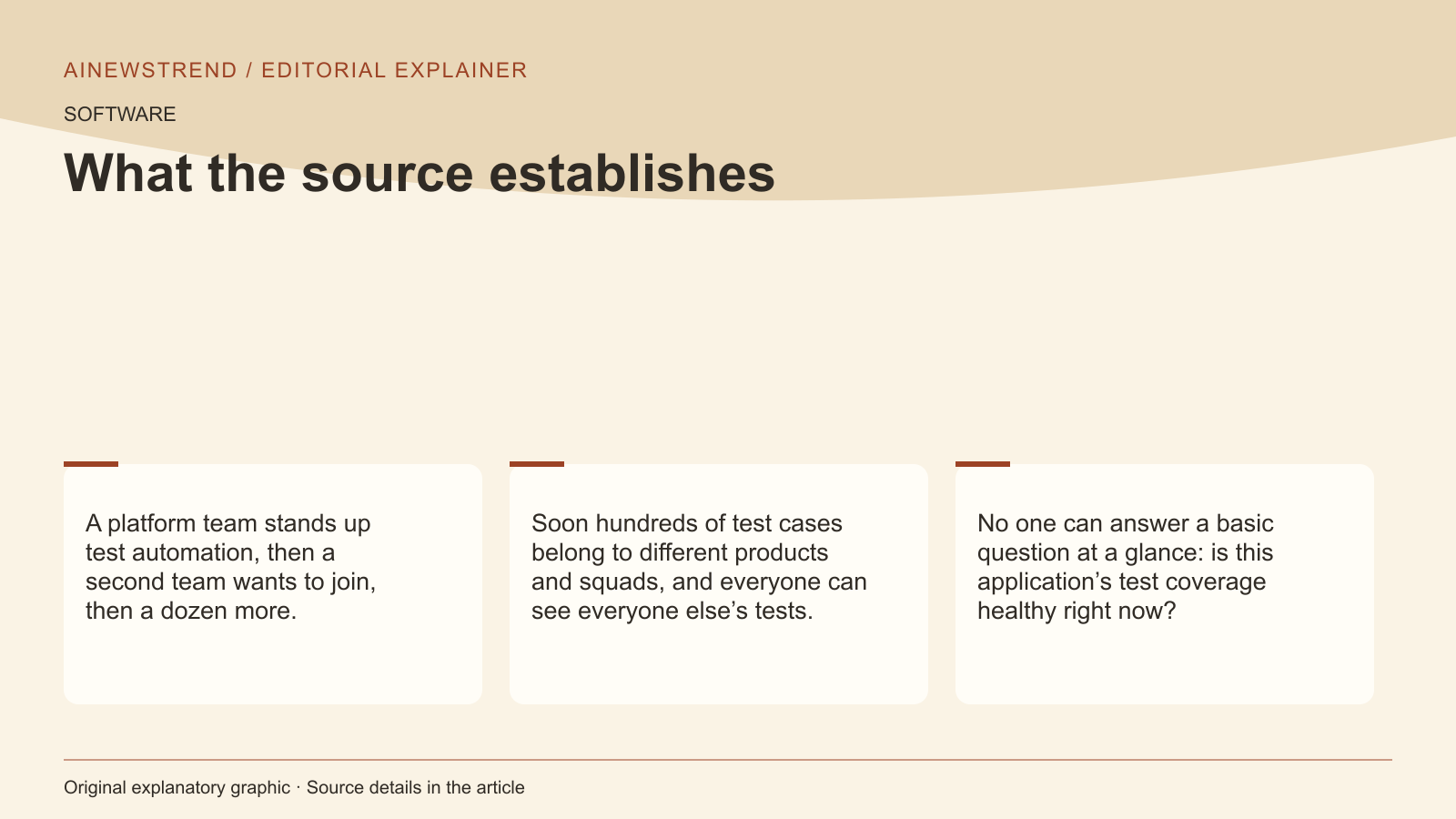
AWS has introduced two new capabilities within QA Studio to help scale QA automation across an organization. These include organizing tests through applications and implementing team-based user management to control access.
What this means in practice
QA Studio now allows teams to define tests in natural language and run them through AI-powered visual navigation. The new application feature represents the system under test, such as a website or web app, and serves as a container for tests, giving them a home and an owner. Teams can create, manage, and group tests within an application, which also inherits its ownership. The application page provides health metrics, including pass rate, execution counts, and failure counts, along with a health score that accounts for flaky tests.
The team-based user management system assigns roles—Admin, Team Lead, Editor, Executor, and Viewer—to control access to applications and tests. Each role includes permissions from lower roles, ensuring that access is managed at the application level rather than on individual tests.
An administrator can view all users, teams, and applications in one place, with the ability to filter by team or role.
Limitations and availability
The supplied announcement does not specify the exact release date or availability of these features. The application health metrics are based on Amazon CloudWatch custom metrics, and the team-based access control is part of the QA Studio platform. The features are designed to support continuous integration and delivery (CI/CD) pipelines, with the ability to filter views by environment and time window for detailed analysis.