
What changed
Cyber insurance provider Cowbell Cyber Inc. announced the launch of Cowbell AI Liability Insurance, a standalone policy designed for U.S. small and mid-sized businesses that use AI agents. The policy covers financial losses resulting from AI agents acting without human oversight, including unauthorized transactions, incorrect outputs, and malicious attacks.
What this means in practice
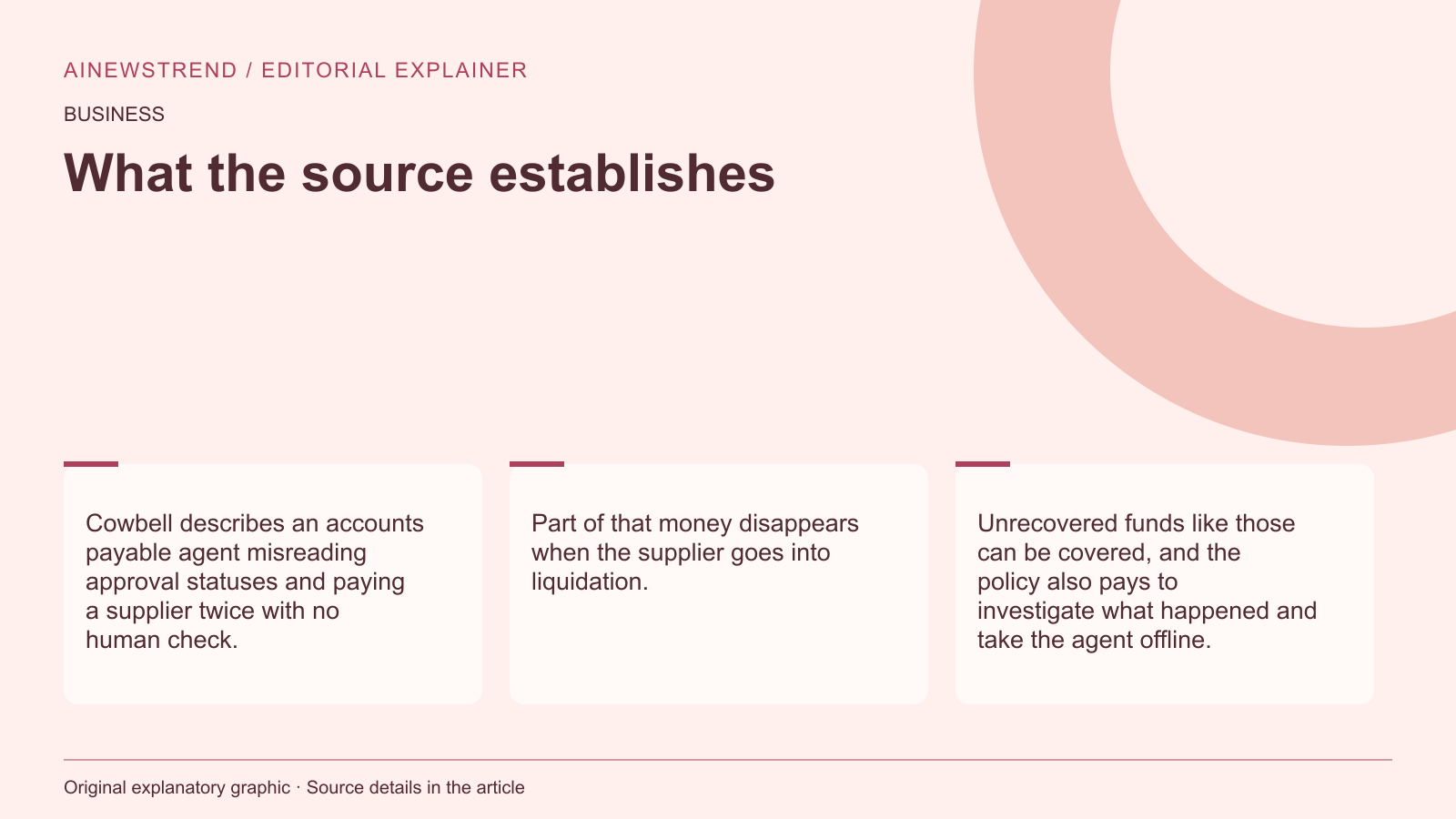
The new policy addresses scenarios where AI agents autonomously perform tasks like moving money or altering customer records without human approval. Coverage includes losses from model drift, manipulated AI actions, and unauthorized usage of AI tools. For example, if an accounts payable agent misreads approval statuses and pays a supplier twice, the policy can cover unrecovered funds, investigation costs, and efforts to correct or withdraw inaccurate outputs.
The policy also covers LLMjacking, where an outsider uses stolen credentials to run AI workloads, leaving the business liable. Claims from customers, such as those arising from incorrect tax filings using outdated rates, are also covered, including legal defense costs, damages, and settlements. Regulatory proceedings, fines, and penalties are included where permitted by law.
Limitations and availability
Cowbell AI Liability Insurance will be available starting January 1, 2027, through wholesale brokers on a non-admitted basis. The policy is tailored for smaller businesses, distinct from Cowbell’s existing Prime One policy, which covers AI-related incidents for larger companies with higher revenue. Underwriting considers three AI-specific factors: observability, autonomy, and governance, which help assess risk levels. Businesses can connect tools like Gemini, Claude, and ChatGPT via Cowbell Connectors to view their risk scores.