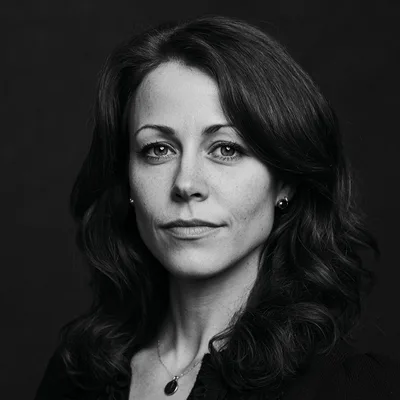

Deepmind CEO Demis Hassabis has outlined a proposal for a new US standards body to regulate advanced AI systems. The framework, modeled after the financial regulator FINRA, would create evaluation protocols for frontier models, starting voluntarily and later becoming mandatory. The body would be funded by industry and use regularly updated benchmarks. The international community would then need to follow suit and find consensus on the most critical points. Hassabis stresses that non-frontier models from startups or academic research would be exempt. That sidesteps the accusation of 'regulatory capture,' where established companies try to use regulation to hold back smaller competitors.
Hassabis's proposal comes amid growing concerns about the potential consequences of advanced AI. A letter signed by prominent AI researchers and economists warned of massive AI-driven job losses. Hassabis did not sign the letter, though his argument about potential consequences sounds similar. His proposal, however, is more specific about countermeasures without being alarmist. 'Nobody in the world knows for sure what is going to happen from here, and even the experts disagree. When there is a large degree of uncertainty and the stakes are this high, proceeding with cautious optimism is the sensible and correct strategy,' Hassabis writes.
The extent of expert disagreement was evident in a public spat last December. Yann LeCun called the concept of general intelligence based on language models 'complete BS' and 'completely delusional.' Hassabis pushed back publicly, saying LeCun was 'just plain incorrect.' Gemini co-lead Oriol Vinyals offers a middle ground: today's models are strong in some areas, but the ability to truly innovate is still missing. Deep learning pioneer Richard Sutton holds a similar view and just announced his startup Oak Labs to tackle that problem. Deepmind co-founder Shane Legg considers a 'minimal AGI' possible as early as 2028.
Source: thedecoder


