
What changed
Earlier this year, Germany planned to double its data center fleet by 2030 to reduce reliance on U.S. AI infrastructure and boost its economy. However, climate commitments led to the introduction of the Energy Efficiency Act in 2023, requiring new data centers to recycle waste heat into municipal heating systems. In June, the government amended the law, removing the obligation to reuse waste heat and instead requiring only an assessment of its feasibility.
What this means in practice
The amendment aims to address industry concerns that the original mandate created an impractical burden. Data center developers argued that without a guaranteed heat offtake—such as a municipal heating system or agricultural use—recycling waste heat was not viable. Under the revised law, developers must evaluate whether recycling is economically and technically feasible. If not, they are exempt from the requirement. The change is expected to make Germany a more attractive location for data center construction due to its geographic centrality for routing data across Europe.
Limitations and availability
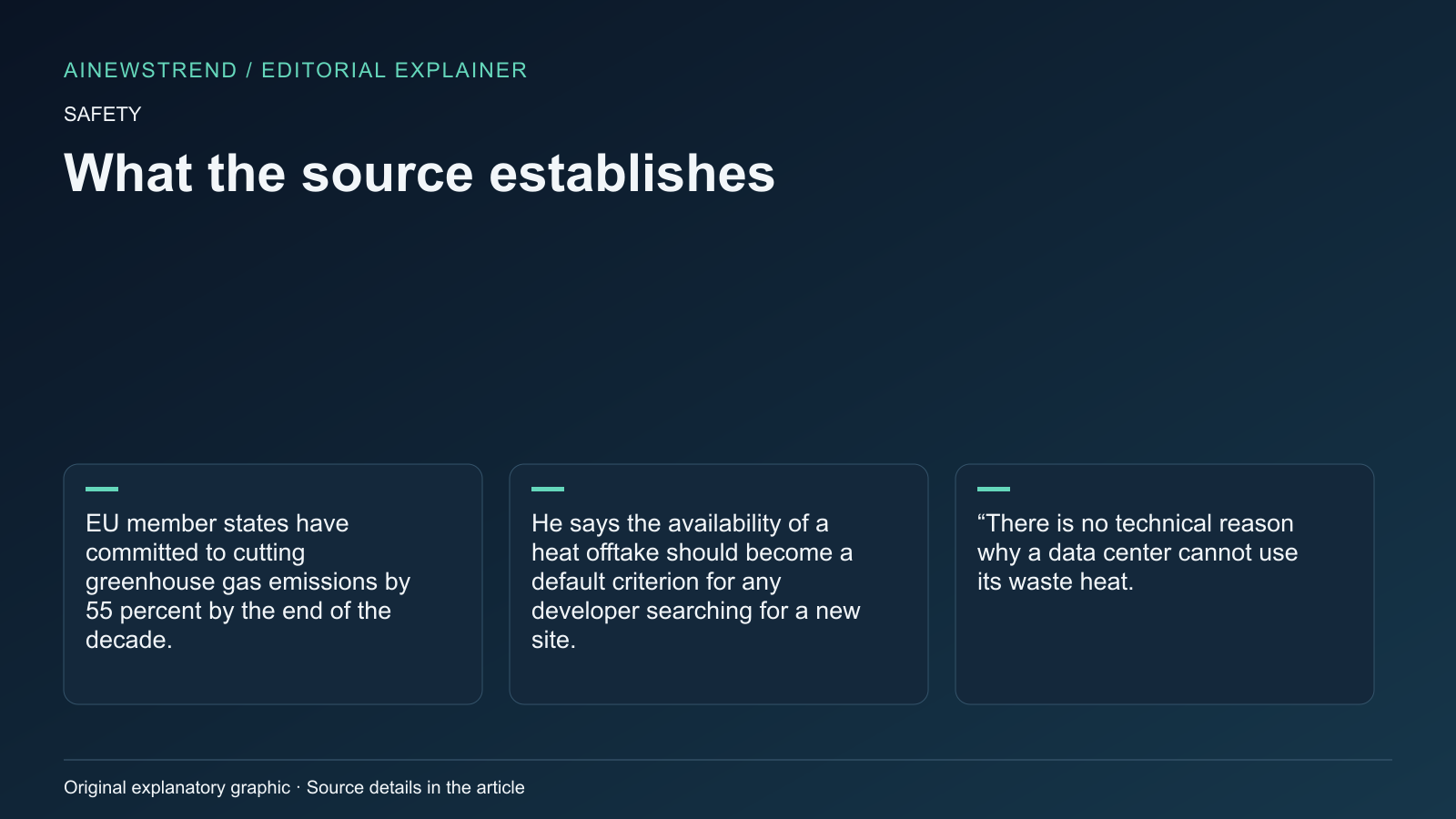
The amendment, which will be put to the German parliament for ratification, may reduce the risk of project cancellations but could also weaken climate goals. Critics, including former senior official Patrick Graichen, argue that the industry’s objections are unfounded and that heat recycling should be a default criterion for site selection. Meanwhile, some data center developers, like Komm.ONE, have cited the Energy Efficiency Act as a reason for withdrawing from projects. The amendment may also risk triggering climate-focused activism, as seen in the U.S., where permitting freezes and moratoria have occurred over similar concerns.