
What changed
Meta has indefinitely delayed its plans to update its commercial terms, which would have required Meta Business account users to allow extensive AI training on external websites linked on Facebook. A Meta spokesperson told Reuters that the company is pausing the changes as it continues to engage with stakeholders and take time to get the update right. The existing terms remain in effect during this delay.
What this means in practice
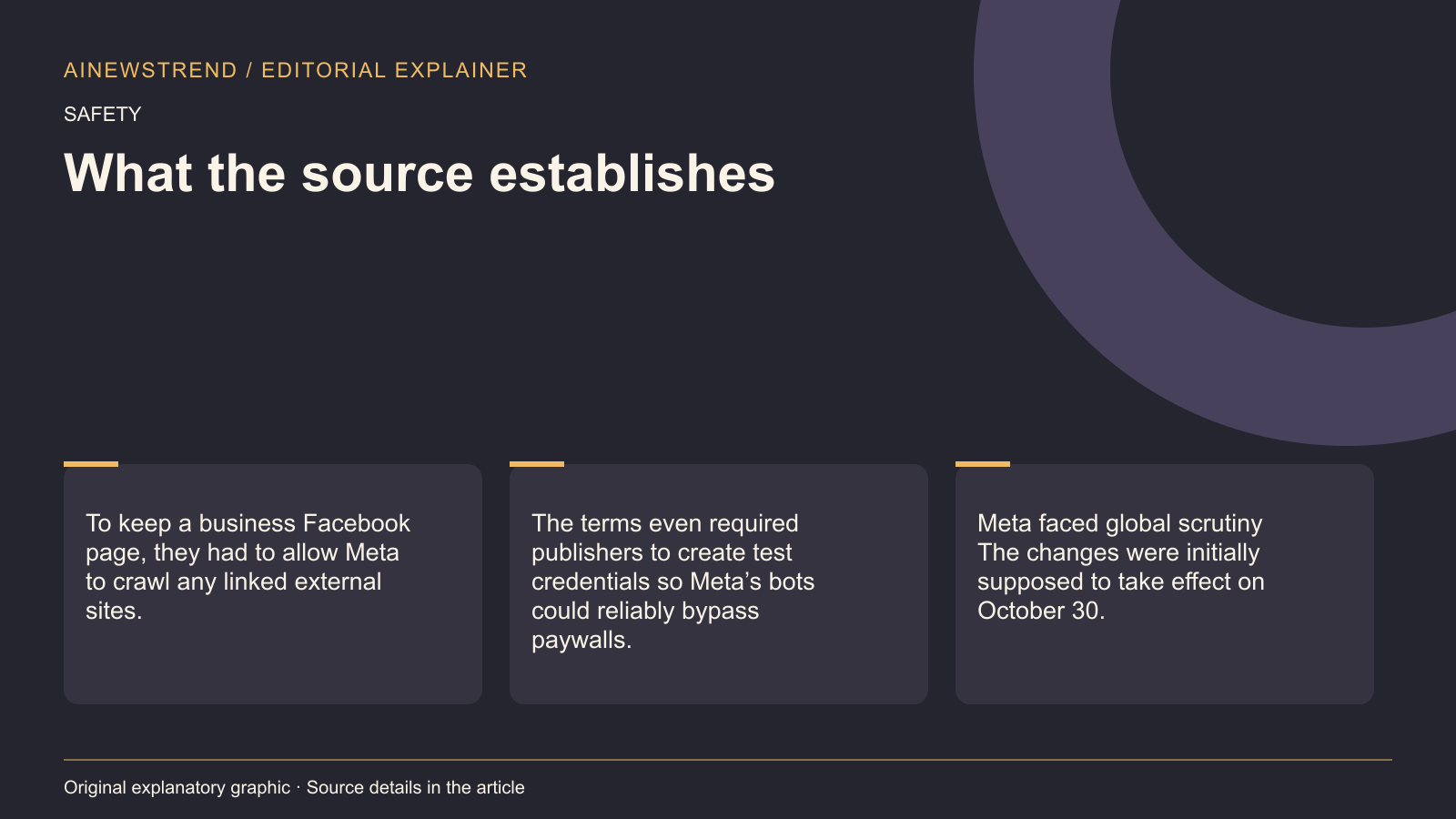
The proposed changes, which were initially set to take effect on October 30, faced significant pushback from users, courts, and regulators worldwide. Legal experts warned that the vague language could allow Meta to ignore scraping preferences specified in robots.txt files and crawl vast amounts of off-Facebook content for AI training. News publishers, in particular, were concerned about potential loss of licensing revenue if the terms had proceeded. Businesses with Facebook pages would have had no way to opt out of allowing Meta to crawl linked external sites, and were required to create test credentials to bypass paywalls.
Limitations and availability
The changes were initially scheduled for November 20, but Meta pushed the date back further amid global scrutiny. Courts in Brazil and Norway issued preliminary injunctions blocking the terms after lawsuits were filed. The UK’s Competition and Markets Authority also launched an investigation into whether Meta was exploiting its dominant position to seize AI training data. Meta has not included specific language about respecting robots.txt preferences in its revised terms of service, despite promising to consult with publishers and adjust the policy.