
What changed
Meta president Dina Powell McCormick warned that the Democratic wins in the midterm elections could make it harder for companies to build data centers, which are essential for AI expansion. She noted that the backlash against data centers, which was a key issue in the election, is tied to public sentiment about AI technology overall. Powell McCormick emphasized that the visible manifestation of AI is the data center, and people are often against having them in their communities.
What this means in practice
Powell McCormick explained that Meta is concerned about losing some of its investments after politicians ran on anti-data-center platforms during the midterms. She stated that the future of building data centers will be more challenging, but it is becoming clear what models work, and states want those models. Communities only want data centers when they benefit in some way, and Meta has been using an approach that includes paying for its own electricity, directing tax surpluses toward teachers and first responders, keeping the labor force local, and getting bipartisan support for the project.
Limitations and availability
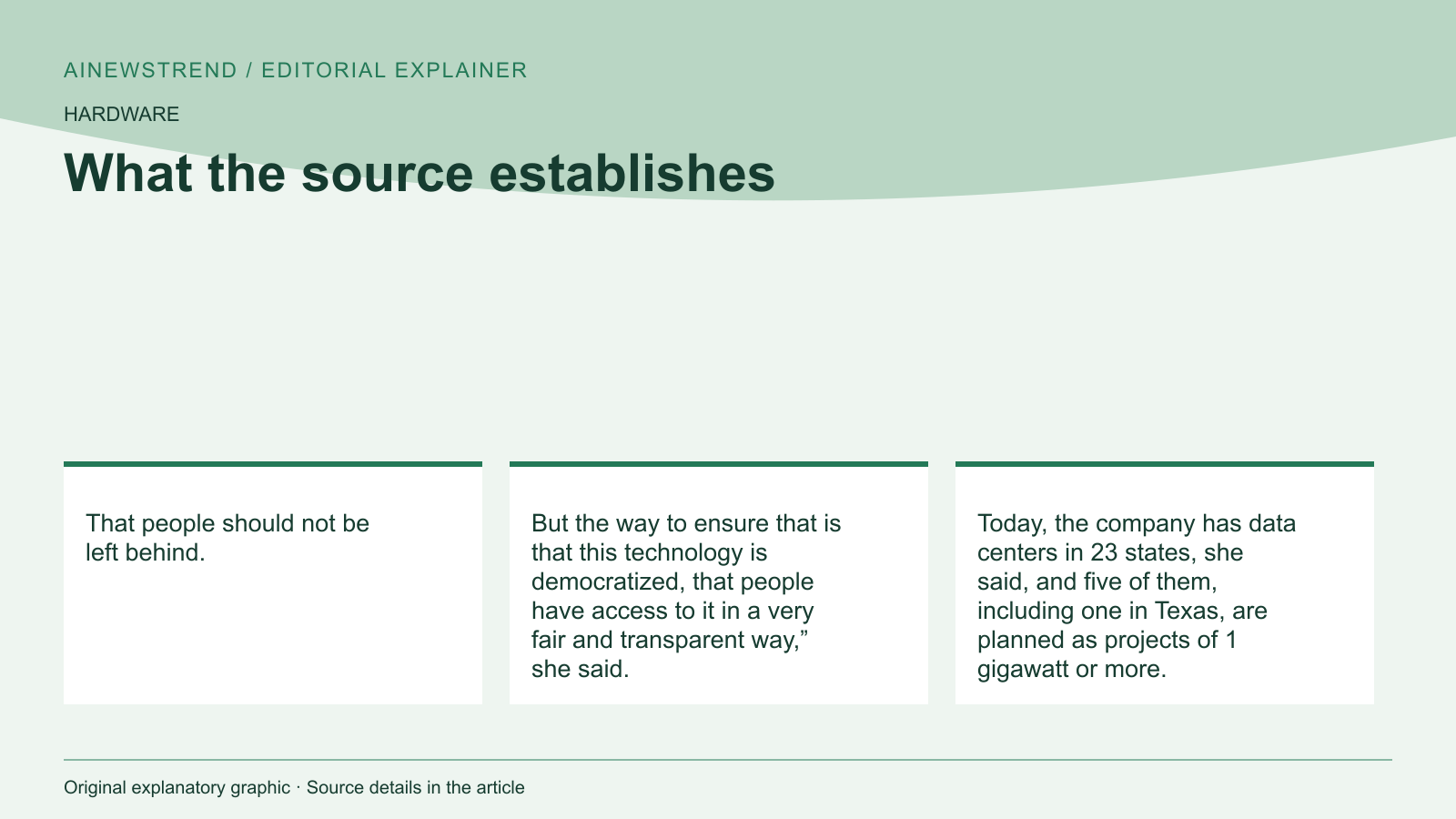
The supplied announcement does not specify the exact number of data centers or the exact locations beyond mentioning 23 states and five planned projects of 1 gigawatt or more. Meta is now worried that it could lose some of its investments after politicians ran on anti-data-center platforms during the midterms. The exec also touted Meta’s experience in building data centers, saying that the company has been doing so for 20 years, as it takes a lot of compute power to offer the products it does in the social networking space. The company has data centers in 2,3 states, and five of them, including one in Texas, are planned as projects of 1 gigawatt or more.