
What changed
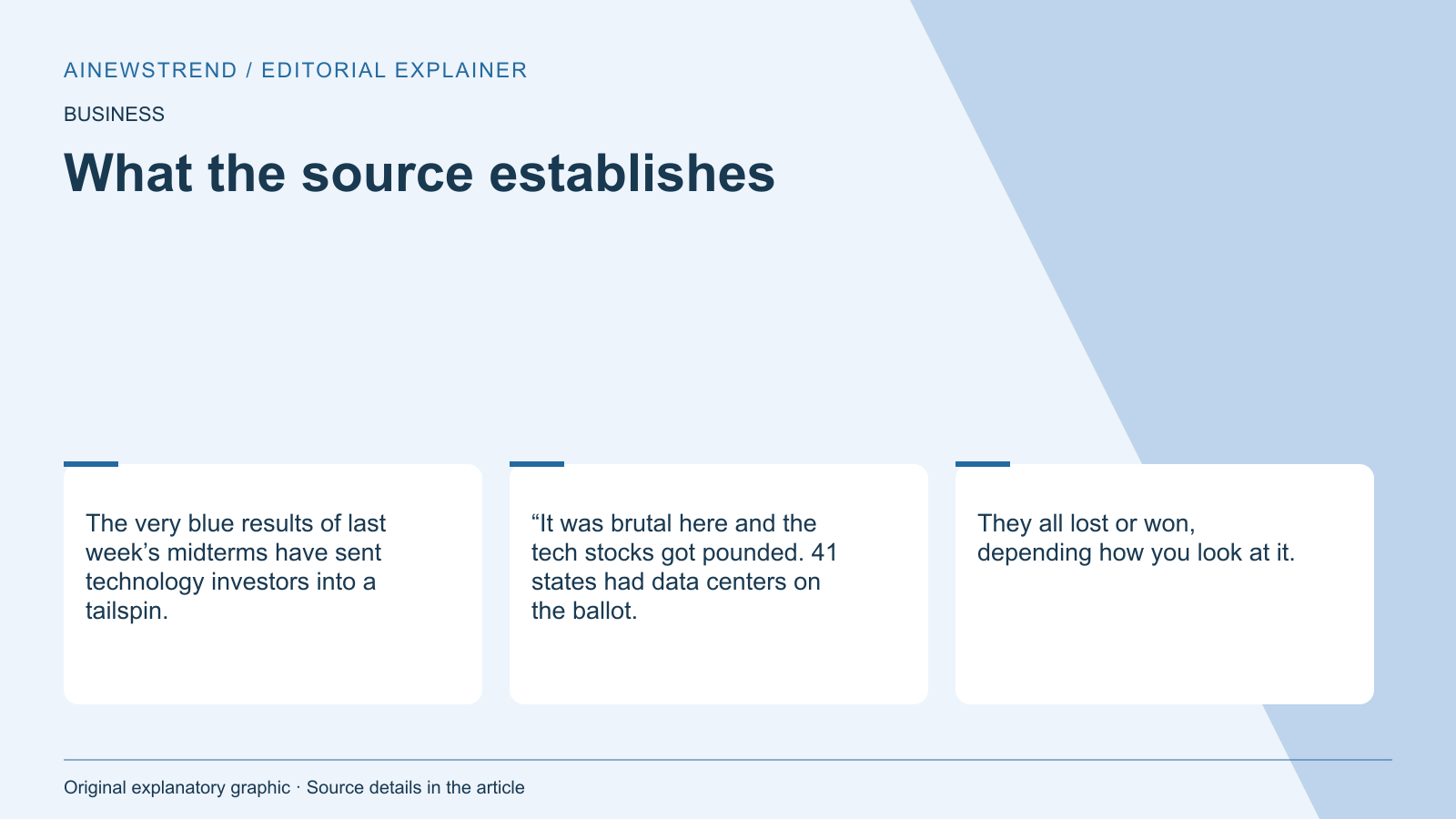
The results of the recent midterms have caused significant concern among technology investors, with many candidates running on platforms that oppose data centers and advocate for stricter AI regulations. This has led to a slowdown in AI spending, as reflected in the market's reaction. Tech stocks fell, with a collective loss of $2.5 trillion in market cap, and the Nasdaq dropped more than 5.5%.
What this means in practice
John Furrier, executive analyst for theCUBE Research, described the market reaction as a 'bloodbath,' noting that 41 states had data centers on the ballot, and the outcome has made AI a political football. TheCUBE’s researchers predict a longer path toward AI monetization, with 2029 identified as the highest-risk year for the AI bubble. Dave Vellante, chief analyst for theCUBE Research, emphasized that while tech companies are applying AI more effectively, enterprises are not yet self-funding. He believes the infrastructure is evolving beyond GPU-centric computing, with companies like Supermicro, AMD, and Marvell gaining strategic advantages.
Limitations and availability
The supplied announcement does not specify the exact timeline for AI monetization or the exact criteria for determining the 'system of intelligence.' However, it highlights that neoclouds like CoreWeave are taking on greater risk by pioneering new software models, while hyperscalers are in a stronger position. The market plunge indicates that not all companies will survive the AI era's eventual slowdown, and companies will need to establish a foothold in the developing system of AI intelligence to remain competitive. The 'system of intelligence' remains in play, with Databricks' Ali Ghodsi seen as having the best vision for owning this layer.