
What changed
OpenAI announced new voluntary rules for its data centers in response to public opposition to AI infrastructure expansion. The company plans to cover full electricity and grid upgrade costs, throttle consumption during peak hours, and disclose construction plans, noise studies, and water usage data. These commitments are part of a National Community Compact and a Policy Blueprint, which OpenAI is promoting to lawmakers to make the rules binding for the entire industry.
What this means in practice
The voluntary pledges apply to future sites that OpenAI owns and operates, but not to those built by partners like Oracle. OpenAI will stop requiring nondisclosure agreements during negotiations with local authorities, though trade secrets and security concerns remain exempt. The company also promises to disclose construction plans and environmental data to win over skeptical residents. Chris Lehane, OpenAI's policy chief, emphasized economic benefits, such as creating permanent jobs through hardware upgrades and offering local payments like $4.8 million for school lunches in Georgia.
Limitations and availability
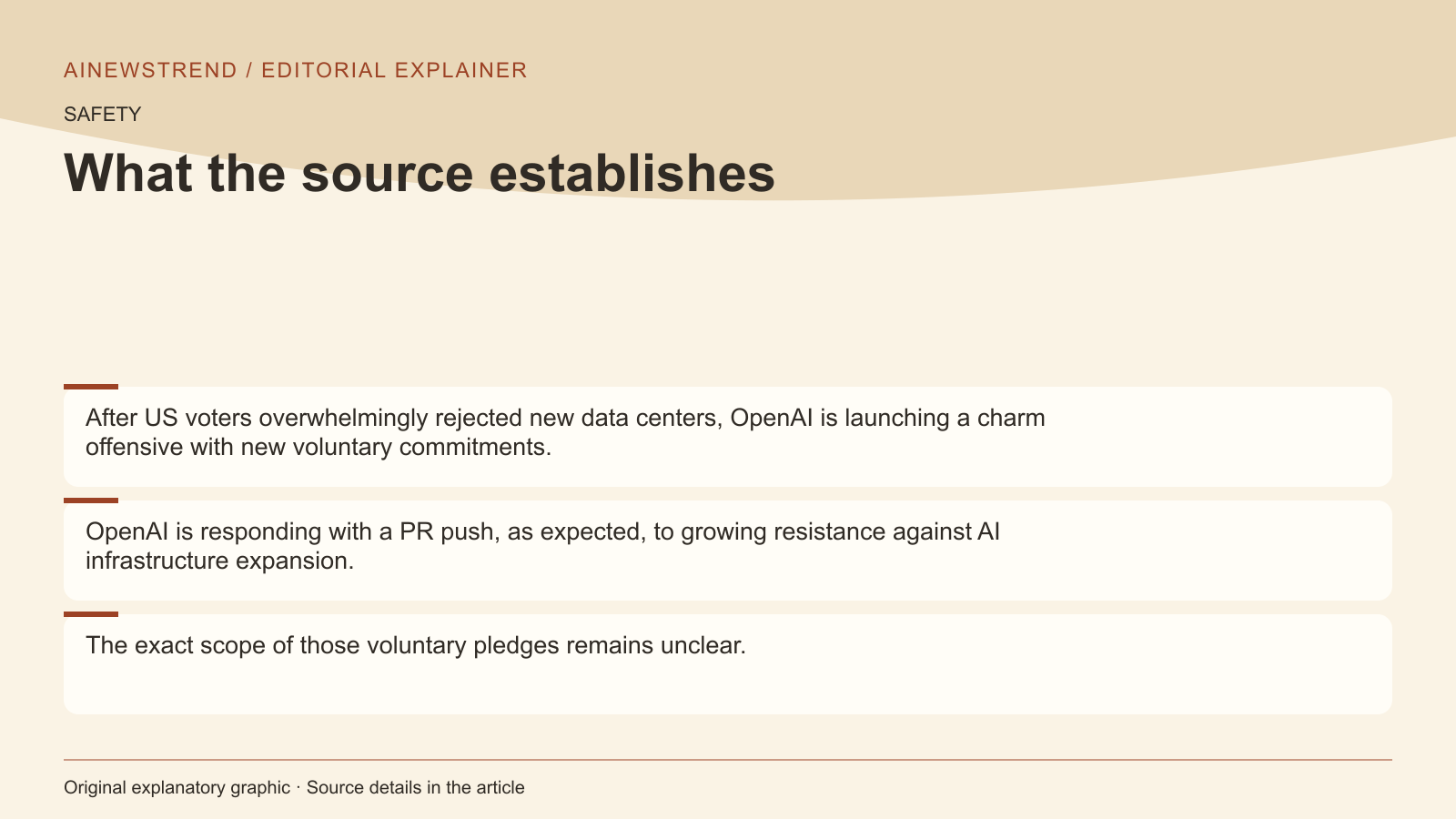
The exact scope of OpenAI's voluntary pledges remains unclear. While the company outlines commitments for its own sites, it does not specify how these rules will apply to partner-operated facilities. Additionally, the announcement comes after voters in 40 out of 41 states rejected new data centers in midterm elections, indicating potential delays for OpenAI projects. The company acknowledges that its expansion could face similar challenges as other tech firms, with some data center operators experiencing stock declines due to tighter permitting expectations.