
What changed
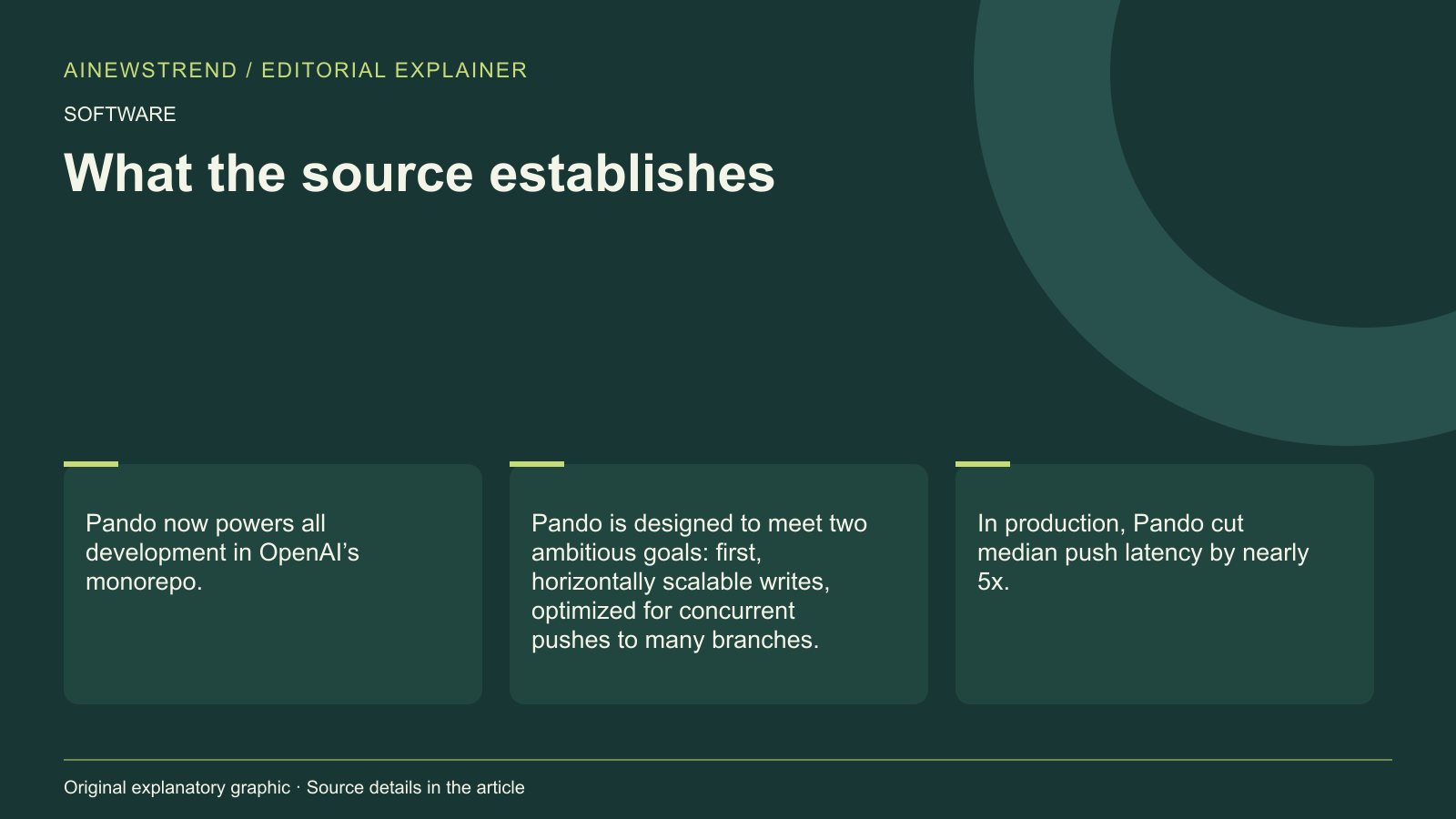
On November 2, 2026, OpenAI announced the development of Pando, a new backend for Git repositories designed to scale their monorepo to handle increased demands from projects like Codex. Pando is now used for all development in OpenAI’s monorepo and is optimized for concurrent pushes to many branches and high read throughput.
What this means in practice
Pando was built to address the challenges of managing a large monorepo with high concurrency. It enables horizontal scalability for writes, allowing multiple branches to be pushed simultaneously without interruption. Additionally, it maximizes read throughput, ensuring clients can download data fast enough to saturate their network bandwidth. In production, Pando reduced median push latency by nearly 5x and handles nearly a petabyte of Git data per day. The system maintains compatibility with the Git protocol and client, allowing engineers and agents to seamlessly adopt Pando into their existing workflows.
Limitations and availability
The supplied announcement does not specify limitations or availability details beyond the current production use. Pando is designed to meet OpenAI’s specific scalability needs, and the company plans to continue contributing improvements to the Git ecosystem. The system retains compatibility with Git, ensuring that enhancements can benefit the broader community.