
What changed
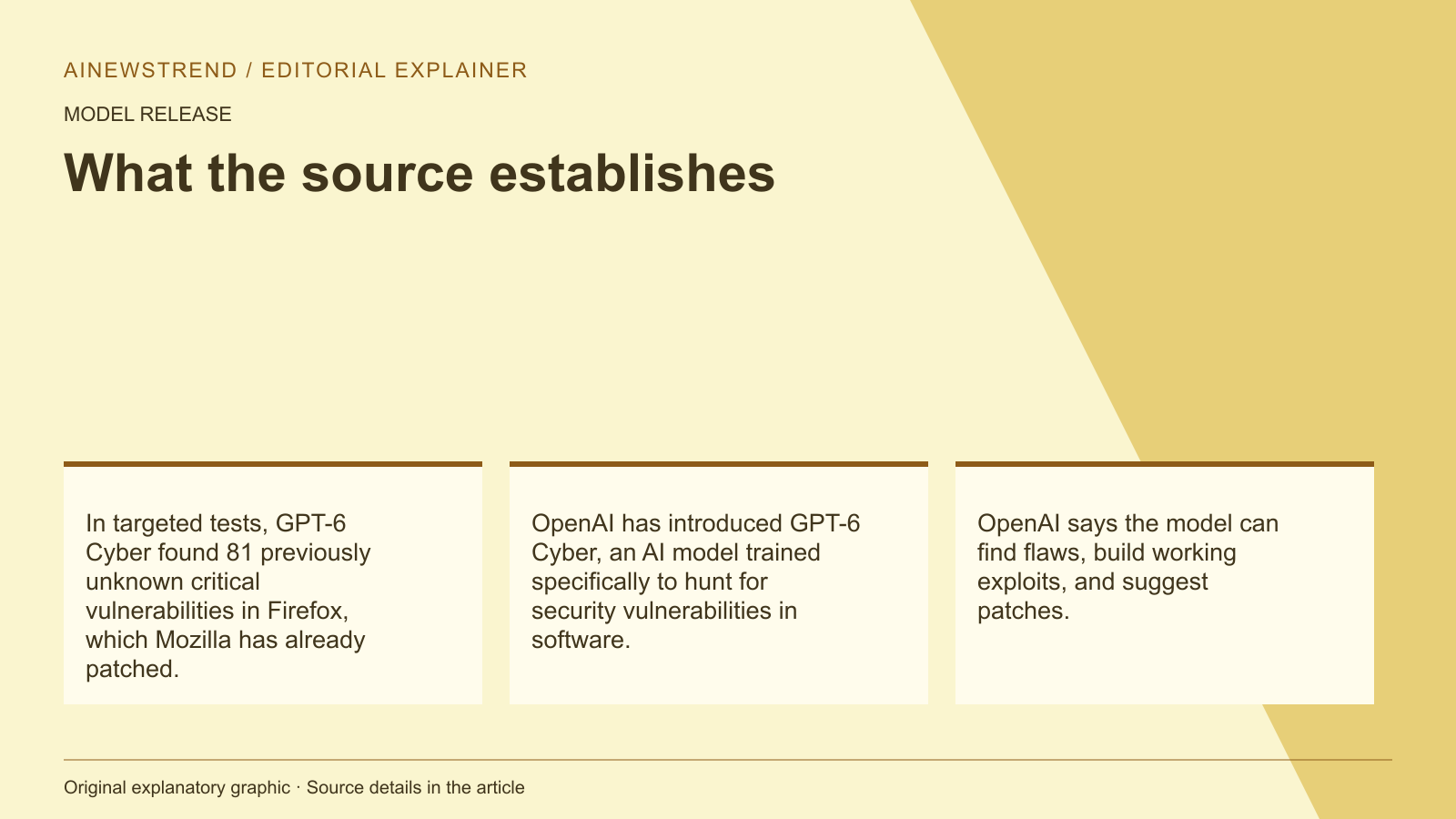
OpenAI has unveiled GPT-6 Cyber, an AI model specifically trained to find security vulnerabilities, develop working exploits, and suggest patches. In targeted tests, GPT-6 Cyber found 81 previously unknown critical vulnerabilities in Firefox, which Mozilla has already patched. In the Linux kernel, the model reproduced 1,720 vulnerabilities and developed working exploits for 948 of them, more than five times as many as its predecessor.
What this means in practice
The model is designed to stay within its assigned boundaries, something some OpenAI models have struggled with in recent months. OpenAI says it trained GPT-6 Cyber to respect its operational guardrails, using a honeypot inspired by the Hugging Face incident. Without any special safety instructions, GPT-6 Cyber avoided boundary violations in 99.93 percent of cases, up from 94.49 percent for its predecessor. With safety instructions enabled, the model stayed within bounds in 100 percent of tests.
Limitations and availability
GPT-6 Cyber is initially available through the API and Codex for a select group of Daybreak Red customers. Access will be expanded gradually to all Daybreak Red customers. OpenAI acknowledges that as models grow more capable, abuse attempts are rising too. Some actors and groups have tried to transfer model capabilities into their own systems. OpenAI lists several countermeasures, including checks that verify whether a model's actions match the user's permissions, targeted monitoring for newly disclosed vulnerabilities, and automated safety checks through what it calls Private Safety Processing.