
What changed
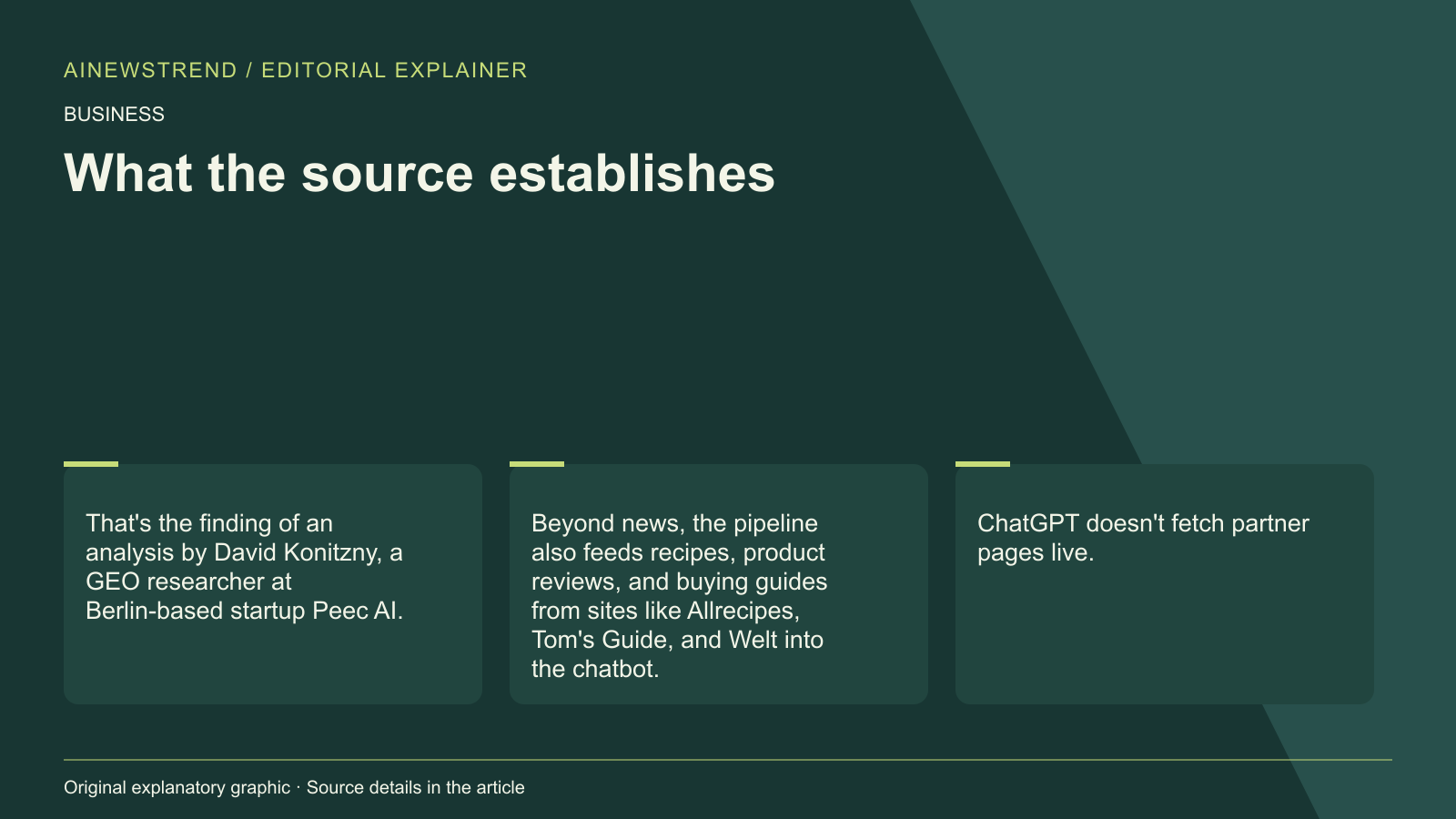
OpenAI's partner content appears to flow into ChatGPT through a dedicated pipeline that gives it priority over the rest of the web. This was identified by David Konitzny, a GEO researcher at Berlin-based startup Peec AI, who analyzed three configured news engines. Only one called 'labrador' populates a field named 'provider,' which was used to identify 12 publishers with 43 domains, including Condé Nast, Hearst, Axel Springer, News Corp, Reuters, and AP. Beyond news, the pipeline also feeds recipes, product reviews, and buying guides from sites like Allrecipes, Tom's Guide, and Welt into the chatbot.
What this means in practice
ChatGPT does not fetch partner pages live. Instead, it receives them as pre-generated summaries, while regular web pages arrive as raw text snippets. In the prompt, partner entries are placed ahead of all web results. For ranked lists, the summaries name 70 percent of entries in positions 1 through 3 but only 23 percent of those in positions 7 through 10, according to 1,000 cases Konitzny analyzed.
Limitations and availability
OpenAI had promised partners more prominent placement in ChatGPT back in 2024, and a study from Hamburg later found Springer media appearing far more often in the web interface than through the API. However, even partners do not always get cited correctly. The supplied announcement does not specify the exact conditions under which partner content is prioritized or the technical mechanisms behind the pre-generated summaries.