
What changed
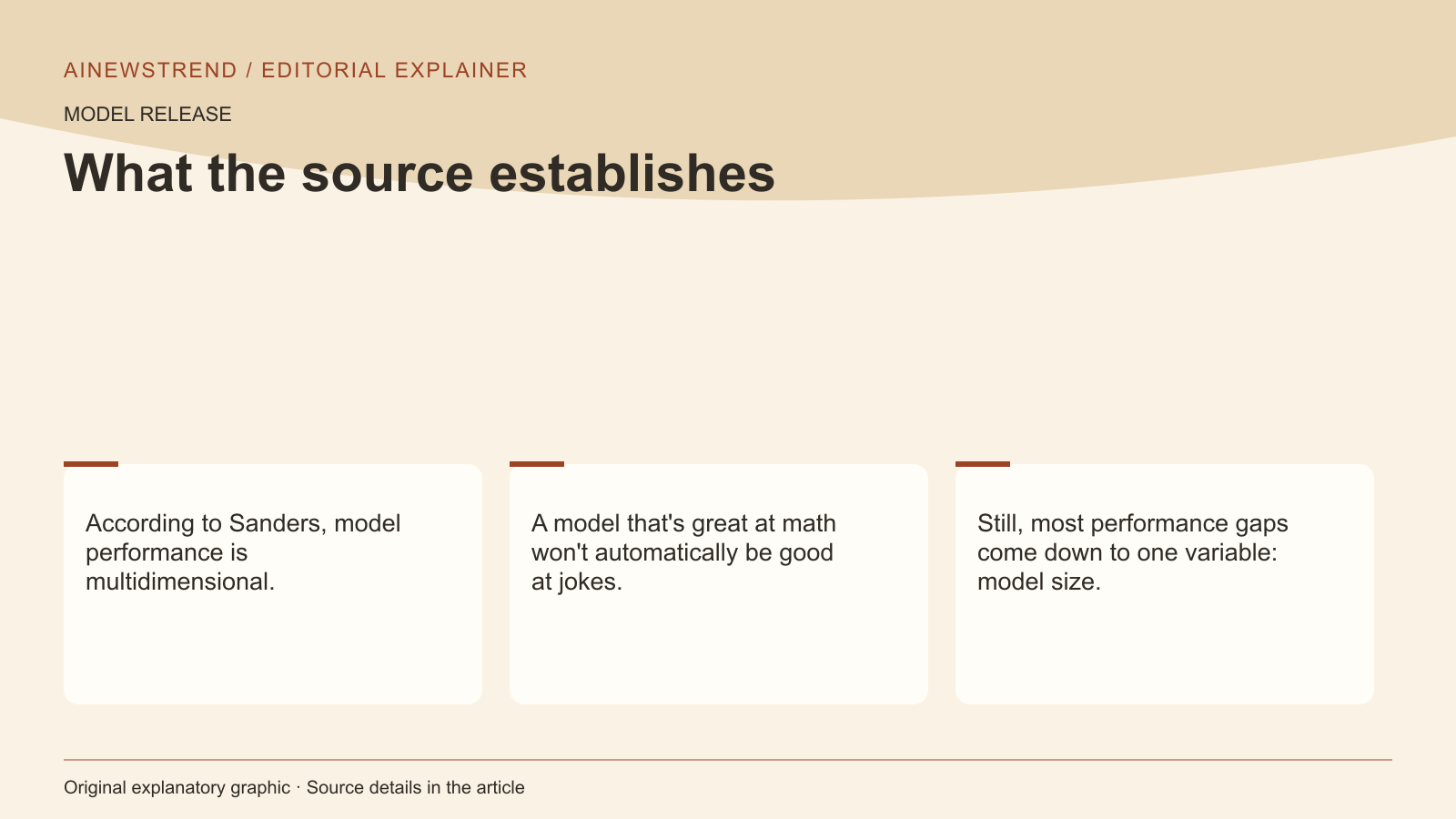
OpenAI's Ted Sanders has shared a rule of thumb for selecting the appropriate GPT model, emphasizing that model performance is multidimensional. According to Sanders, while model size is a significant factor, it does not fully explain performance differences. He noted that newer, smaller models can outperform older, larger ones through better training data or improved architectures.
What this means in practice
Sanders explained that GPT-6.1 Terra is likely better than the larger Astra at technical communication and roughly matches it in image processing and computer use at a much lower price point. However, it falls short in most other areas. He advised users to choose Astra for quality, Sol for a balance of cost and performance, and Terra or Luna for cost-sensitive applications.
Limitations and availability
The supplied announcement does not specify the exact hardware requirements, licensing conditions, or download versus API availability for these models. Sanders also mentioned that model names are complex because they represent distinct dimensions such as model size, reasoning effort, and multi-agent systems. Combining these into a single metric would obscure important details. The article does not provide information on when these models will be available or how to access them.