
What changed
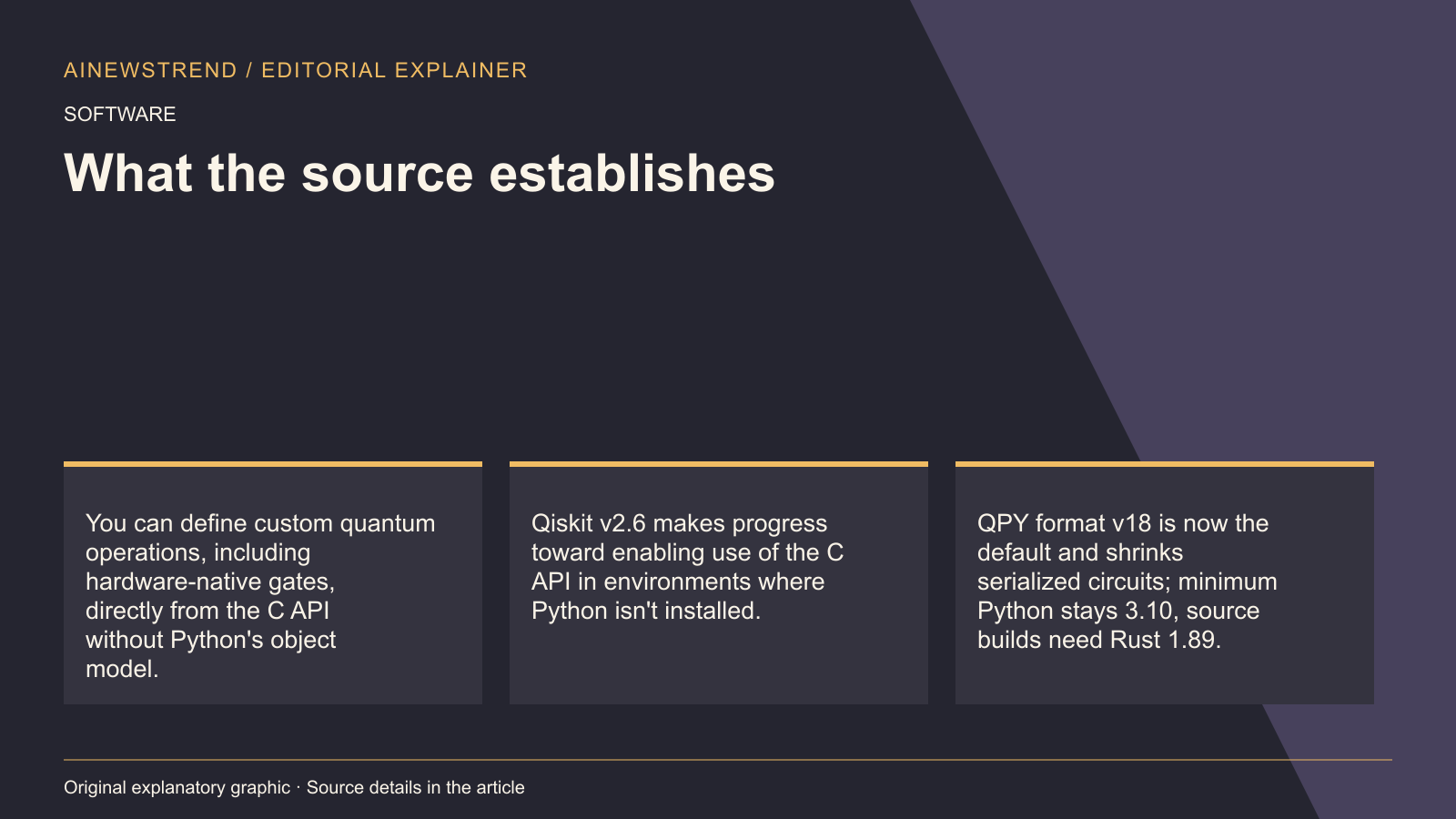
IBM's Qiskit SDK v2.6 is a technical release centered on the C API, introducing a new pass-manager framework, QPY serialization, and the ability to define custom quantum operations directly from the C API. These updates allow developers to write and execute compiler passes in compiled languages like C, C++, and Julia, without relying on Python. The release also includes improvements to the QPY serialization format, now defaulting to version 18, which reduces the size of serialized circuits. Additionally, the minimum Python version remains 3.10, and source builds require Rust 1.89.
What this means in practice
The new C API pass-manager framework enables users to build and customize compiler pipelines, allowing for the lowering of quantum circuits through multiple intermediate representations (IRs). This provides greater control over the compilation process and supports cross-language interoperability. QPY serialization now supports native circuits in C, eliminating the need for a Python round-trip, and maintains compatibility with Python-generated QPY files. Developers can also define custom quantum operations directly from the C API, enhancing flexibility in circuit design. These changes are part of IBM's ongoing effort to make Qiskit usable in environments where Python is not installed, such as Julia-on-Windows setups.
Limitations and availability
The C API features in Qiskit v2.6 are not available without Python, though the release includes behind-the-scenes work toward making Python optional. The new QPY format version 18 is the default, but users should review upgrade considerations. The SDK is available for download, and the C API is expected to support more advanced workflows in quantum-centric supercomputing (QCSC) environments. The supplied announcement does not specify exact release dates for these features beyond the current release.