
What changed
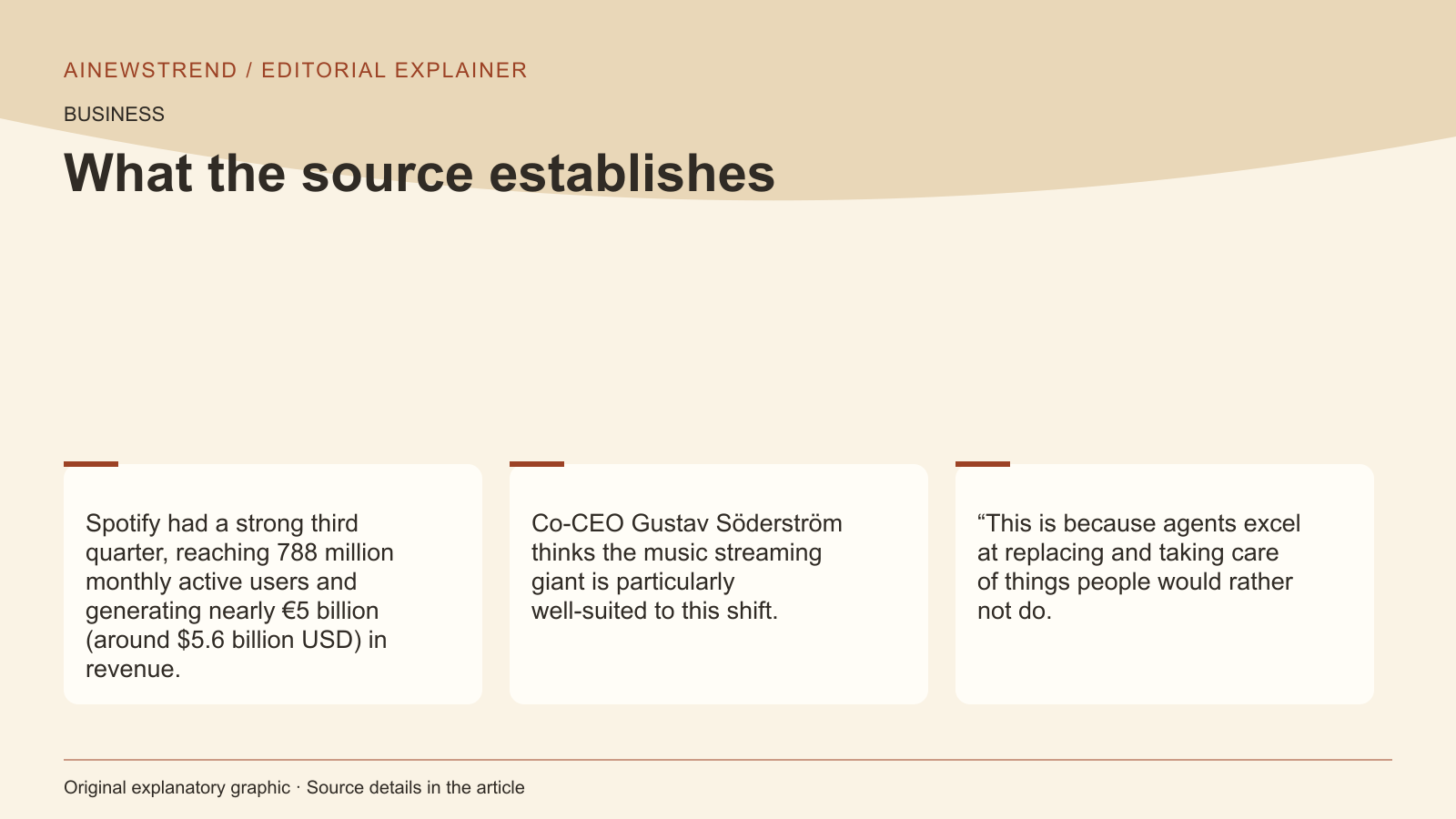
Spotify's co-CEO Gustav Söderström outlined how the company is positioning itself to benefit from the rise of AI agents. He emphasized that Spotify is well-suited to thrive in the agentic age, as agents can handle tasks people would rather not do, such as curating music playlists. Listeners could ask AI assistants to create personalized music experiences, like playlists for workouts or audiobook recaps. Spotify aims to be the service that agents turn to, allowing users to interact with the platform through conversations rather than just its app.
What this means in practice
Spotify is integrating with AI assistants like Meta’s Muse, ChatGPT, and Claude, aiming to be a media service that can be used from any agent. This integration allows users to ask Spotify to analyze their listening history, identify favorites, and create customized playlists. The company uses its own systems to process requests, ensuring that recommendations are more personalized than generic AI-generated playlists. Spotify’s approach focuses on leveraging its extensive listening data to provide tailored experiences without sharing user data with partners.
Limitations and availability
The supplied announcement does not specify the exact timeline for full AI agent integration or the availability of all features across different platforms. Spotify’s current integration with AI assistants is a step toward becoming a more conversational and personalized media service. However, the market is already showing signs of friction over how agents access third-party services, as seen with Amazon blocking Meta’s Muse from shopping on its platform. Spotify’s strategy is to participate in the growth of AI agents rather than remain passive, but the extent of this participation and its impact on user experience remains to be seen.