
What changed
Tyler Shultz, a former Theranos whistleblower, has warned that the current AI industry's rapid growth and high valuations could create opportunities for deception, drawing parallels to the Theranos scandal. Shultz, who exposed the company's dangerously inaccurate blood testing devices, expressed concerns about the ease with which AI startups could mislead investors and the public, similar to how Theranos operated.
What this means in practice
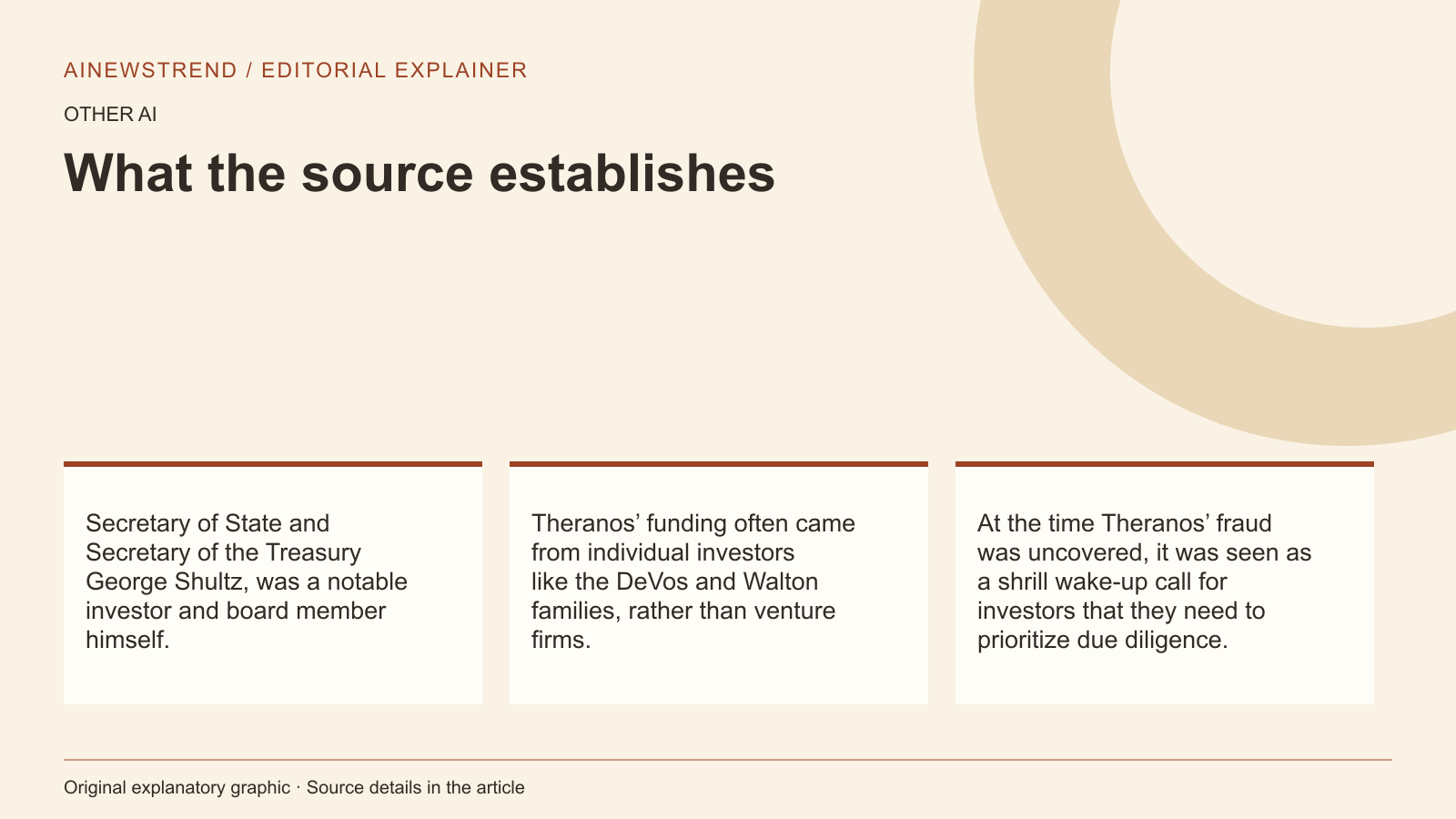
Shultz highlighted the risks of the AI era, where companies with no proven profitability are raising capital at trillion-dollar valuations. He argued that the difficulty of conducting due diligence on AI technologies makes it easier for fraudulent practices to go unnoticed. Shultz emphasized that investors need to be cautious, as putting large sums of money into a company's hands grants them significant power. He also noted that Theranos' fraud was partly enabled by its secrecy around its technology, which deterred top venture capitalists.
Limitations and availability
The supplied announcement does not specify the exact mechanisms by which AI startups could be deceptive, nor does it provide concrete examples of current AI companies facing similar scrutiny. Shultz's concerns are based on his experience with Theranos and his observations of the AI industry's current state. The article does not mention any specific actions being taken by regulatory bodies or investors to address these concerns. The documentary 'You Can See Everything' is mentioned as a context for Shultz's reflections, but it is not directly related to the AI industry's practices.