
What changed
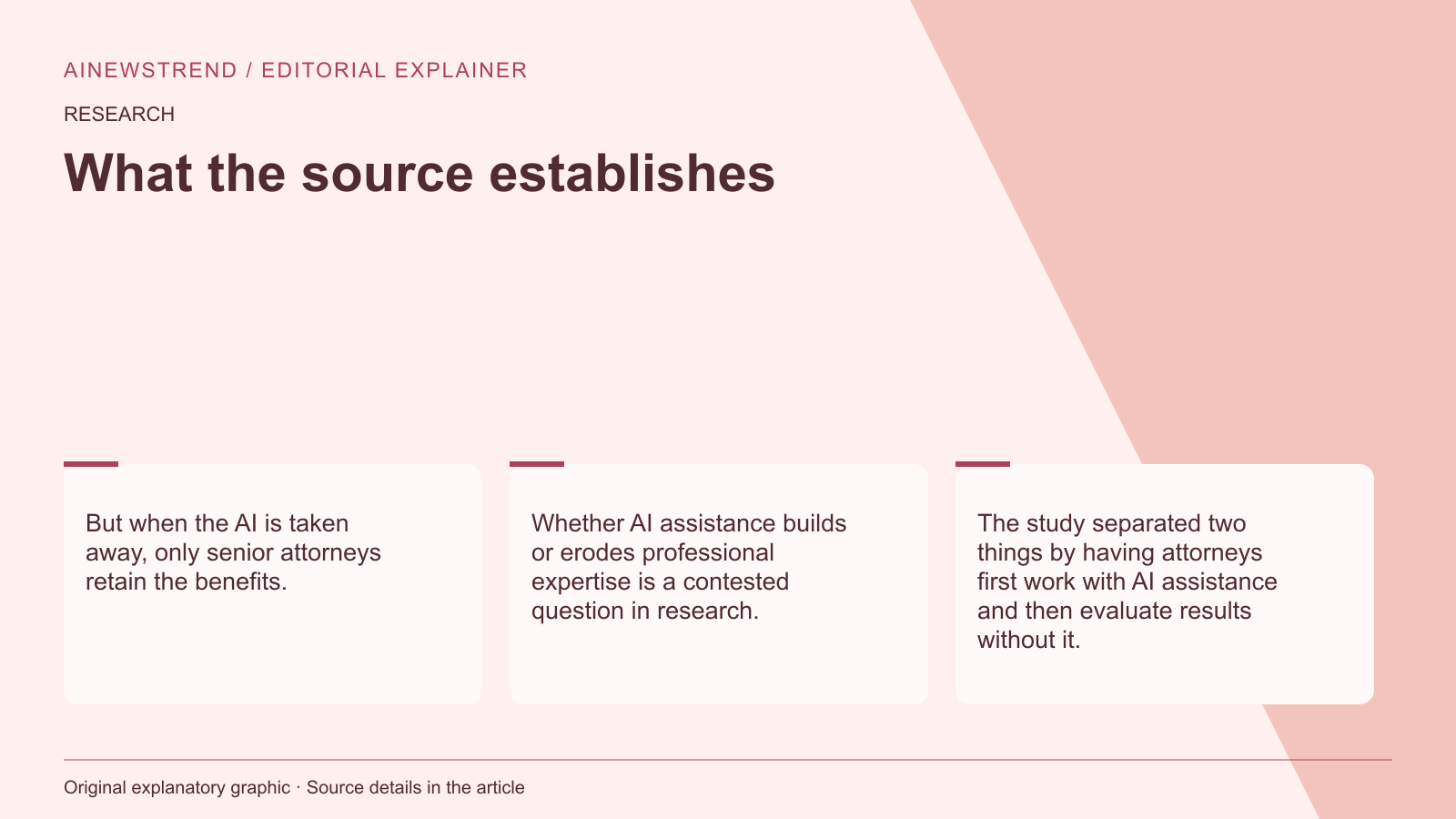
A three-month field experiment with 133 patent attorneys found that AI assistance improves immediate performance, especially for junior lawyers. However, when AI is removed, only senior attorneys retain the benefits. The study, conducted by the National Bureau of Economic Research (NBER), involved two groups: one using an unreleased AI assistant from Google Labs called InFlow, and another without AI assistance. The results showed that AI-assisted drafting tasks led to better performance for junior attorneys, but redlining tasks without AI showed no benefit for juniors, with seniors retaining an advantage.
What this means in practice
The study highlights a tension between immediate productivity gains and long-term skill development. While AI helps junior attorneys improve their performance in drafting tasks, it may not help them develop the deeper judgment required for tasks like redlining, which are typically done without AI. The researchers suggest that baseline expertise may be necessary for AI-assisted practice to translate into durable ability. The study also notes limitations, including a small sample size and the fact that participating firms are not representative of the broader professional services industry.
Limitations and availability
The study's authors point out several limitations, including the short three-month timeframe compared to the years it takes to build patent expertise. Additionally, the study does not provide a baseline measurement of participants' skills. The AI tool used, InFlow, is unreleased, and its availability to attorneys in real-time scenarios like client meetings or courtroom proceedings remains unclear. The findings align with similar patterns observed in other fields, such as software development and essay writing, where AI use has shown mixed effects on skill retention and development.