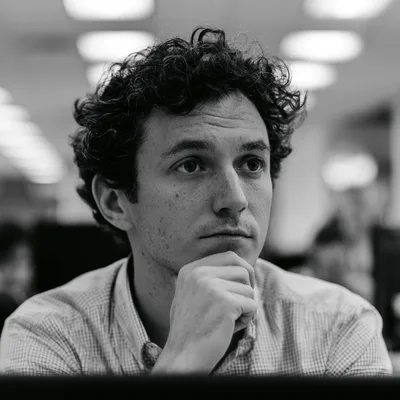

Jessica Wachter, a finance professor at the University of Pennsylvania’s Wharton School, said AI companies will need to increase their own productivity by a factor of 2.7 to break even by 2030.
The calculation includes the cost of capital and a 15% return, as well as depreciation of the assets. Wachter previously served as the SEC’s chief economist and director of its division of economic and risk analysis.
Hyperscalers are spending about $750 billion this year on massive data centers, with projections suggesting total AI capital investments from companies like Alphabet, Microsoft, Amazon, Meta, and Oracle could exceed $5 trillion over the next four years. This is one of the largest capital investments by any industry in history.
Gary Gensler, who ran the SEC during the Biden administration and is now a professor at MIT’s Sloan School, noted that while hyperscalers plan to spend trillions, total AI revenues will be around $150 billion to $200 billion this year. He emphasized that the challenge is that the spending does not have commensurate revenues yet.
"The challenge is that the spending does not have commensurate revenues yet. That’s a fact," said Gensler. "And then the question is, is that an investment that will be paid off in the future?"
The risks are growing as AI companies borrow large amounts of money to build more data centers. Free cash flow is expected to soon dip into negative territory for the group, with Alphabet reporting a free cash deficit of some $5.9 billion in its latest quarter.
Without significant productivity growth, the data centers risk becoming stranded assets. Mihir Kshirsagar at Princeton’s Center for Information Technology Policy warned that owners of AI data centers that come online this year and next will need to spend billions more on the next generation of chips by the end of the decade if they want to stay competitive.
Source: mittr