
What changed
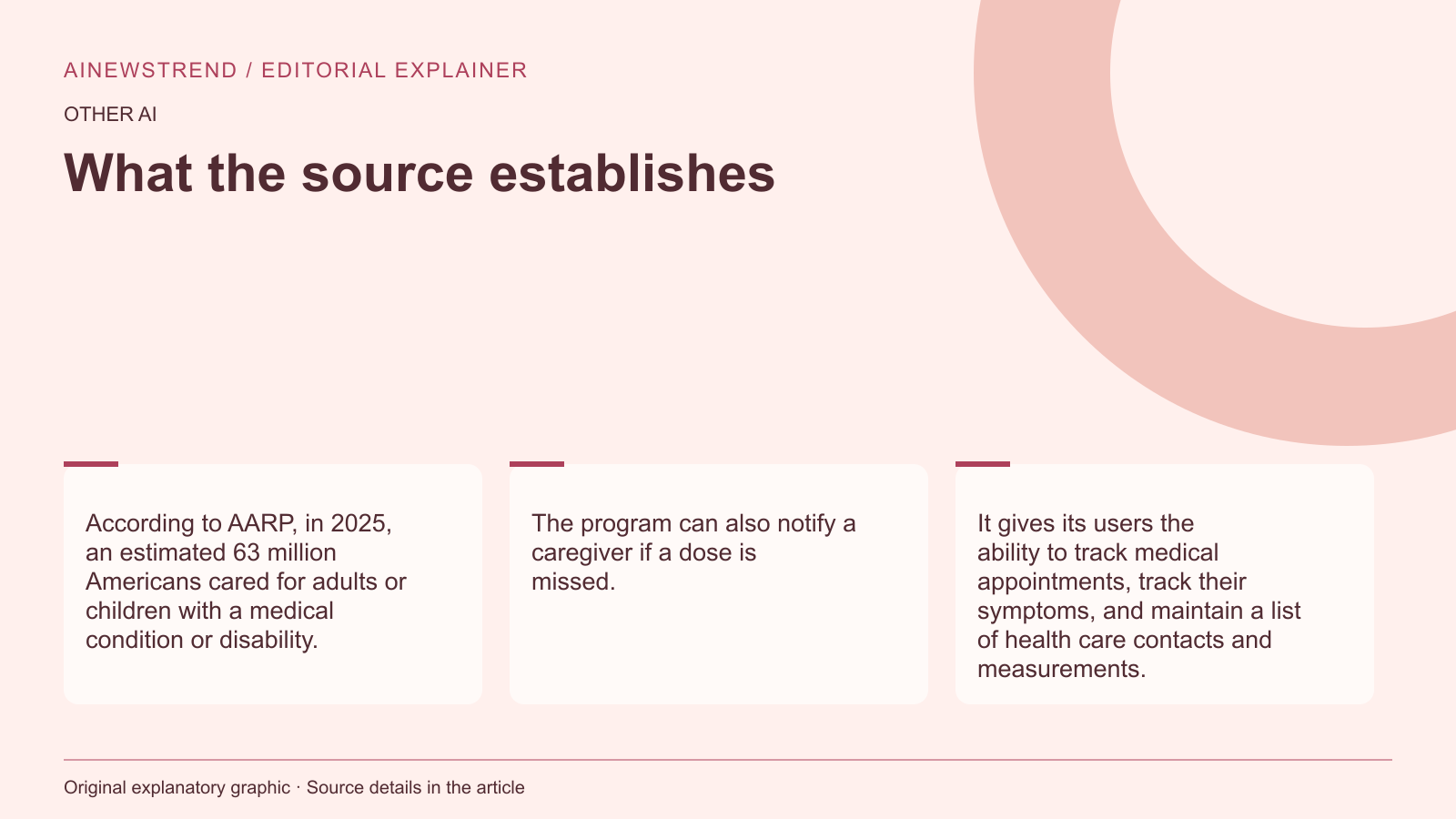
Caregivers are increasingly turning to apps and AI tools to manage the complex demands of their roles. These tools range from medication tracking and appointment scheduling to AI assistants that help prepare for medical appointments and track symptoms. Apps like Medisafe, Caring Village, and Mejo offer features such as reminders, care plans, and shared journaling to help caregivers stay organized. Ari, an AI 'health teammate' currently in beta, can access medical records, patient portals, and calendar events to assist with care coordination.
What this means in practice
These apps aim to reduce the mental load on caregivers by automating tasks and providing a centralized place to track care routines. For example, Mejo allows users to input a loved one’s medical history, which is then shared with caregivers, doctors, and therapists. Ari, which is currently available only for people with rare diseases, can summarize past medical information and suggest questions for medical appointments. However, most of these tools are not medical devices and have not been reviewed by the FDA, meaning their safety and efficacy are not independently verified.
Limitations and availability
Many of these apps require manual data entry, and some, like Briggzy, are still in testing phases. While AI features are being explored, they are not yet fully integrated into all platforms. For instance, Mejo’s team is looking into incorporating AI to help users formulate questions for medical appointments, but the current version relies on manual input. Additionally, the information stored in these apps is not protected by HIPAA, as it is typically entered by individuals rather than covered entities. Caregivers must be aware that the data they input may be used for purposes beyond their immediate needs, and companies often have contractual language that limits their liability.