
What changed
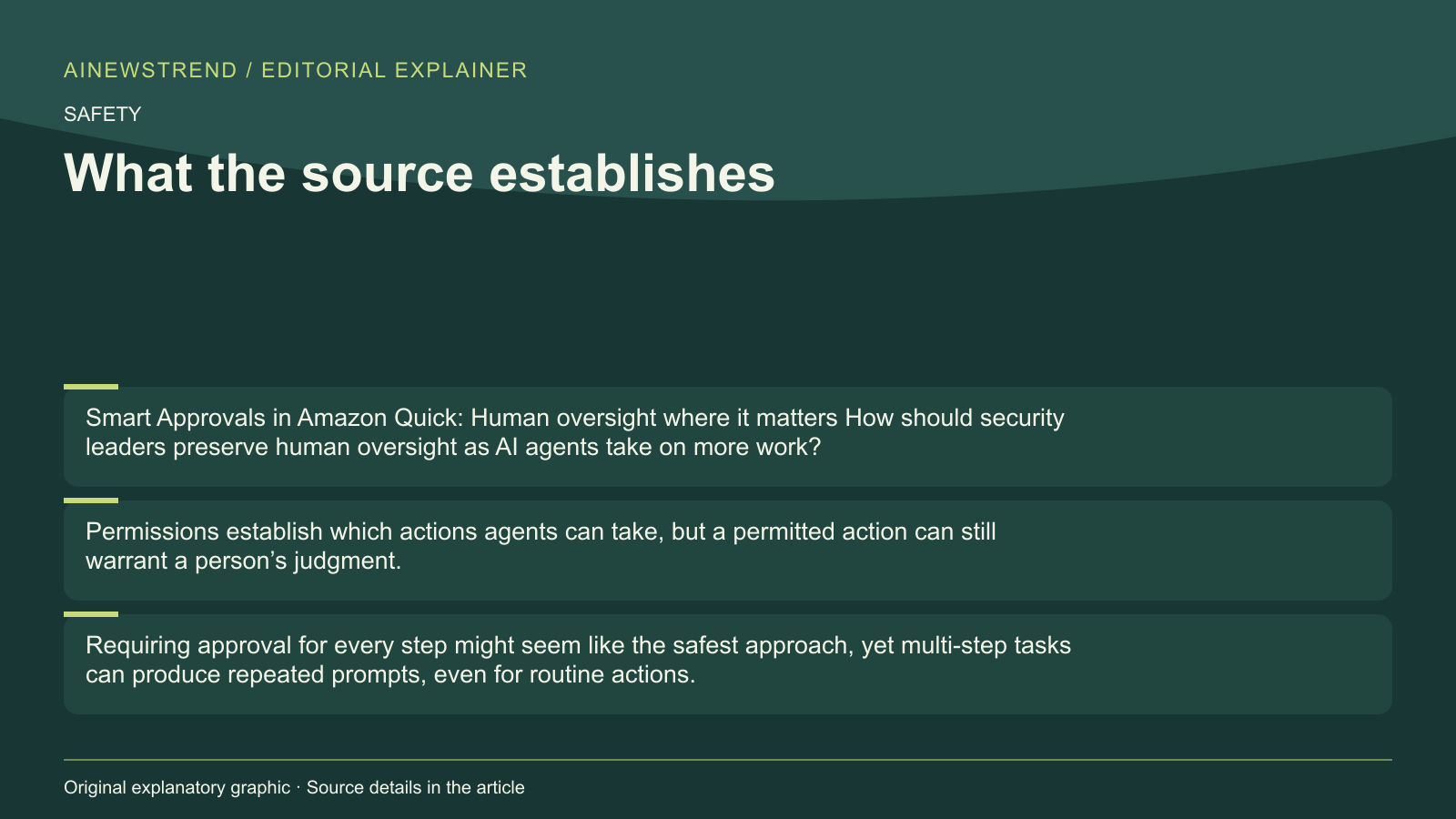
Amazon Quick has introduced Smart Approvals, a feature designed to reduce the need for repeated human oversight in routine tasks while ensuring that critical decisions still require human judgment. The feature evaluates eligible actions against the user’s request and conversation context, automatically approving routine actions or returning them to the user for review when necessary.
What this means in practice
Smart Approvals operates within existing controls, such as Custom Permissions and Quick Guardrails, to determine which actions are eligible for automated review. It uses a separate classifier model to assess the proposed action against the user’s request and the conversation context, without granting additional permissions or removing required human approvals. Actions that involve sending content outside the organization, changing access, or initiating payments are flagged for human review, ensuring that consequential decisions remain under human control. The feature is enabled by default but can be turned off by users or restricted through Custom Permissions.
Limitations and availability
Smart Approvals does not replace mandatory human approvals for sensitive actions, such as those involving sensitive data or high-impact decisions. The classifier model does not use the content it reviews to improve its performance, and its judgments are not guaranteed to be correct. Automatic approvals are single-use and apply only to the exact action and parameters reviewed. The feature is available to all Amazon Quick users, with setup instructions provided in the Amazon Quick User Guide. The supplied announcement does not specify the exact model used for classification or its performance metrics.