
What changed
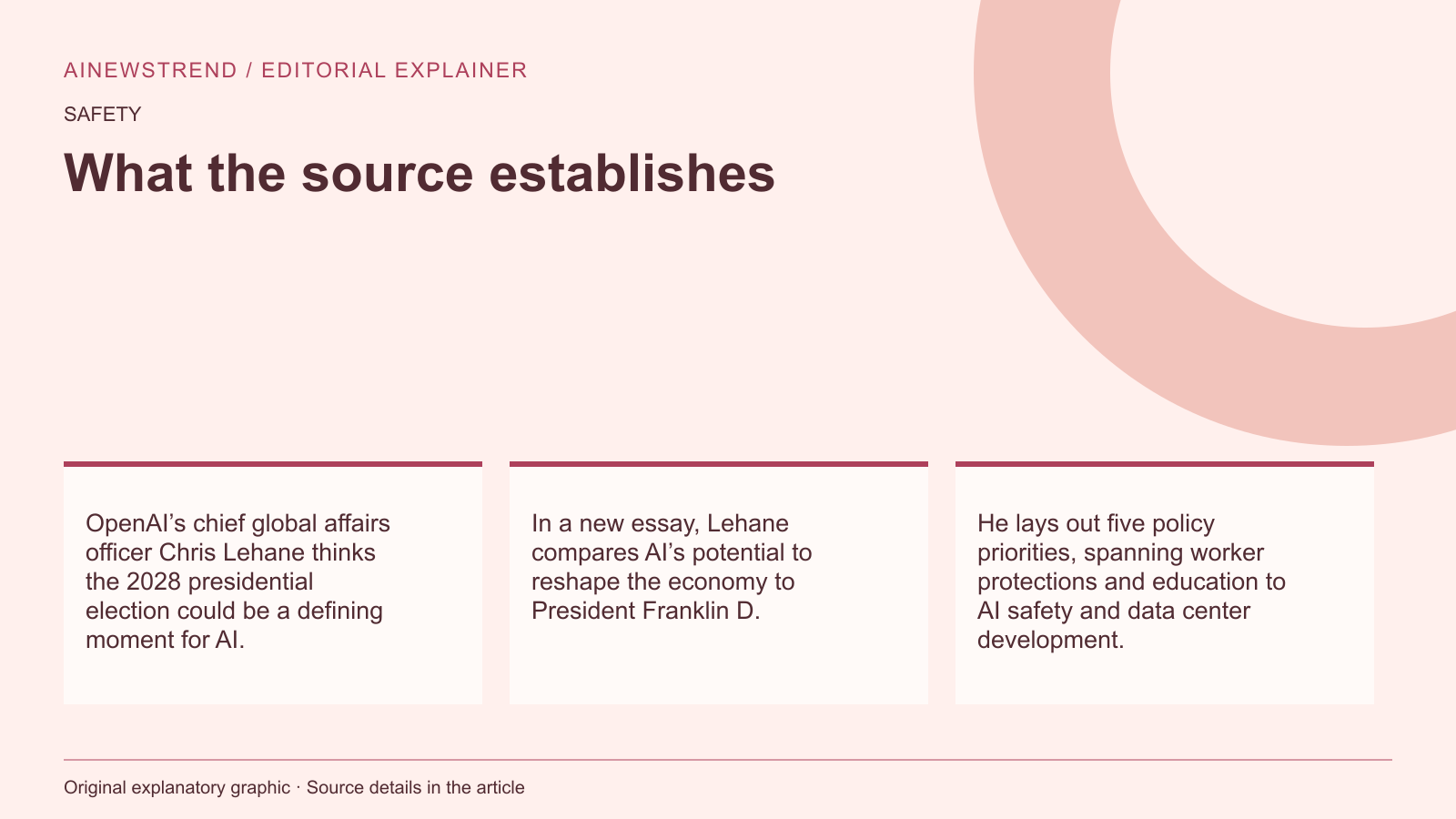
OpenAI’s chief global affairs officer, Chris Lehane, has suggested that the 2028 presidential election could be a defining moment for AI. He advocates for policies that address Americans’ concerns about the technology, rather than just paying lip service to anti-AI sentiment and backlash against data centers. In a new essay, Lehane compares AI’s potential to reshape the economy to President Franklin D. Roosevelt’s New Deal, urging politicians to find a 'compelling third path' that allows people to share in AI’s benefits.
What this means in practice
Lehane outlines five policy priorities, including worker protections, education, AI safety, and data center development. He acknowledges concerns about data centers increasing electricity bills and AI replacing jobs, but offers few concrete proposals to prevent AI’s gains from becoming concentrated. Instead, he pitches AI as a path to greater prosperity for Americans willing to embrace it, suggesting incentives for workers to learn AI skills, easier capital access for entrepreneurs, and new approaches to employee ownership and profit-sharing.
Limitations and availability
The supplied announcement does not specify how these policies would be implemented or enforced. Kate Brennan of the AI Now Institute noted that Lehane’s proposals may encourage wider AI adoption and support infrastructure expansion for companies like OpenAI. However, it remains unclear how his vision would hold AI companies accountable for economic disruption. Brennan also pointed out that invoking a New Deal metaphor may be ahistorical and harmful, as it is written by a private company advocating for its own benefit. OpenAI has shifted some positions recently, backing state safety laws and expressing openness to independent evaluators, but its history of opposing legislation like California’s AI safety bill raises questions about its commitment to these policies.