
What changed
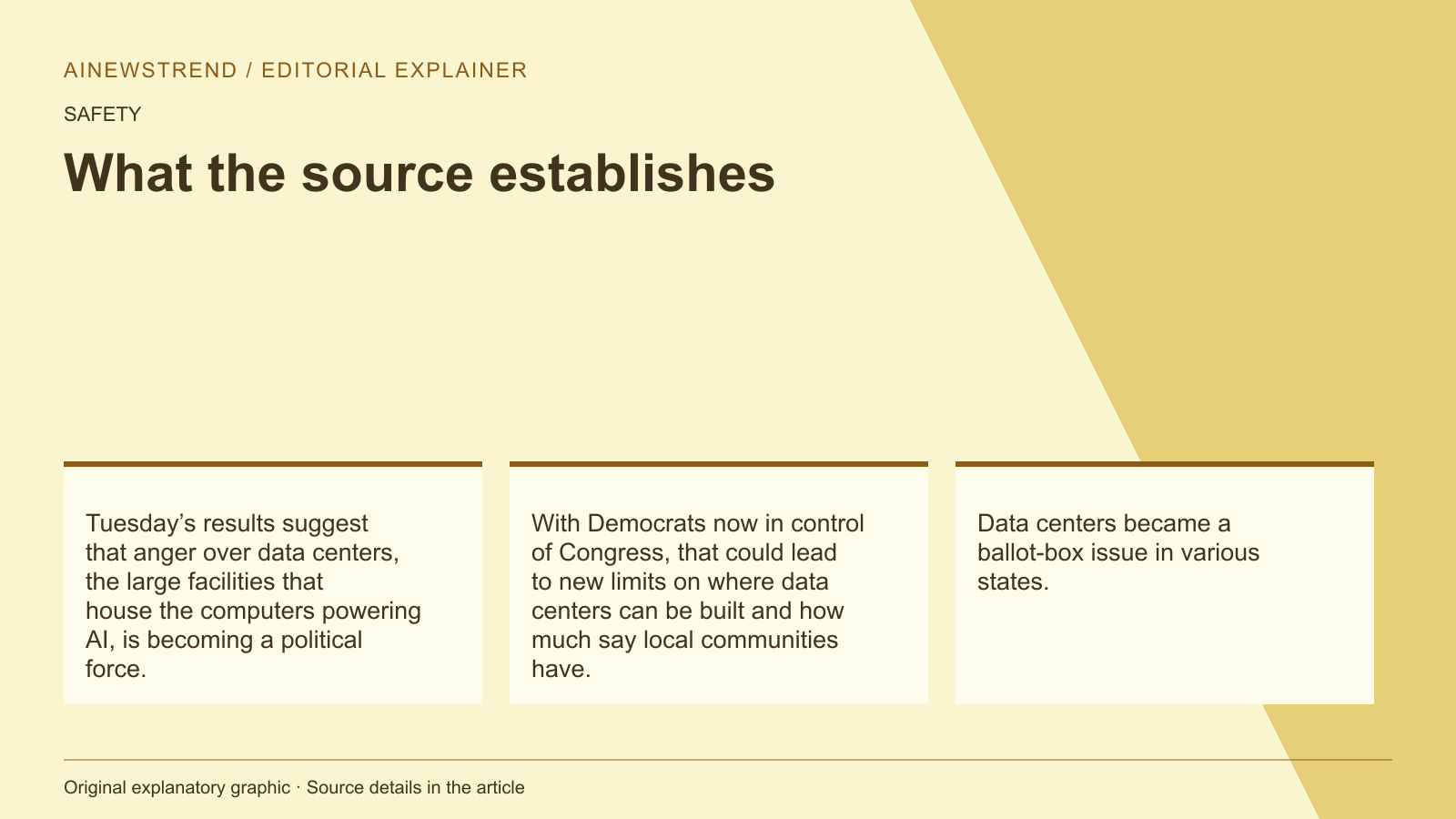
The November 3 midterm election results gave Democrats full control of Congress, setting the stage for a more divided U.S. government. This shift has intensified political tensions over data centers, with voters increasingly concerned about their impact on communities and the environment. An NBC exit poll showed that more than half of respondents believe AI will do more harm than good, while almost 80% are against building data centers in their neighborhoods. Data centers became a ballot-box issue in various states, with voters in several states pushing back against the AI buildout.
What this means in practice
The election results suggest that data centers are becoming a significant political issue. With Democrats in control of Congress, there could be new limits on where data centers can be built and how much say local communities have. For example, in Ohio, the county where Meta had planned a 700,000-square-foot facility just passed a ban on data centers. Analysts predict that Democratic governor-elect Amy Acton could pose a major risk to Ohio’s data center buildout. Similarly, candidates in Texas, Maine, Michigan, Nevada, Georgia, and South Carolina all won seats after taking a stance against the rapid buildout of data centers.
Limitations and availability
The supplied announcement does not specify exact policies or legislation that will be introduced. However, it mentions potential changes such as construction moratoriums or requiring data centers to pay for their own power grid upgrades. There are also bills like the GRID Savings Act, which would prevent grid infrastructure costs from being passed on to communities during large AI data center buildouts. The environment is also a major concern, especially at xAI’s data center in Memphis and at the data centers throughout Virginia, known as the world capital of data centers, where gas turbines are used for power.