
What changed
Anthropic, as it approaches its initial public offering, has implemented a complex corporate governance structure that limits the influence of common shareholders. The company's structure includes a public benefit company status, a Long-Term Benefit Trust (LTBT), and a special class of stock owned by its founders. These elements collectively give the founders, the LTBT, and employees significant control over major decisions, while common shareholders have limited say.
What this means in practice
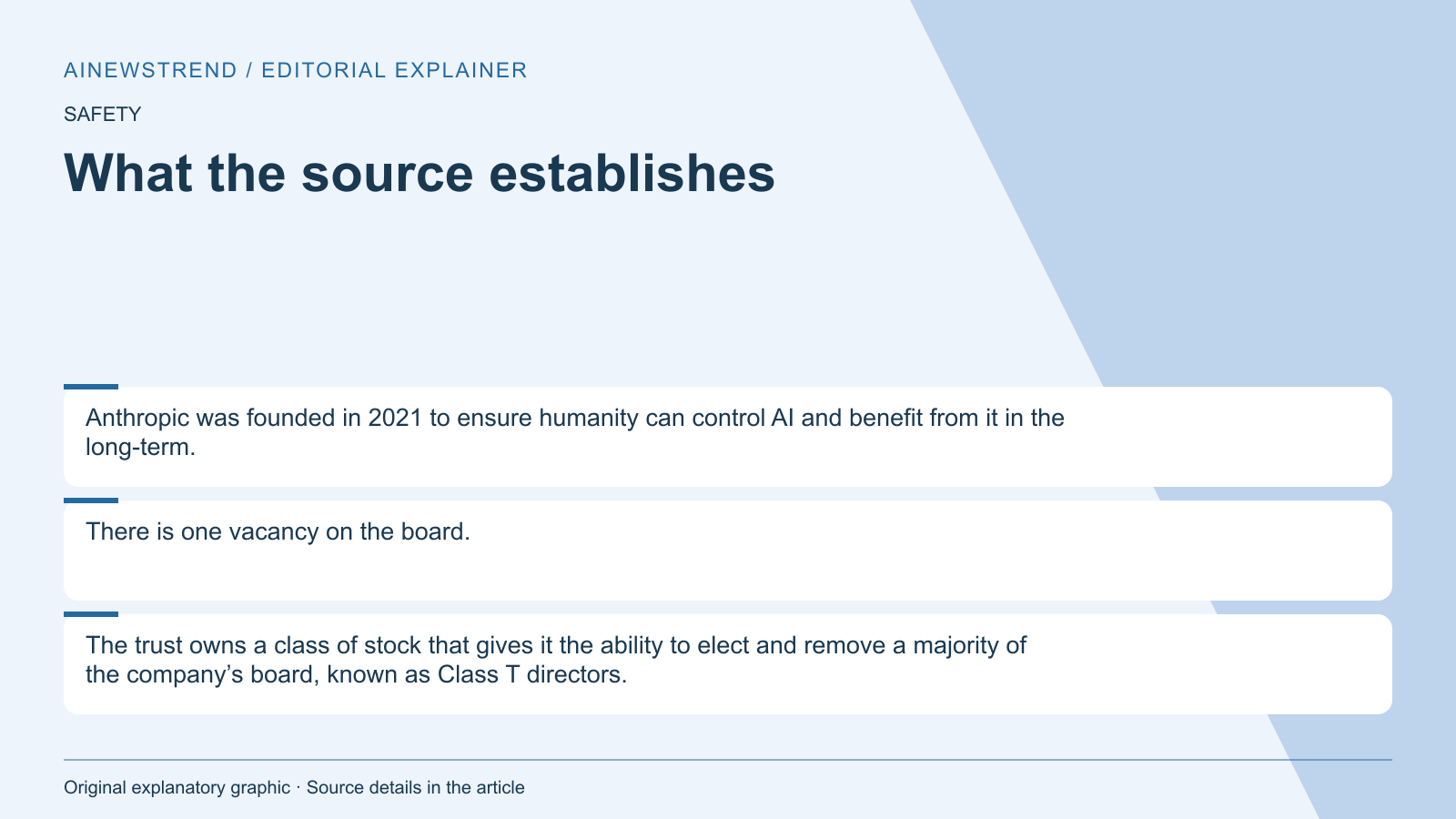
Anthropic's board is chaired by Daniela Amodei and includes notable figures such as Dario Amodei, Reed Hastings, and Vas Narasimhan. The LTBT, an independent panel, owns a class of stock that allows it to elect and remove a majority of the board, known as Class T directors. The LTBT is chaired by Neil Shah and includes members like Ben Bernanke and Richard Fontaine. Additionally, the seven founders jointly own a special class of stock that gives them 50.1% of shareholder voting power, allowing them to elect three members of the board. The board also has the ability to overrule the LTBT on board seat decisions, with the final decision potentially going to employees.
Limitations and availability
The structure of Anthropic's governance is designed to prioritize AI safety and long-term benefits over shareholder value. The founders' control is not permanent; it will end automatically when fewer than three of them remain, or they can choose to end it ten years after the IPO. At that point, the LTBT will continue until 85% of common shareholders vote to end it or it decides to step down with board approval. The supplied announcement does not specify the exact timeline for these changes or the conditions under which common shareholders might gain more control.