
What changed
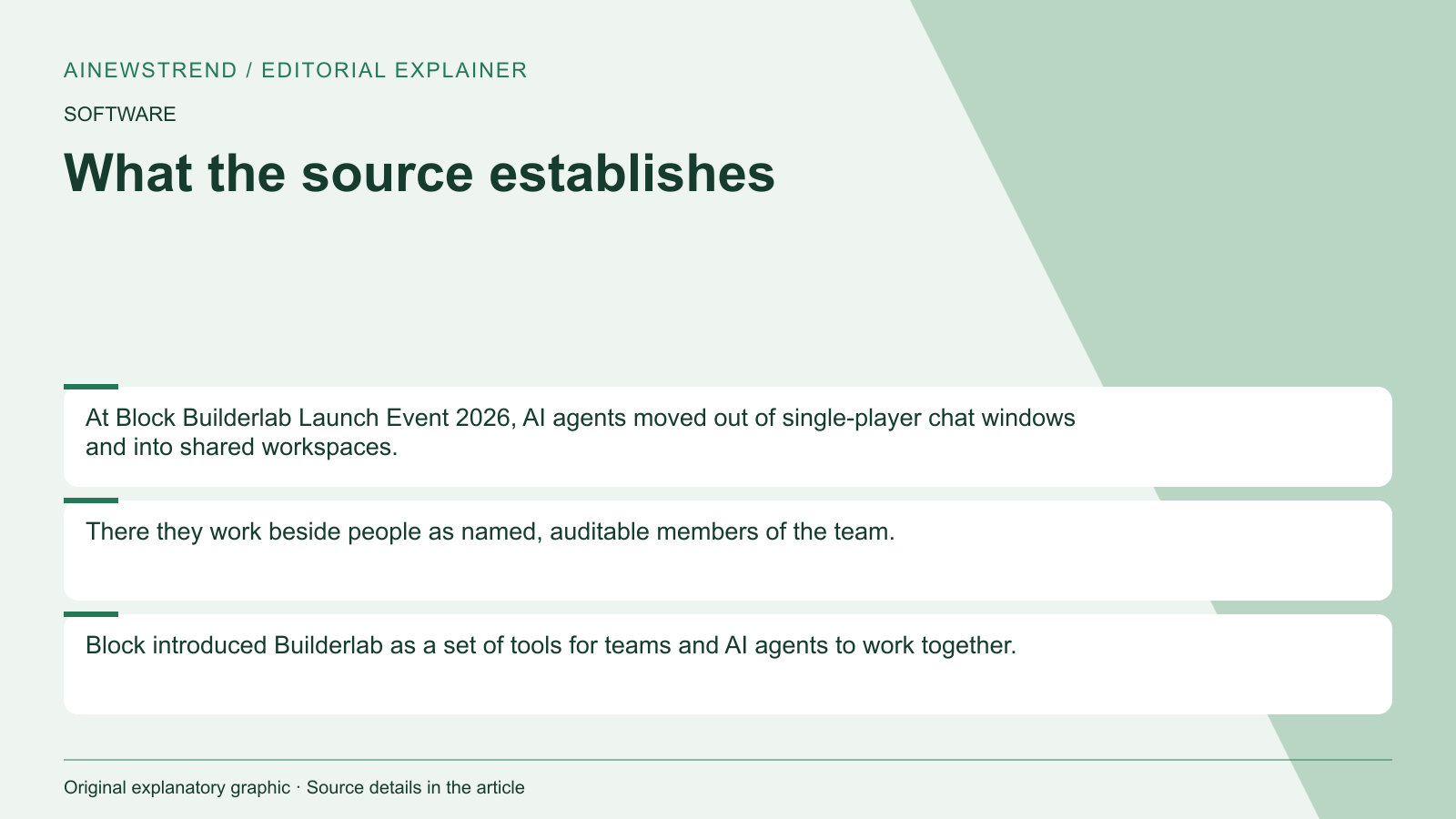
At Block Builderlab Launch Event 2026, AI agents moved out of single-player chat windows and into shared workspaces. There they work beside people as named, auditable members of the team. Block Inc. built these tools to run itself as an intelligence company, and it is now offering them to other businesses, building on Buzz, its open-source workspace for humans and AI agents. Block introduced Builderlab as a set of tools for teams and AI agents to work together.
What this means in practice
Block’s new approach focuses on collaboration between AI agents and human team members rather than individual agent capabilities. The company plans to spread this model with open-source code, model-agnostic design, and hosted infrastructure. Buzz, the open-source workspace, allows agents to have names, avatars, and personalities, shifting the focus from switching among software-as-a-service applications to the work itself. This could threaten SaaS companies, as the revenue model follows the classic open-source pattern of giving the software away and charging for the convenience of a hosted cloud service.
Limitations and availability
The next phase of Block’s AI tools will depend less on how capable a single agent becomes than on how well agents collaborate, share an organization’s context, and stay within firm security boundaries. Companies can self-host the open-source code, use a free tier, or add funds for remote agents, models, and extra storage. Remote agents run in central cloud environments that are easier to secure than laptops, and they can be handed large assignments overnight. Agents run on secure building blocks that never grant them permission for certain actions. Some teams have shipped software releases 50% to 75% faster. Block is also building information flow control, which tags data from sensitive sources so the security policy travels with that data and blocks leaks.