
What changed
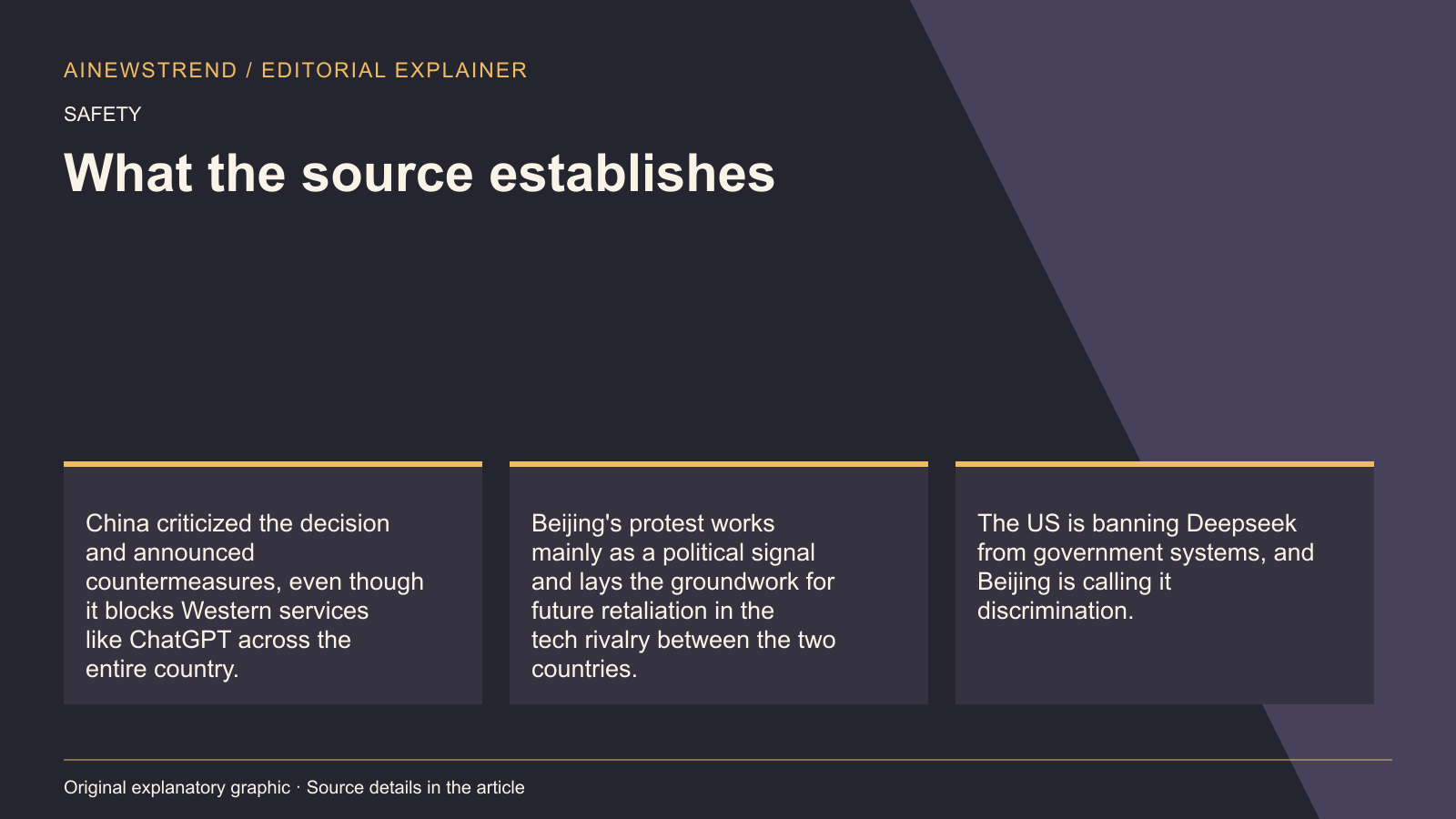
The US Department of Homeland Security ordered civilian federal agencies to remove all products from Chinese AI company Deepseek from their IT systems. The ban also covers software from other vendors built on Deepseek's open-source models and prohibits future purchases. China has responded by criticizing the decision as discriminatory, while simultaneously blocking access to Western AI services like ChatGPT, Claude, and Gemini within its own borders.
What this means in practice
The US action is framed as a national security measure to prevent sensitive data from being accessed by Beijing through Deepseek. China, however, has long maintained strict controls over foreign AI services, requiring all AI services to comply with political guidelines since 2023. State bodies and state-owned companies are mandated to replace foreign hardware and software with domestic alternatives. Additionally, China has proposed its own export and licensing controls for AI technologies, mirroring the US approach.
Limitations and availability
The US ban applies specifically to civilian federal agencies and does not extend to private sector use. China's restrictions on foreign AI services are more comprehensive, affecting the entire market and not just government agencies. The situation highlights the broader tech rivalry between the two nations, with both sides using national security as a justification for protecting their respective markets and technologies.