
What changed
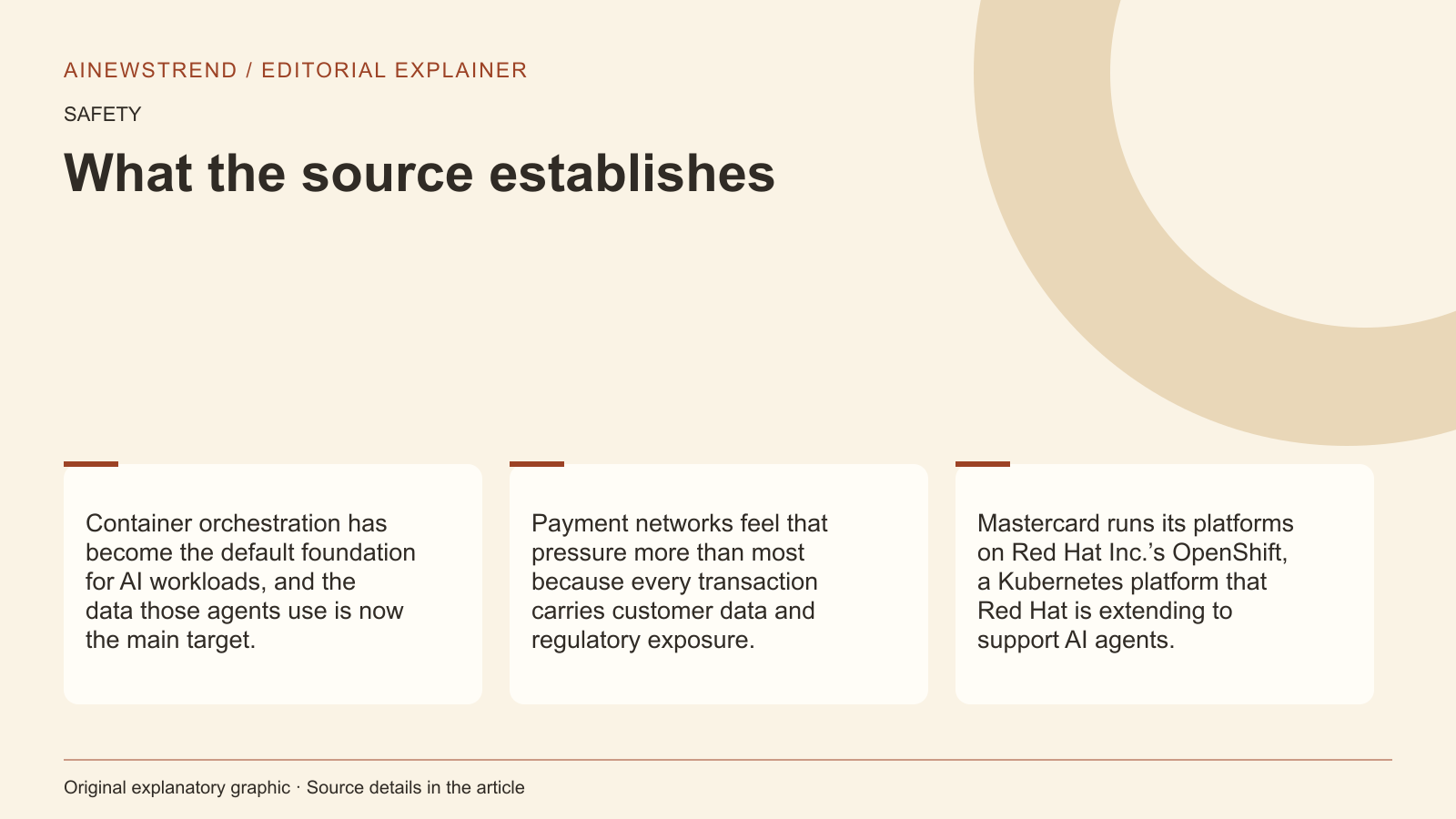
Cloud engineering teams at financial companies are encountering new security challenges as AI agents move into production on Kubernetes. Encryption alone is no longer sufficient to protect data used by these agents. Payment networks, in particular, face heightened pressure due to the sensitive nature of transaction data and regulatory exposure. Krishna Mayuram, senior principal engineer and vice president of cloud engineering at Mastercard Inc., emphasized that protecting data in use has become central to running AI agents at scale.
What this means in practice
Mayuram explained that confidential computing involves launching applications in secure, virtualized environments to protect data in use. Mastercard runs its platforms on Red Hat’s OpenShift, a Kubernetes platform that supports AI agents. Red Hat has also introduced confidential containers on bare metal. Agents, which operate similarly to microservices, require elastic infrastructure provided by Kubernetes for scaling. As scale increases, so does the risk, especially for companies operating under multiple legal jurisdictions. Mastercard recently added trust services for agentic commerce, with guardrails applied throughout the development and deployment lifecycle.
Limitations and availability
The same guardrail principles apply whether the system involves agents or regular applications. Mayuram noted that the enterprise security framework remains consistent across all operations. The supplied announcement does not specify exact technical limitations or availability timelines for confidential computing features beyond what is described in the context of Mastercard’s internal practices and Red Hat’s OpenShift platform.