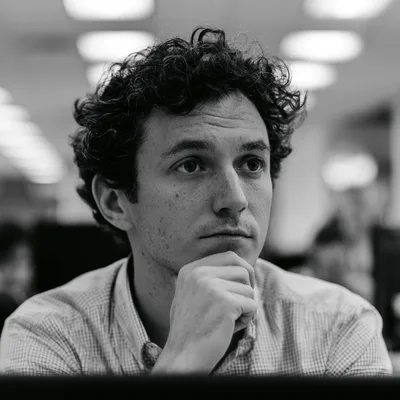

Microsoft released a bearish AI forecast from Nobel laureate Daron Acemoglu, predicting only 1.5% GDP growth over a decade. The analysis contrasts sharply with more optimistic projections from some AI labs. Acemoglu said the pace of AI development is hard to predict, emphasizing the role of human nature in shaping its impact.
Acemoglu argued that the bottleneck for AI's economic impact is human behavior. Companies must reassign tasks, upskill workers, and restructure before productivity gains materialize, a process that could take longer than the electrification era. He stressed that bigger models alone won't solve these challenges.
"What's missing are easy-to-deploy apps that change how things get made," Acemoglu said. "AI that extends human skills will beat full automation on productivity, since even 99 percent accuracy often isn't enough once you factor in last-mile problems and real user needs."
The forecast was published in Microsoft's corporate blog, The Humanist Review of AI, where authors sign their pieces by hand. Microsoft's approach aligns with Acemoglu's thesis, allowing the company to integrate AI into existing products without betting on large-scale automation.
The announcement follows Microsoft's broader strategy to position AI as a tool for human augmentation rather than full automation. Acemoglu's analysis highlights the limitations of AI's economic potential and the need for human-centric solutions.
Microsoft did not comment on the long-term economic impact of AI beyond Acemoglu's forecast, and the report raises questions about the pace of AI adoption and its real-world applications.
Source: thedecoder


