What changed
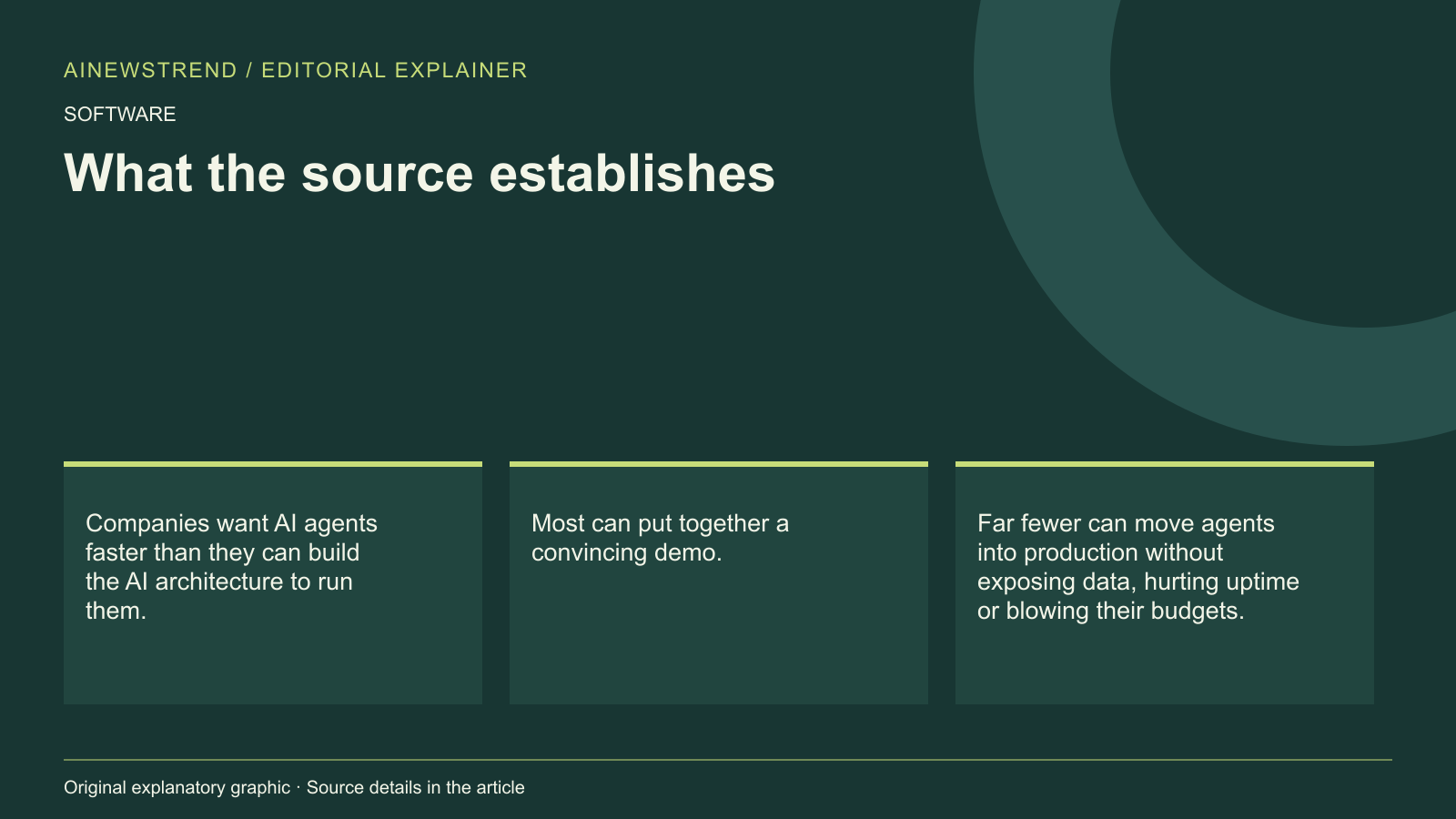
Oracle's executive vice president, Çetin Özbütün, highlighted the challenges of deploying AI agents in production environments, noting that security and system resiliency are major obstacles. He explained that while AI agents are easy to demonstrate, transitioning them to real-world use involves significant technical and operational hurdles.
What this means in practice
The primary challenge is securing access to AI agents, as Özbütün noted that vulnerabilities are being exploited at an unprecedented rate. Oracle's Autonomous AI Database addresses this by encrypting data at rest and in transit by default, with protections that cannot be disabled. Additionally, the database guarantees 99.995% availability, measured by the ability to connect and run queries, not just the underlying infrastructure. Oracle also applies online patches weekly, ensuring the database remains operational during updates.
Limitations and availability
Oracle's Deep Trust AI architecture ensures that security profiles defined by customers are enforced. New features like expanded Deep Data Security are available in the Autonomous AI Database as soon as they are announced, ahead of on-premises releases. Users do not need to take any action to access these features, which become available on day one. The supplied announcement does not specify the exact timeline for on-premises availability of these features.