
What changed
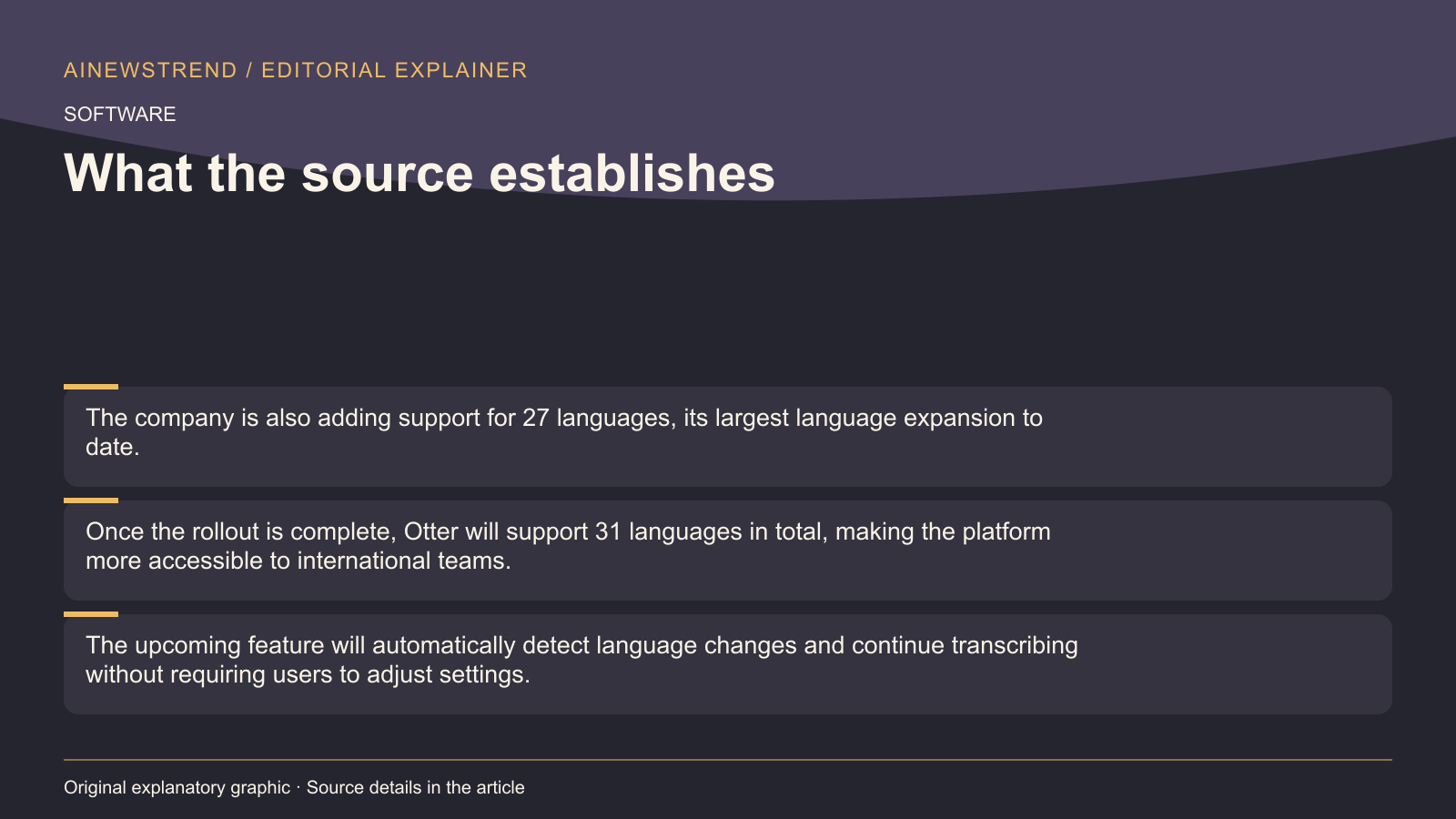
Otter.ai, the AI-powered note-taking tool, announced it is expanding its multilingual capabilities, including a new multilingual transcription feature that can follow conversations as speakers switch between languages during the same meeting. The company is also adding support for 27 languages, its largest language expansion to date. Once the rollout is complete, Otter will support 31 languages in total.
What this means in practice
The upcoming feature will automatically detect language changes and continue transcribing without requiring users to adjust settings. For example, a call could move from English to Korean to Portuguese, with Ot,ter following the conversation throughout. The update aims to address a common challenge for global teams, where language differences can make meetings and collaboration more difficult. Thirteen of the new languages are available now: Mandarin Chinese, Korean, German, Italian, Cantonese, Portuguese, Russian, Indonesian, Malay, Dutch, Turkish, Vietnamese, and Polish. The remaining 14 languages are coming soon and include Swedish, Danish, Finnish, Arabic, Hindi, Thai, Hebrew, Norwegian, Greek, Macedonian, Persian, Czech, Hungarian, and Romanian. The newly added languages run on Otter’s own speech models. The company told us it trained them using publicly available datasets and worked with native-speaking volunteers to review transcripts and check accuracy.
Limitations and availability
The announcement comes as Otter continues to expand beyond transcription and into other workplace AI tools, following its $320 million funding from General Catalyst. It recently introduced Work Mode, which uses meeting history and connected apps to help users prepare for upcoming calls. Another recent addition is Live Assist, which provides real-time coaching during meetings.