
What changed
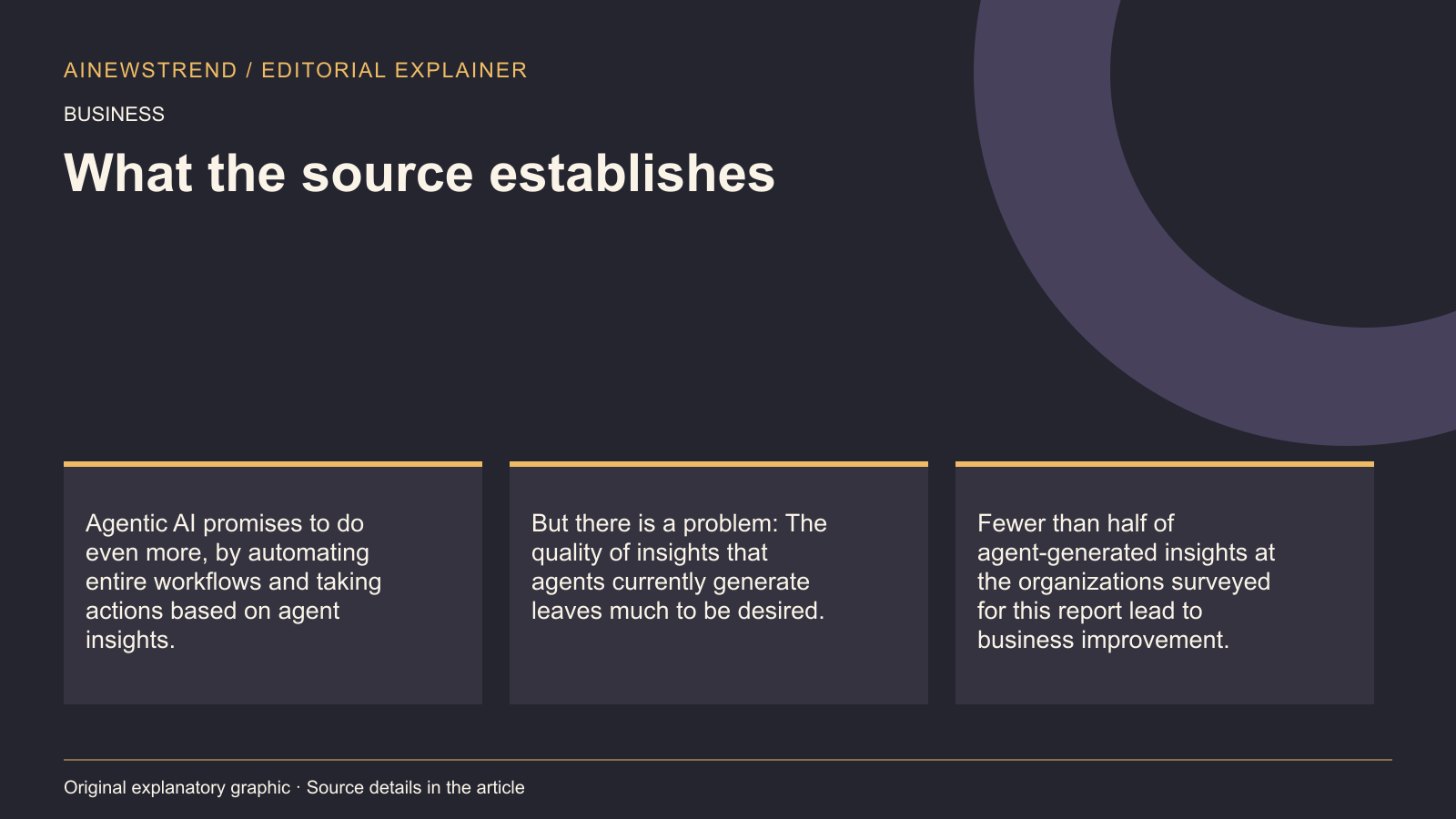
In a recent report, it was revealed that fewer than half of the insights generated by analytics agents at surveyed organizations lead to business improvements. This marks a slight improvement from 37% one year ago, but still indicates that over half of the insights are not contributing to business outcomes. The report highlights that while descriptive insights are generally well-received, prescriptive insights—those that guide actions—are met with mixed reviews.
What this means in practice
The report identifies key challenges in achieving high-quality insights. Organizations labeled as 'insight leaders' show significantly better performance, with over 70% of their agent insights leading to business improvements. These companies also rate the quality of their agents' insights higher. The main reasons for substandard insights include insufficient business context and fragmented or inaccessible data. Additionally, many organizations struggle with insight overload, where analytics agents generate too many insights to be effectively evaluated and acted upon.
Limitations and availability
The report emphasizes that improving insight quality requires initiatives such as strengthening AI and data governance and adding a semantic layer to data architecture. These efforts are being prioritized by surveyed companies. However, the supplied announcement does not specify the exact methods or timelines for implementing these improvements. The findings are based on survey responses and do not include independent testing or verification.