
What changed
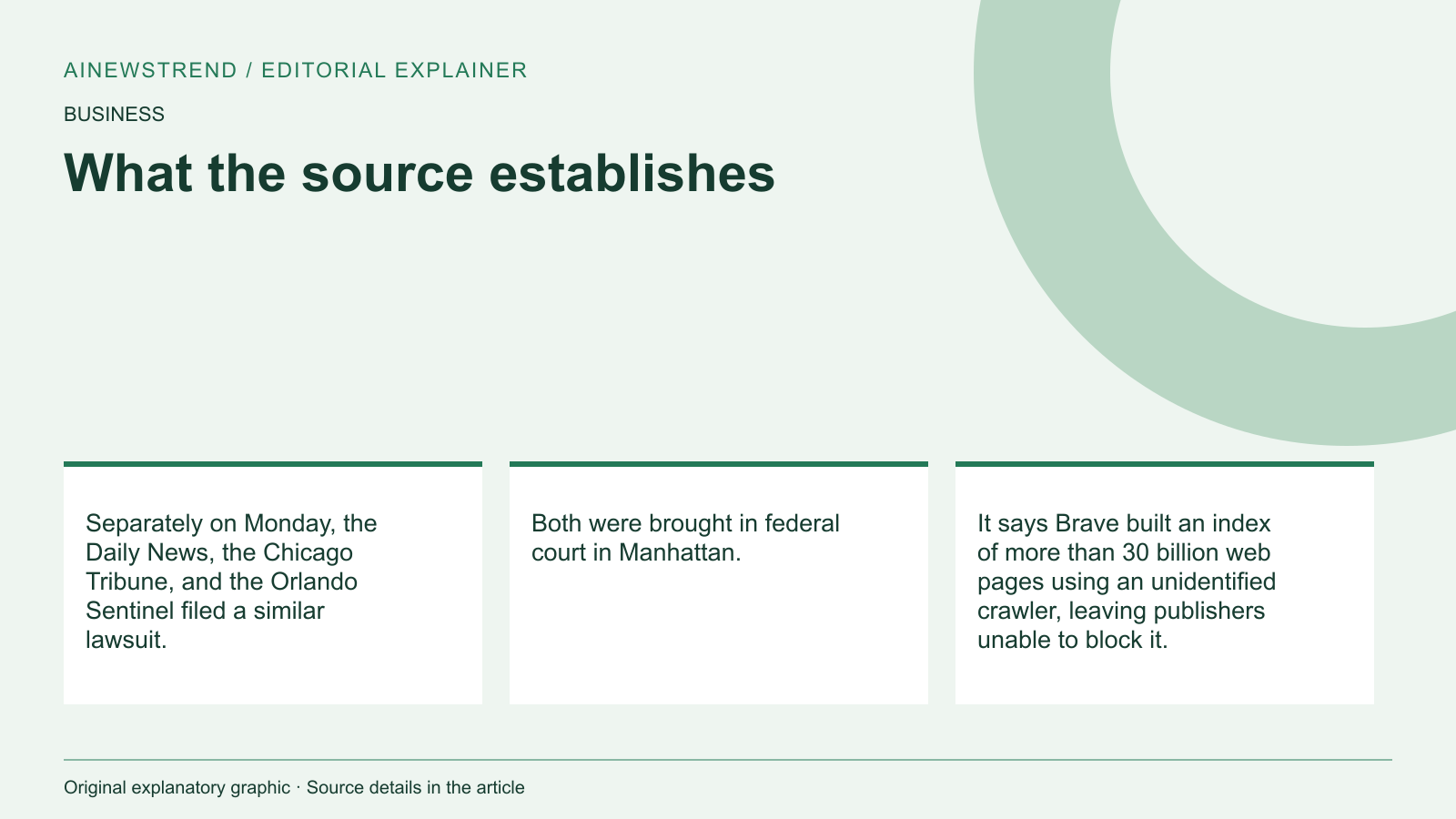
The New York Times and other media outlets have sued Brave, the privacy-focused web browser, over allegations that it scrapes copyrighted content and distributes it to AI companies. The lawsuit, filed in federal court in Manhattan, names Brave along with several other entities, including Anthropic, Perplexity, Mistral, xAI, and Cohere. The New York Times also previously sued OpenAI and Perplexity over similar claims.
What this means in practice
The lawsuit alleges that Brave built an index of more than 30 billion web pages using an unidentified crawler, making it difficult for publishers to block. The suit also targets Brave's browser feature that bypasses paywalls and its practice of blocking publishers' ads while selling its own. The New York Times likens Brave to a 'supplier, dealer, and distributor of stolen copyrighted content' for AI companies, describing it as acting like both a 'burglar' and an 'AI fence.' The Times is seeking an injunction and damages.
Limitations and availability
The supplied announcement does not specify the exact methods Brave used to scrape content or the extent of the alleged distribution. Brave did not immediately respond to a request for comment. The lawsuit highlights concerns about content scraping and the potential impact on publishers' ability to control their content distribution.