
What changed
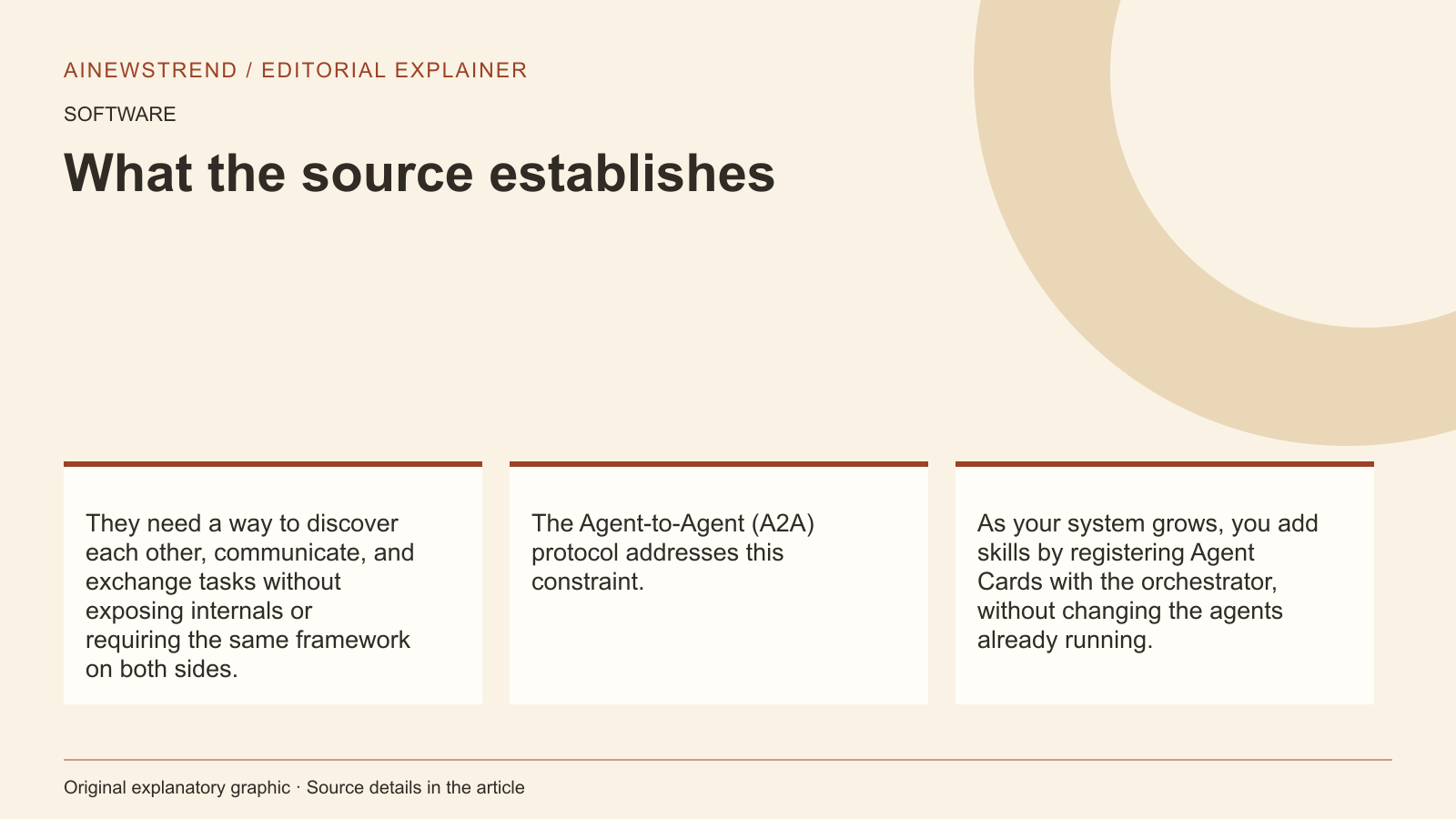
AWS has introduced the Agent-to-Agent (A2A) protocol to facilitate the creation of composable and interoperable multi-agent systems that span organizational boundaries. This protocol allows agents from different organizations to discover each other, communicate, and exchange tasks without exposing internal details or requiring the same framework on both sides. The A2A protocol is now a Linux Foundation project, with AWS among the supporting organizations.
What this means in practice
The A2A protocol enables independent software vendors (ISVs) to build agents that work with A2A-compatible frameworks their customers already use. This reduces the need for custom integration code for each customer and framework. The protocol uses existing authentication standards such as OAuth 2.0 and OpenID Connect (OIDC) for cross-boundary security. It is designed to work across A2A-compatible frameworks, allowing agents to discover each other, negotiate tasks, and collaborate across organizational boundaries through a standardized protocol.
Limitations and availability
The A2A protocol is currently available as a Linux Foundation project, with AWS supporting it. The protocol is implemented in a reference architecture on AWS, where a LangChain-based enterprise orchestrator communicates with a Strands Agents-based SaaS agent across organizational boundaries using A2A. The solution involves two AWS accounts, one for the enterprise and one for the SaaS provider, with each side using its own Amazon Cognito user pool for authentication. The protocol is designed to work with A2A-compatible frameworks and is intended for use in production environments where cross-boundary communication is required. The deployed solution uses Amazon Bedrock for foundation models and Amazon API Gateway for secure communication.