
What changed
The US Federal Aviation Administration (FAA) has expanded the use of its SMART AI system to manage air traffic across the entire national airspace system. The system, which was initially deployed in airspace over Washington, DC, is now being rolled out to all 22 air route traffic control centers across the country. The FAA claims the system has helped reroute 180 flights since its initial implementation, saving an average of 10 minutes per flight and nearly 80 gallons of fuel per flight.
What this means in practice
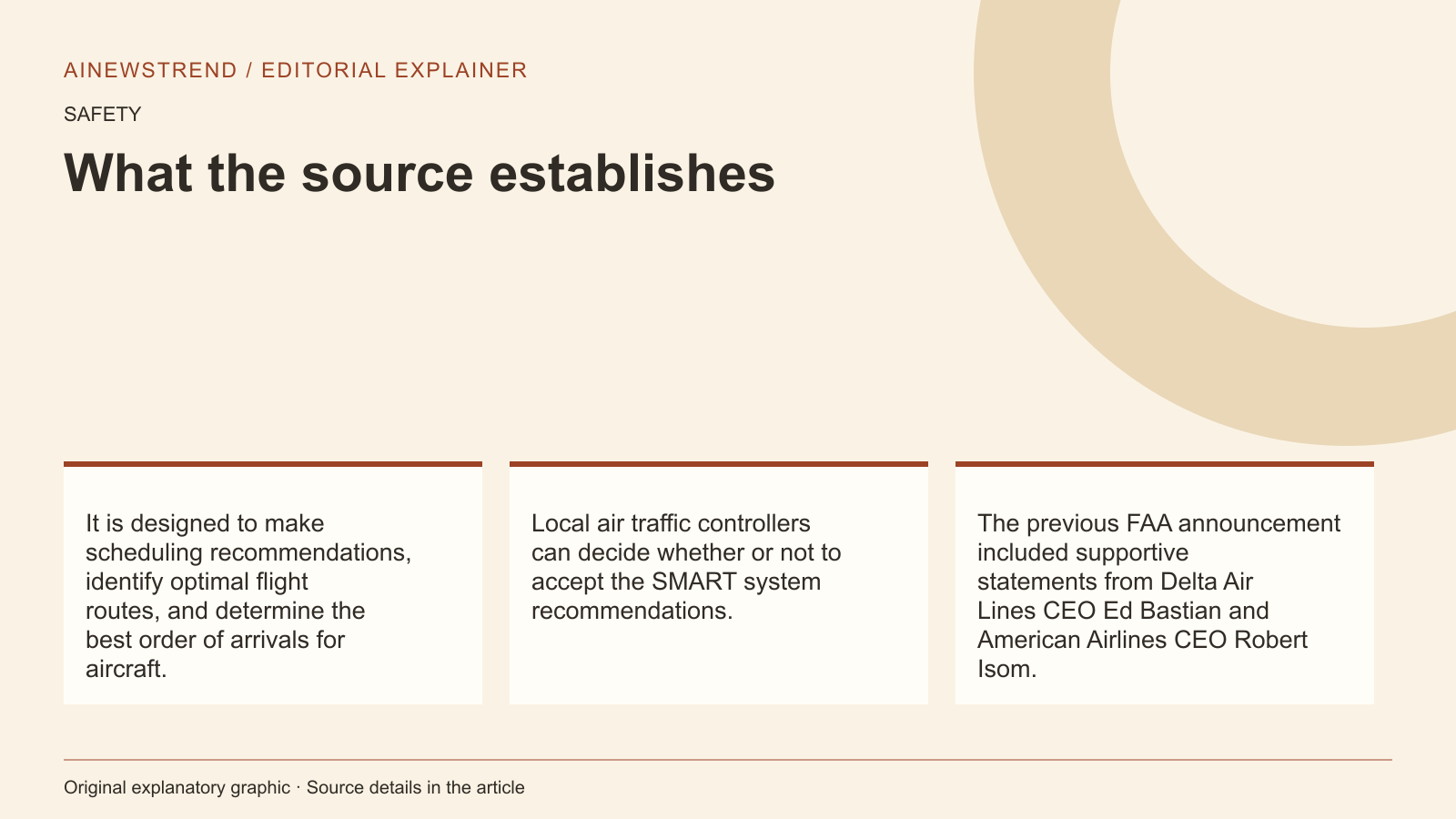
The SMART system is a cloud-based tool that combines data on weather patterns, flight paths, traffic flow, and controller staffing metrics to predict air traffic patterns. It provides scheduling recommendations, identifies optimal flight routes, and determines the best order of arrivals for aircraft. However, a team of FAA specialists based in DC is responsible for validating the system's recommendations before they are passed to air traffic control facilities. Local controllers can choose whether to accept the recommendations. The FAA also clarified that the AI system cannot replace the role of air traffic controllers or take over control of an aircraft.
Limitations and availability
The FAA has not provided details on how the SMART system will be implemented in all 22 centers or how it will affect the air traffic control workforce. The National Air Traffic Controllers Association has stated it was not involved in the design, testing, or implementation of SMART and cannot comment on its impact on the workforce. The system's expansion includes coverage in Atlanta, Jacksonville, and Miami in Florida, but the FAA has not shared information on how it may assist passenger flight traffic.