
What changed
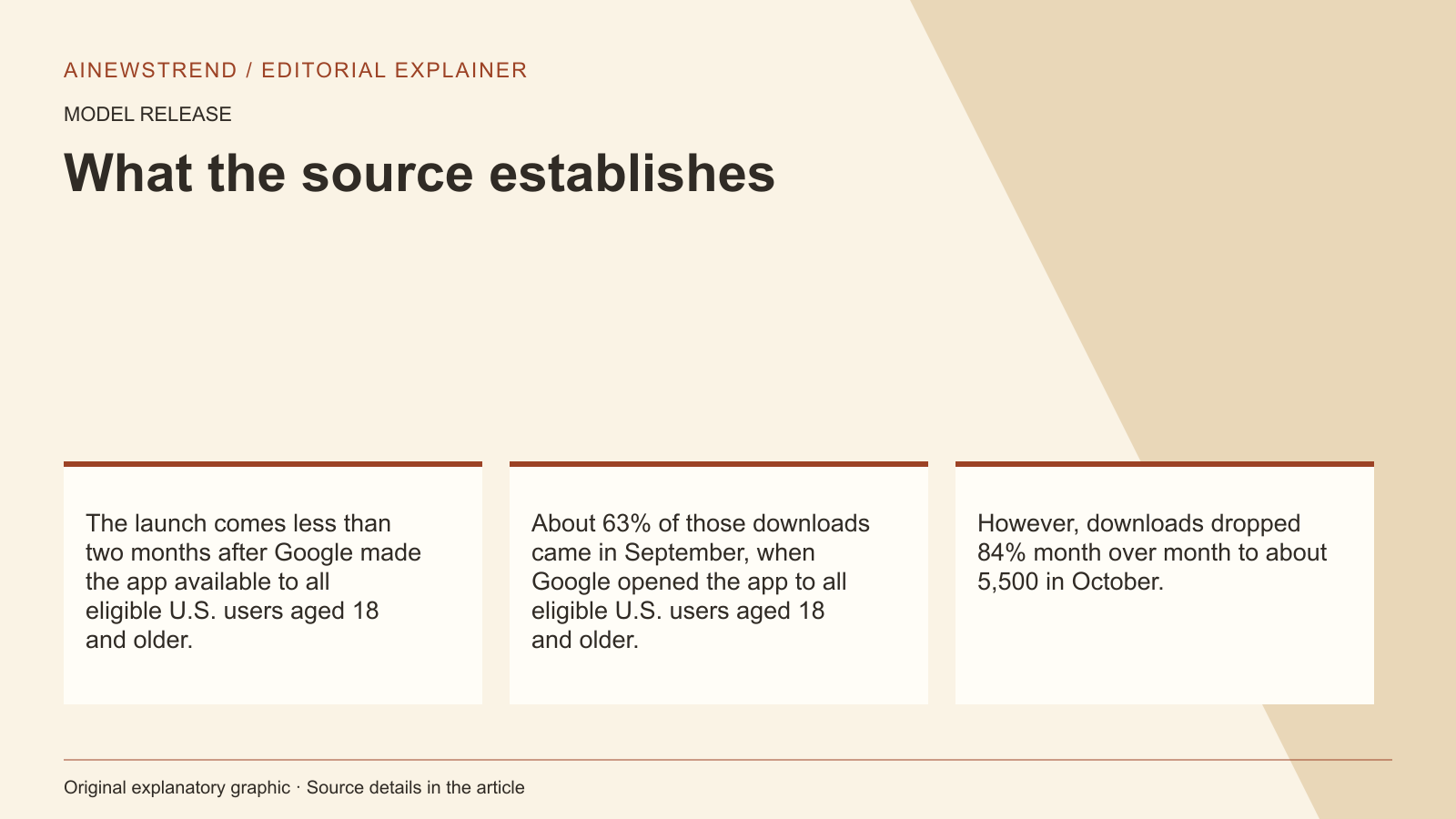
Google has launched its experimental AI app Dreambeans in India, its first international market outside the U.S. The app, available on Android and iOS, supports 13 local languages, including Hindi, Punjabi, Tamil, Telugu, and Bengali, alongside English. The expansion follows its June release in the U.S., where it has recorded nearly 55,000 downloads since its debut, with 63% of those coming in September when it was opened to all eligible U.S. users aged 18 and older.
What this means in practice
Dreambeans uses information from connected Google services, such as Calendar, Gemini, Gmail, Photos, Search, and YouTube, to generate personalized, illustrated stories about users’ interests and everyday lives without requiring a prompt. The app initially featured static illustrations but now includes animated images using Google’s Veo video-generation model in select stories. Users can choose only one language at a time for their stories, despite the app’s ability to draw on information across multiple languages. However, it cannot generate stories that mix languages, which may limit its appeal in India, where many users switch between languages, including Hindi and English.
Limitations and availability
Dreambeans depends on users’ Google accounts for personalization, raising privacy concerns. Users can select which services to connect to the app and can delete their data at any time. The app is available only to personal Gmail account holders, not enterprise users, and generated stories are visible only to the account holder. Additionally, Dreambeans may surface memories that users find upsetting, such as stories involving deceased individuals. Users can request the app to avoid certain subjects, similar to controls in Google Photos. Google is exploring ways to make Dreambeans more actionable, moving beyond personalized stories to help users act on the app’s suggestions.