
What changed
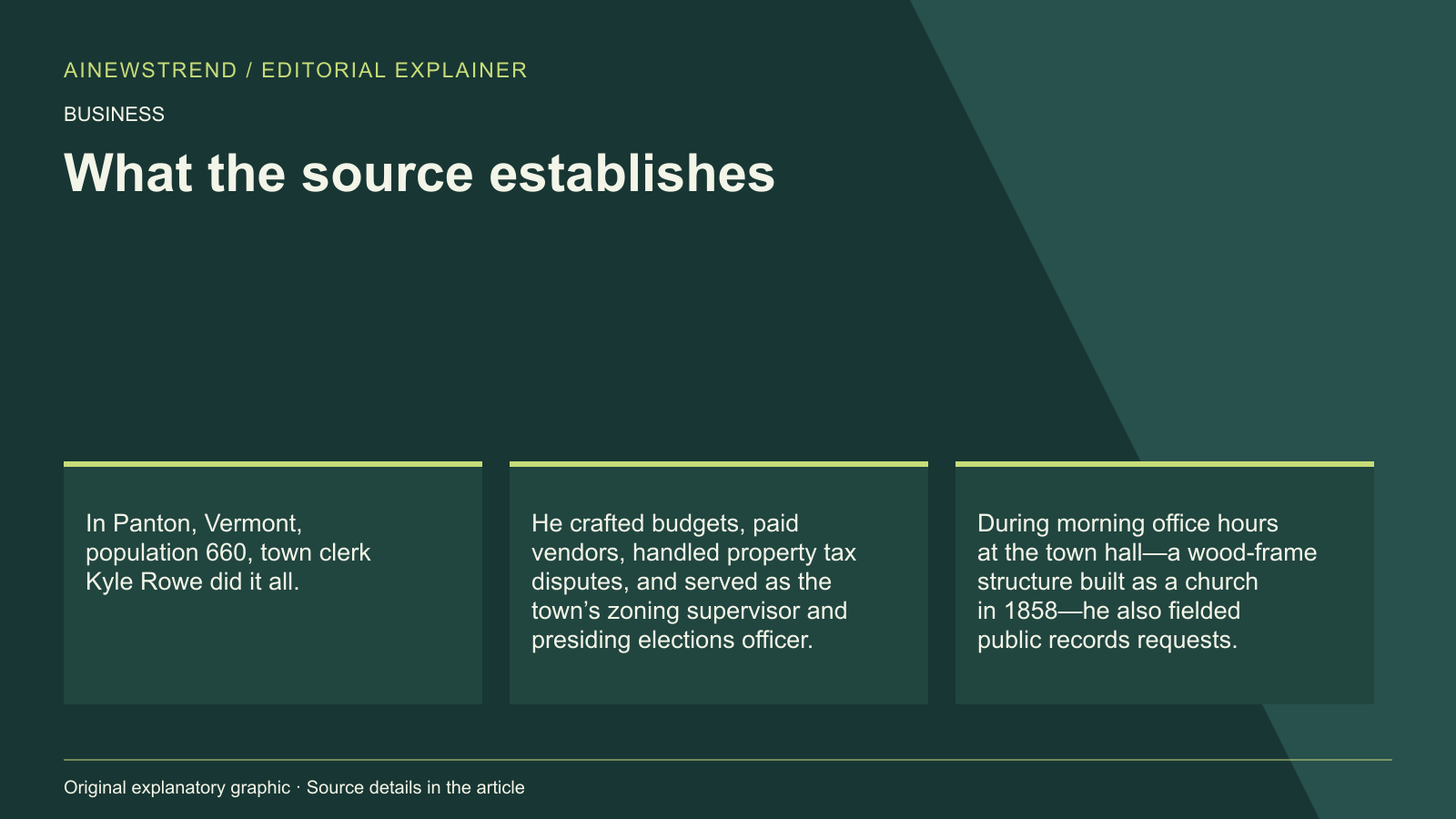
In Panton, Vermont, town clerk Kyle Rowe has seen a dramatic increase in public records requests from companies like SmartProcure, which now submit requests quarterly instead of annually. These requests have become more specific, such as asking for records related to emergency road flares, and occur monthly or more frequently. This trend is not unique to Panton; similar patterns are emerging across the U.S., with AI tools enabling both businesses and individuals to draft more detailed and frequent requests.
What this means in practice
The surge in requests is driven by AI-powered tools that help businesses and individuals generate more comprehensive and targeted public records inquiries. Companies like SmartProcure and newer startups such as Starbridge and Pursuit are leveraging AI to streamline data collection and analysis, creating sales signals for government vendors. These tools have made it easier for entities to access public data, but they have also placed a significant burden on local governments, which are struggling to keep up with the volume and complexity of requests. In some cases, handling these requests has become a full-time job for clerks and county attorneys.
Limitations and availability
The increase in requests has led to challenges in processing and responding to them, with some local governments reporting that FOIA requests now consume a significant portion of their staff time. While AI has made it easier to draft requests, it has also led to poorly structured inquiries that strain existing systems. Some states are responding by passing legislation to make it easier to deny requests, potentially reducing transparency. The use of AI in drafting requests is becoming more common, with estimates suggesting that at least 29% of requests to the U.S. Department of Education were partially written by AI in 2025. The supplied announcement does not specify the exact number of requests processed by AI or the impact on transparency.