
What changed
The latest report highlights a significant rise in ransomware attacks, with AI playing a growing role in enhancing the effectiveness of these cyber threats.
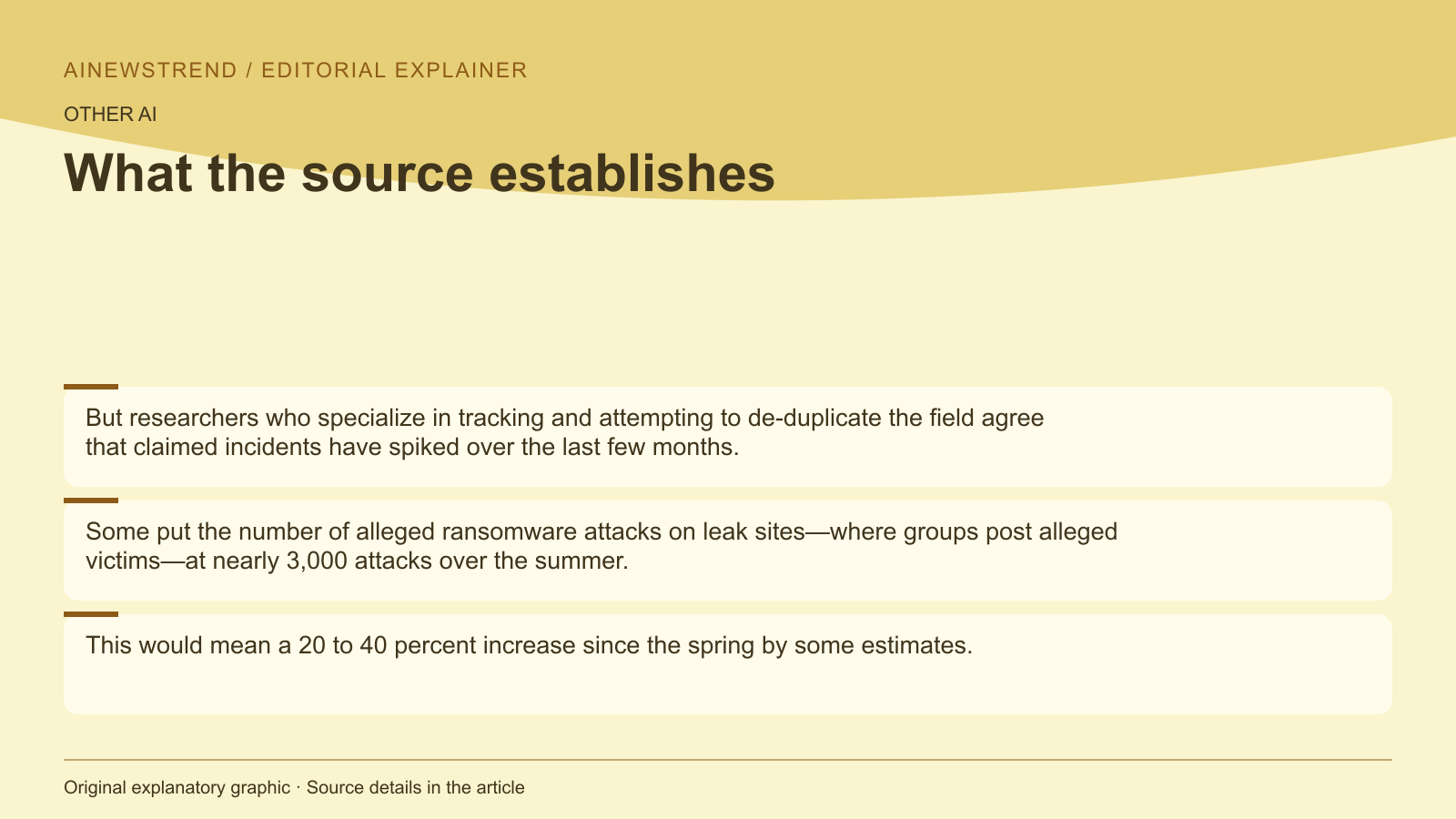
Researchers note that the number of alleged ransomware attacks has increased, with some estimates suggesting a 20 to 40 percent rise since the spring.
The surge is particularly notable in international operations, where AI-powered techniques are being used to create more convincing phishing emails and improve negotiation tactics.
What this means in practice
Cybercriminals are increasingly leveraging large language models (LLMs) for mundane aspects of their attacks, such as crafting phishing emails and managing negotiations.
While most successful ransomware groups remain human-operated, the integration of AI is enabling new actors to enter the field with greater capabilities.
For instance, a new group called Global Secret Group claimed attacks on 48 victims, with more than half listed on the same day. Another group, Storm, listed 71 victims in just 20 days.
These groups are often run by inexperienced individuals, such as a teenager who reportedly made over $800,000 in under two weeks.
Limitations and availability
The report emphasizes that while AI is fueling the growth of ransomware attacks, the success of these new actors remains uncertain.
Established groups typically use double extortion tactics, encrypting systems and exfiltrating data, while newer, independent groups may focus solely on data extortion to simplify operations.
The report also notes that the number of attacks involving encryption may decrease year over year, though the overall volume of ransomware attacks continues to rise.
The supplied announcement does not specify exact numbers of attacks or the exact role of AI in all cases.