
What changed
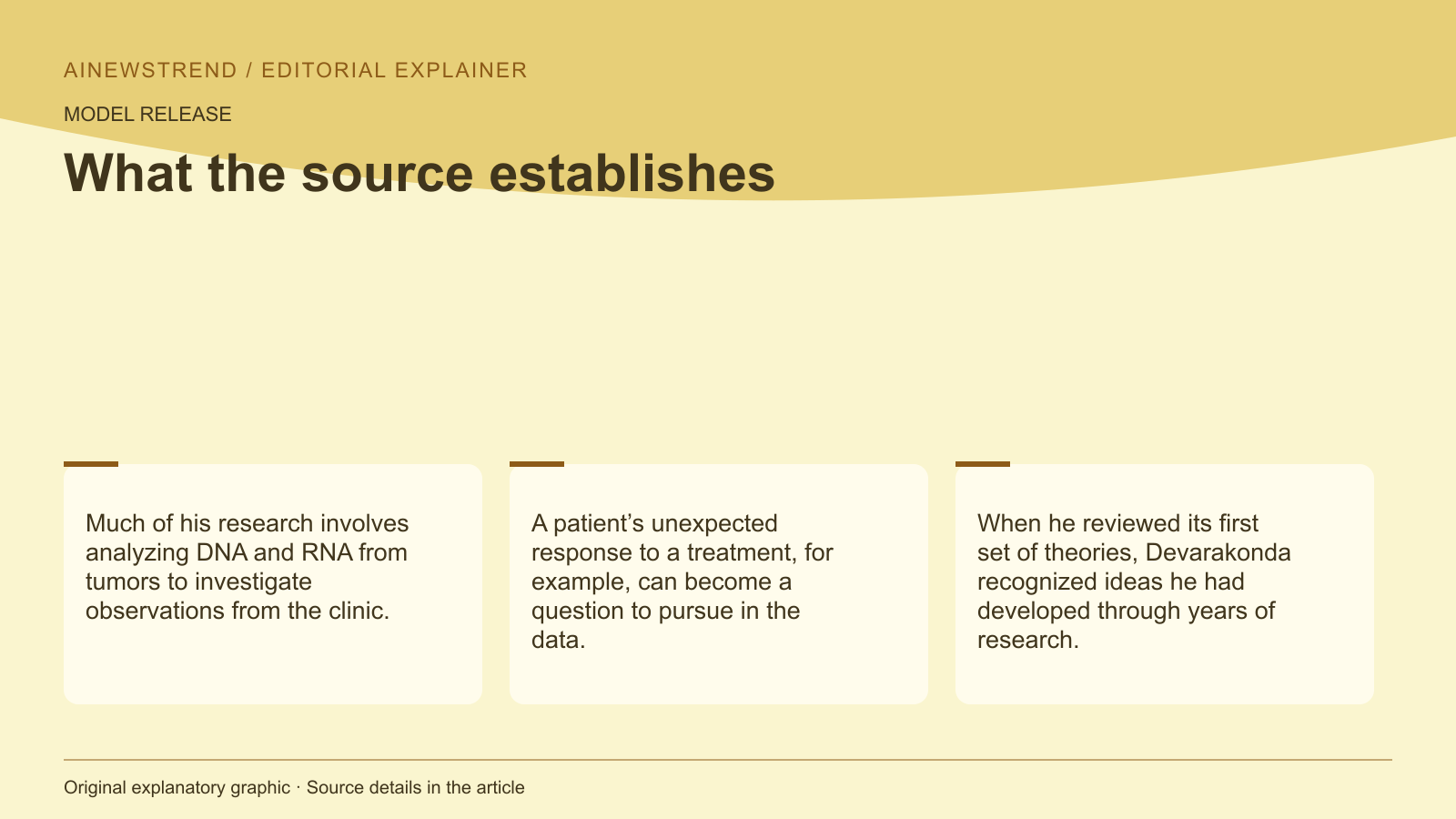
Dr. Sid Devarakonda, medical director of the thoracic oncology clinical and research program at Providence Swedish Cancer Institute, has collaborated with the Asta team to launch Theorizer, an AI agent that proposes explanations for scientific observations. Theorizer is now available in Asta, an AI platform for scientific research, and its code is open-sourced for researchers to examine and adapt.
What this means in practice
Theorizer links its proposed explanations to evidence from published studies and describes where they might apply. Researchers can inspect the cited studies to assess the support for a theory and whether the studies examined comparable conditions. The tool also flags claims it considers new, but a search can miss earlier work and the model can misjudge originality; researchers still need to check a claim against the wider literature.
Through Asta’s web interface, token costs are covered up to a limit; those who prefer to work on their own machines can run the open library and pay for tokens as needed.
Theorizer helps researchers turn broad questions into specific hypotheses they can investigate in molecular data.
For example, Devarakonda used Theorizer to investigate "driver-negative" lung adenocarcinoma, the most common subtype of lung cancer, and formulated three hypotheses about how these tumors could grow without a recognized driver.
Limitations and availability
Theorizer is now available in Asta, an AI platform for scientific research. The tool is open-sourced, allowing researchers to examine how it generates theories and adapt the methods to their own work. However, the supplied announcement does not specify the exact version of Theorizer or the conditions under which it was tested. Researchers are encouraged to verify claims against the wider literature and use the tool as a supplementary resource rather than a standalone solution.