
What changed
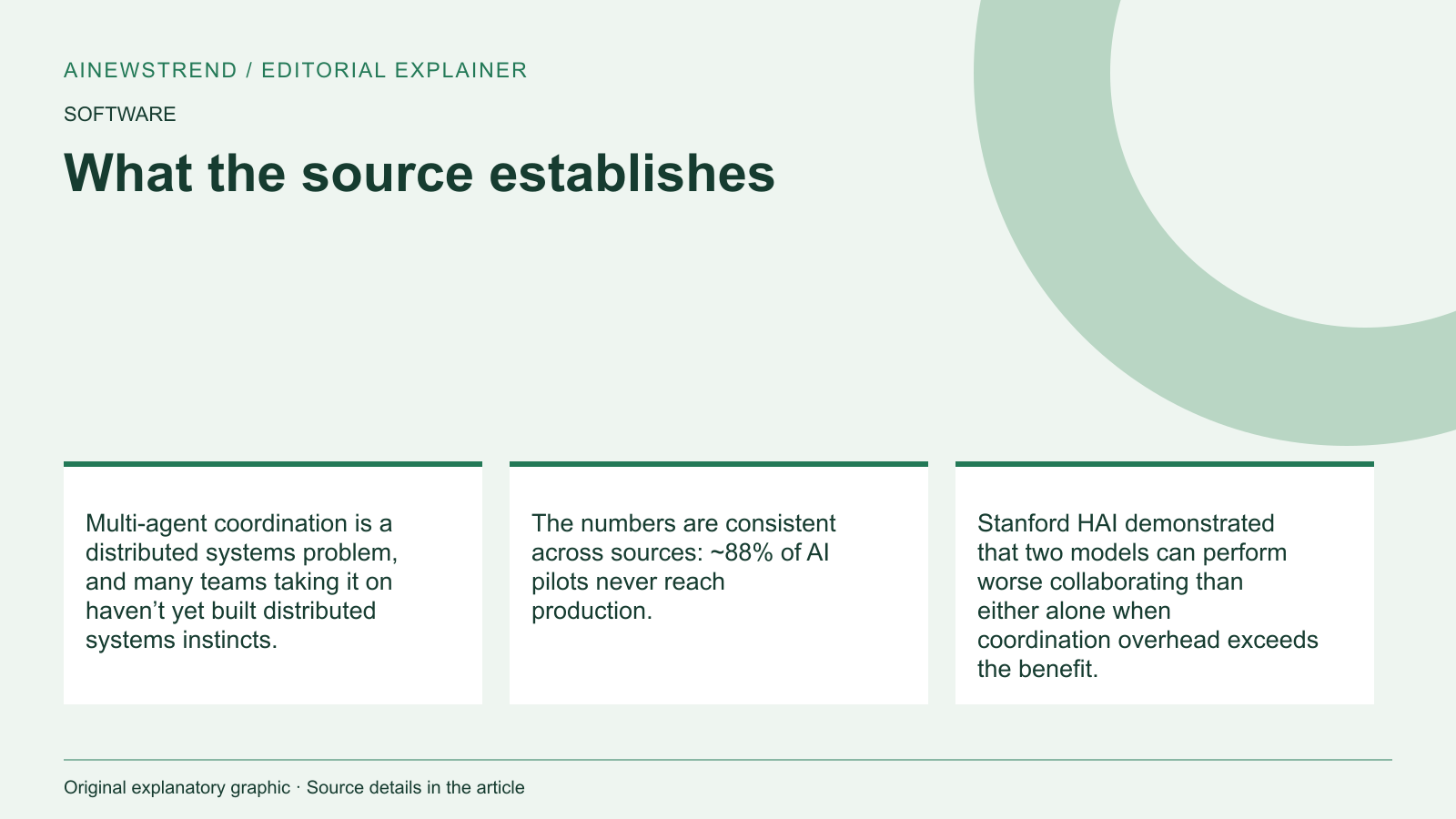
AWS published a blog post detailing a taxonomy of multi-agent design patterns, anti-patterns, and lessons learned from manufacturing applications. The post emphasizes that many AI pilots fail to reach production due to poor coordination and complexity management.
What this means in practice
The blog explains that multi-agent coordination is a distributed systems challenge, and teams often add complexity without sufficient understanding. It outlines two tiers of coordination patterns: Tier 1, which involves deterministic control flow, and Tier 2, where control flow is determined at runtime by the AI model.
Tier 1 includes sequential pipelines, conditional workflows, conditional routers, and parallel workflows. These patterns are suitable for tasks with predictable execution timing and ordered processing, such as document processing and ETL chains. Tier 2 includes plan-based orchestration, handoff patterns, and conversation-driven patterns, which offer more flexibility but at a higher cost in terms of tokens, latency, and debugging.
Limitations and availability
The blog does not specify exact hardware requirements or licensing conditions for the described patterns. It also does not mention download or API availability for the discussed coordination methods. The practical default is to start with Tier 1 patterns and move to Tier 2 only when subtasks emerge during the work. The blog provides diagrams and examples to illustrate these patterns but does not include performance benchmarks or independent testing results.