What changed
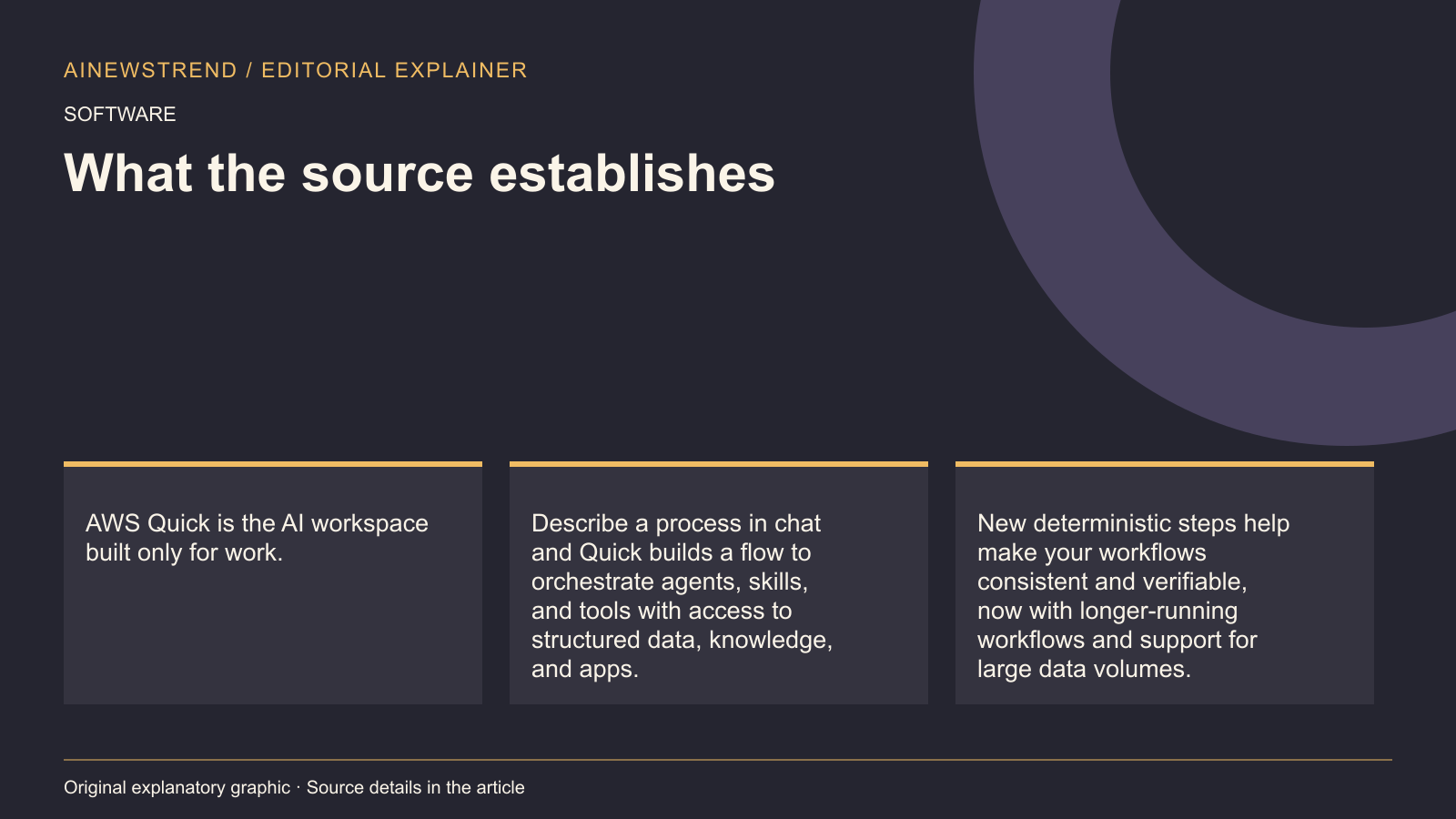
AWS has released updates to its Quick service, introducing more capable workflows, an updated web experience, and multi-agent orchestration capabilities. These updates aim to help teams automate and standardize business processes through conversation-driven workflows. The new deterministic steps allow for consistent and verifiable workflows, with support for longer-running processes and larger data volumes. The updated web app now provides a daily briefing, prioritizes urgent tasks, and maintains work progress even when users close the tab. Additionally, the service now supports integration with Meta ads and Amplitude, enabling users to combine data from multiple sources.
What this means in practice
The new multi-agent orchestration feature allows several specialized agents to work on a request simultaneously, with Quick combining their findings into a single response. This enables users to complete complex tasks through a single prompt, improving efficiency. The updated web app puts urgent tasks and daily briefings on the home screen, and users can continue workflows after closing the browser. The service also supports multiple languages, including Japanese, German, Chinese (Simplified and Traditional), and Vietnamese. Users can now build, run, and refine workflows entirely in chat, with a diagram showing each step for verification. The example provided illustrates how a finance team can automate monthly reports, ensuring consistency and reducing manual effort.
Limitations and availability
The supplied announcement does not specify exact hardware requirements or licensing conditions for the new features. The updates are available through the Quick web app, desktop app, and mobile app, with existing dashboards and spaces continuing to function as before. The new features are part of the AWS Quick service, which is designed for business workflows and is available to users who have access to AWS services. The availability of the multi-agent orchestration and data integration tools is not explicitly stated in the source snapshot.