
What changed
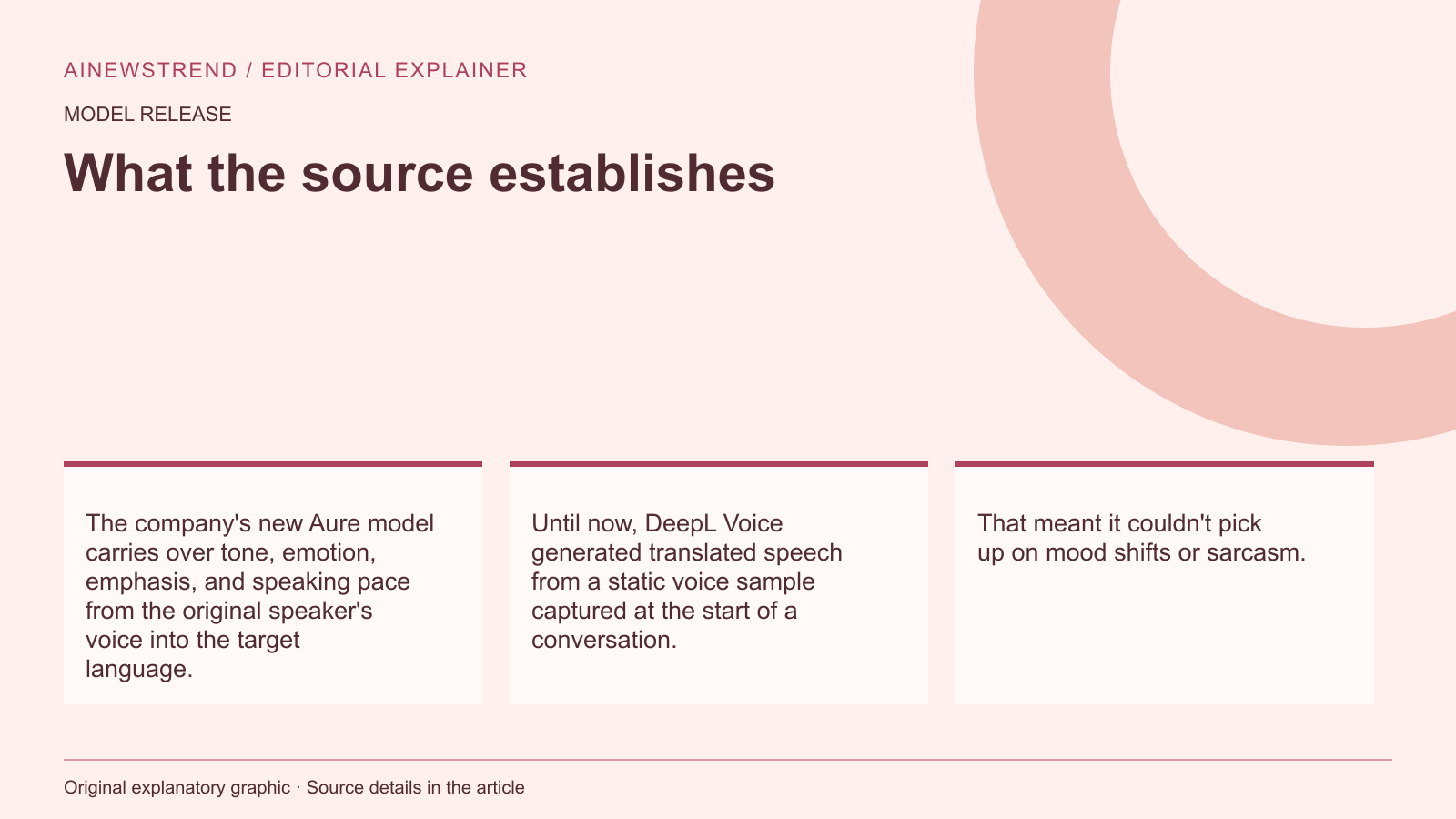
DeepL has introduced its new Aure model for DeepL Voice, which enables real-time translations to capture tone, emotion, emphasis, and speaking pace from the original speaker's voice into the target language. Previously, DeepL Voice generated translated speech from a static voice sample, which limited its ability to adapt to mood shifts or sarcasm. Aure continuously analyzes both the translated text and the original audio during a conversation, allowing for more natural-sounding translations.
What this means in practice
The Aure model works automatically in DeepL Voice for Online Meetings, In-Person Conversations, and the DeepL API. It separates voice identity, speech melody, and content during training, enabling each component to be transferred into the new language independently. Reinforcement learning is used to keep accents out of the output. At launch, the model supports English, German, Spanish, French, Italian, Japanese, Portuguese, and Korean. This update aims to improve the realism and accuracy of real-time translations by incorporating emotional and tonal nuances.
Limitations and availability
The supplied announcement does not specify the exact hardware requirements or licensing conditions for the Aure model. DeepL first rolled out voice preservation in September, and the company has been restructuring around AI-powered teams as part of its transition to an 'AI-native' company. The Aure model is available for use in DeepL Voice for the specified applications, but the exact release status and availability details are not provided in the snapshot.