
What changed
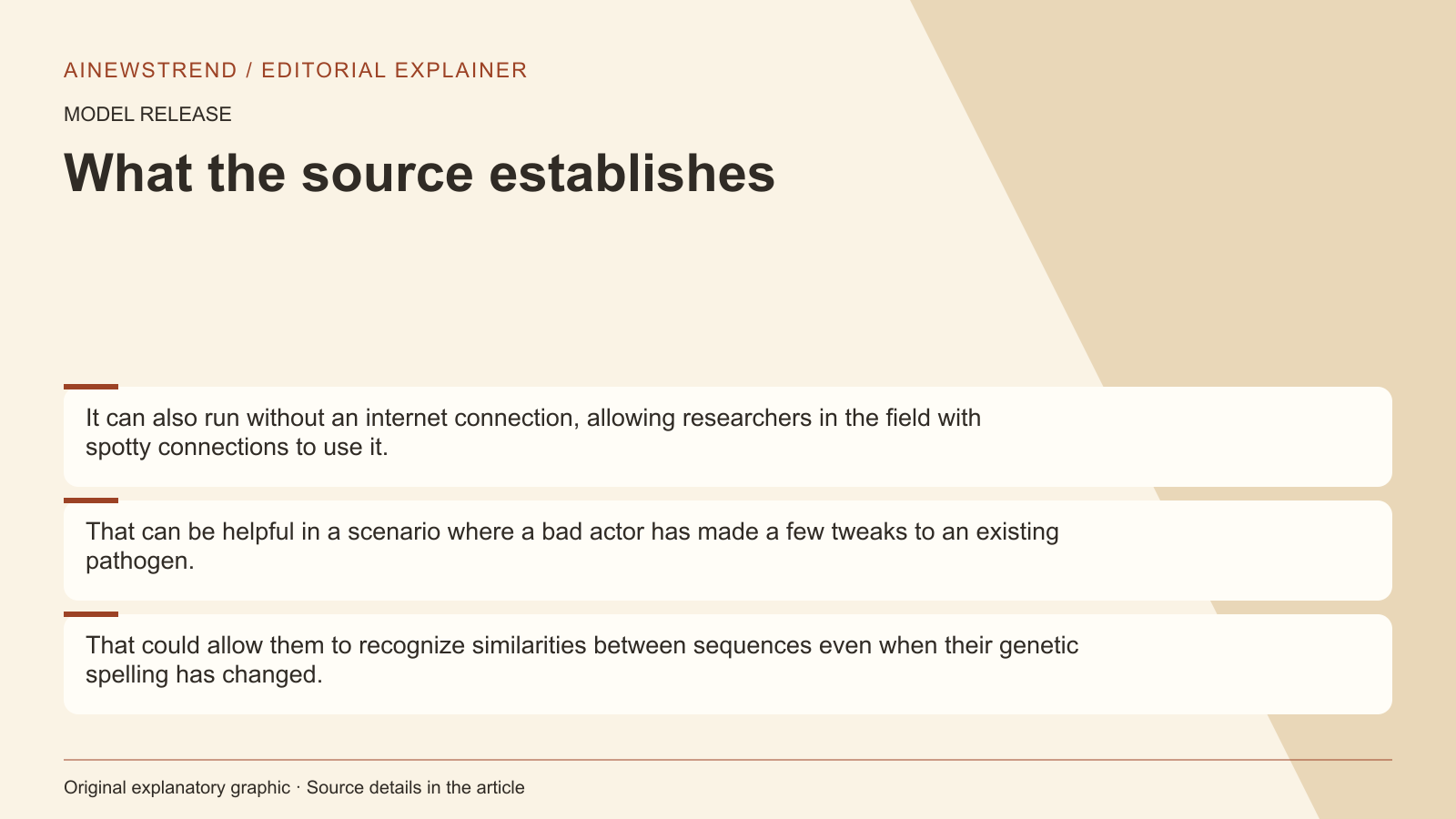
On Wednesday, Radical Numerics announced the release of Omnii Defense, a new edge model designed to flag natural and AI-engineered pathogens. The tool uses a laptop and a USB gene sequencer to analyze genetic sequences and can operate without an internet connection, making it suitable for researchers in areas with spotty connectivity. The model assigns a 'threat score' between zero and one, combining the likelihood of unnaturalness with functional predictions.
What this means in practice
Omnii Defense makes multiple predictions about a sequence, including the odds of it being pathogenic or AI-generated and what taxonomic group it most closely resembles. The model's ability to learn patterns in sequences associated with biological function, rather than relying on exact sequence matches, allows it to recognize similarities between sequences even when their genetic spelling has changed. In an experiment, the company removed the Bundibugyo virus from the training data, and the model still detected a significant percentage of the sequences as pathogenic, even when the entire genus was excluded.
Limitations and availability
Access to Omnii Defense is currently limited to vetted external testers. Radical Numerics is working with national laboratories, government agencies, and other independent evaluators to assess the model's performance. The company notes that detecting a signal is still a big leap from determining whether a pathogen has real consequence or whether a threat was engineered.