
What changed
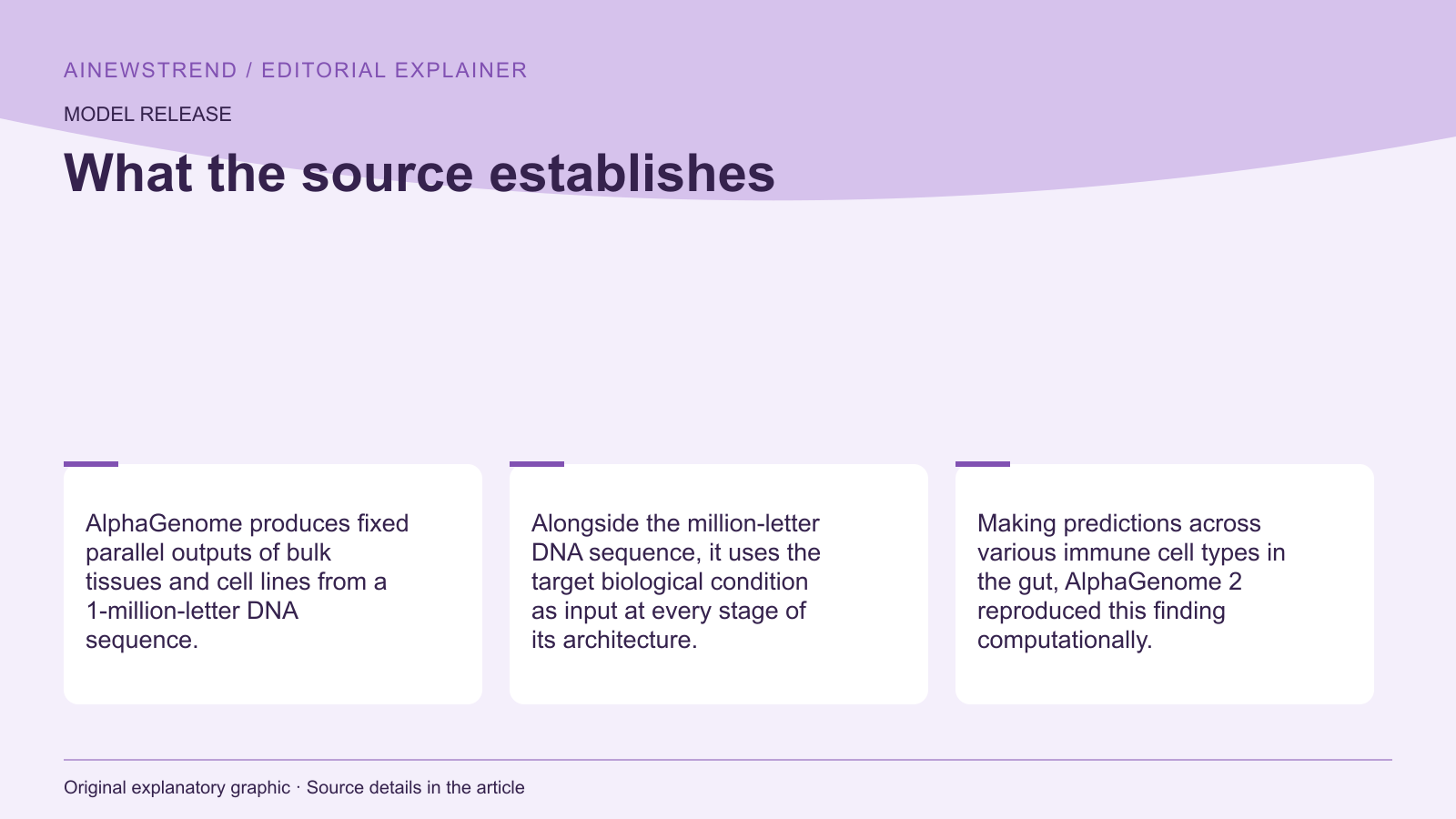
DeepMind announced AlphaGenome 2, a next-generation DNA sequence model that predicts how genetic variants impact specific human cell types. The model improves upon its predecessor by focusing on individual cell types and states rather than broad tissue averages, offering better predictive performance for variant effects.
What this means in practice
AlphaGenome 2 allows researchers to predict how DNA variations affect gene expression in disease-relevant cells that might be missed by broader models. It can also predict effects for cell and disease states not previously seen, enhancing the ability to identify crucial DNA variants that act only in specific cell types. The model is available for non-commercial research via the AlphaGenome API and in private preview for commercial research.
Limitations and availability
AlphaGenome 2 is trained on over 107 million individual cell profiles across 68 tissues and can resolve activity inside specialized cells, such as distinct heart muscle or blood immune cells. It predicts core experimental readouts like gene expression, histone modifications, and chromatin accessibility, as well as DNA methylation. The model adapts directly to new single-cell data without retraining, enabling predictions for newly profiled cell states from even a small sample of cells. The model is not yet generally available for commercial use beyond private preview.