
What changed
Google Cloud has been named a Leader in the 2026 Gartner Magic Quadrant for AI Application Development Platforms, maintaining its top position on the Ability to Execute axis. The announcement highlights the company's continued focus on providing enterprise-ready AI solutions that meet the needs of large-scale organizations.
What this means in practice
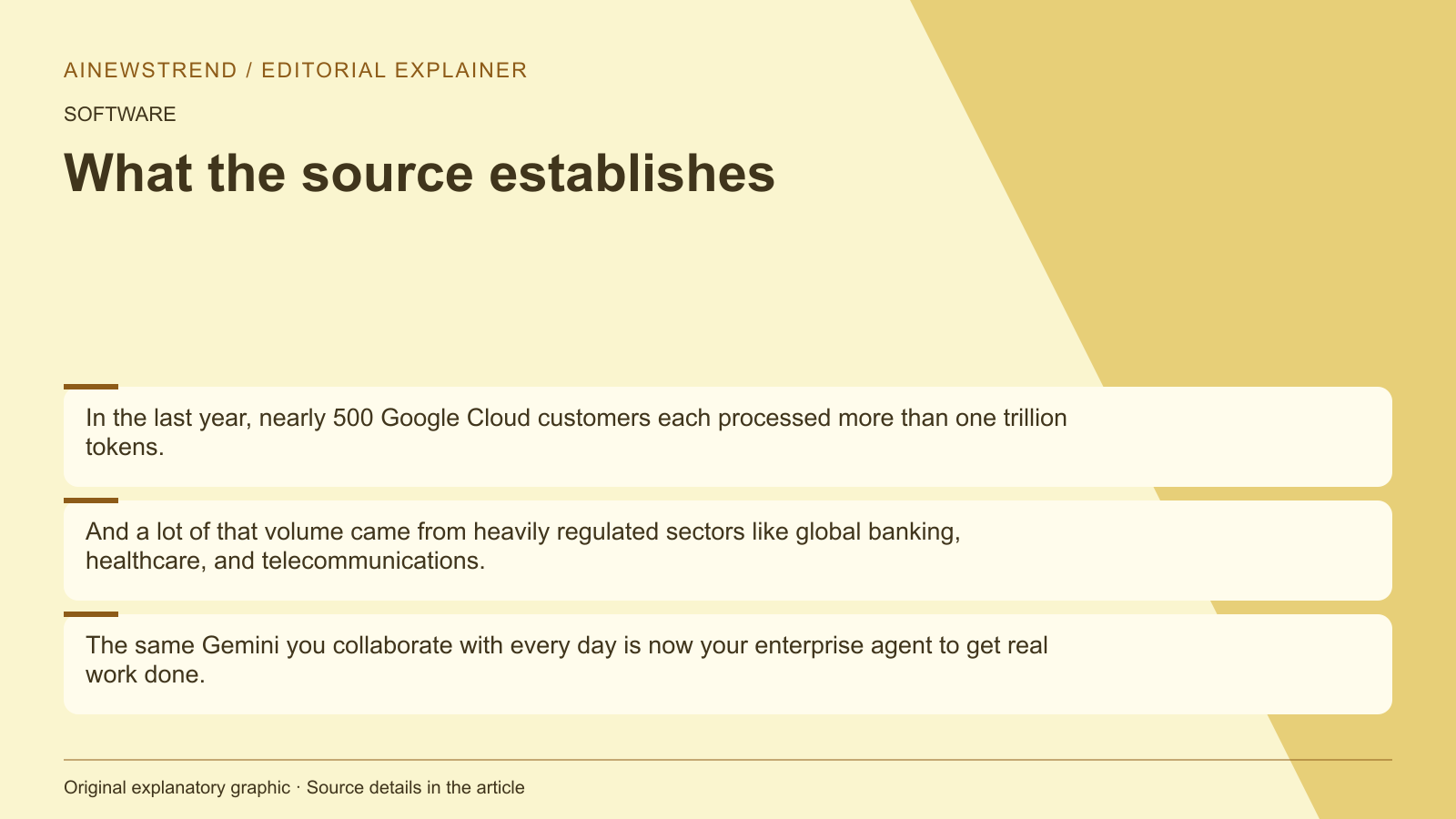
Google Cloud customers are leveraging AI to handle day-to-day operations, ensuring compliance and delivering measurable returns on investment. Over the past year, nearly 500 customers processed more than one trillion tokens, with significant usage in regulated sectors like banking, healthcare, and telecommunications.
The unified Gemini experience allows users to deploy enterprise agents across various platforms, including Google Workspace, Microsoft 365, and internal chats. This enables non-technical teams to create custom agents using natural language, as demonstrated by Dojo, which built over 600 agents in two months.
Google Cloud now offers access to leading frontier models from Google, Anthropic, and OpenAI on a single platform, providing over 200 models through its model garden. This allows organizations to optimize for speed, precision, and cost across different tasks.
Limitations and availability
The announcement does not specify exact model sizes or active parameters. The availability of models and the unified Gemini experience is through Google Cloud's platform, with access to enterprise systems like BigQuery, Cloud Storage, SAP, Salesforce, S3, and Azure. The model garden provides a single invoice for cloud commitments, eliminating the need for separate contracts.
The supplied announcement does not specify the exact cost structure or pricing details for the unified platform. However, Google Cloud emphasizes cost optimization through co-designed TPU silicon, cluster networking, and foundation models, along with FinOps controls such as monthly spend caps and anomaly detection.