
What changed
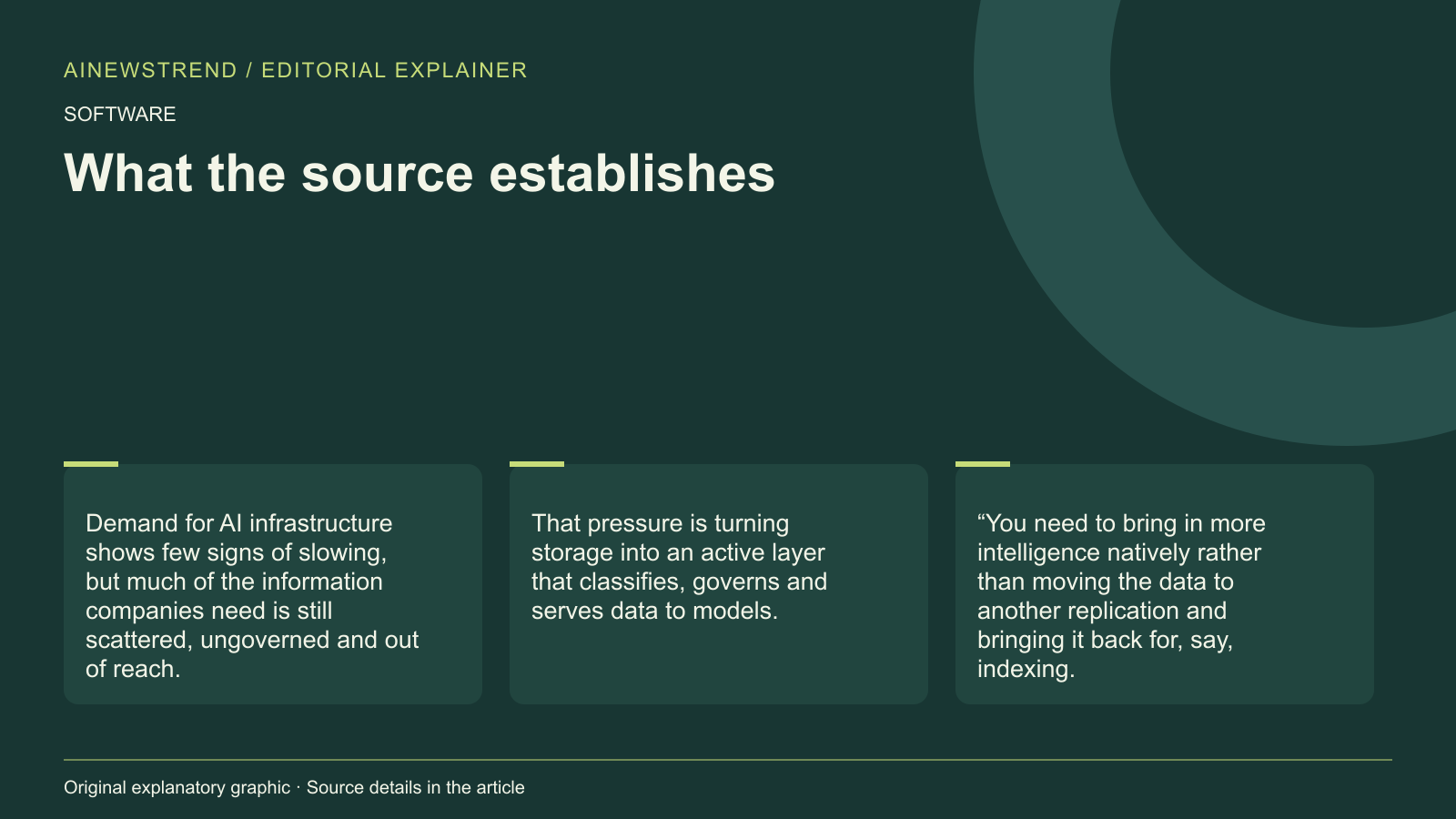
Hitachi Vantara has expanded its VSP One platform with new object storage and data lakehouse capabilities, integrating intelligence into storage to manage data for AI workloads. The company is leveraging Apache Iceberg to store and query metadata from unstructured data sources like CT scans, enabling direct analytics without separate ETL processes.
What this means in practice
The updated storage solutions allow data scientists to flag files containing sensitive information, such as Social Security numbers, and prevent their use in specific models or replication to other countries. This intelligence is embedded within the storage system itself, improving data governance and accessibility. By using Apache Iceberg, organizations can store and query metadata directly from object stores, reducing the need for additional data processing steps.
Limitations and availability
The enhancements are part of Hitachi Vantara's broader efforts to address the AI pilot-to-production gap, focusing on outcomes rather than specific technologies. The company is building industry-specific solutions using its Hitachi iQ stack and related business expertise. While the new features are available through the VSP One platform, the exact availability and deployment timelines for these capabilities are not specified in the announcement.