
What changed
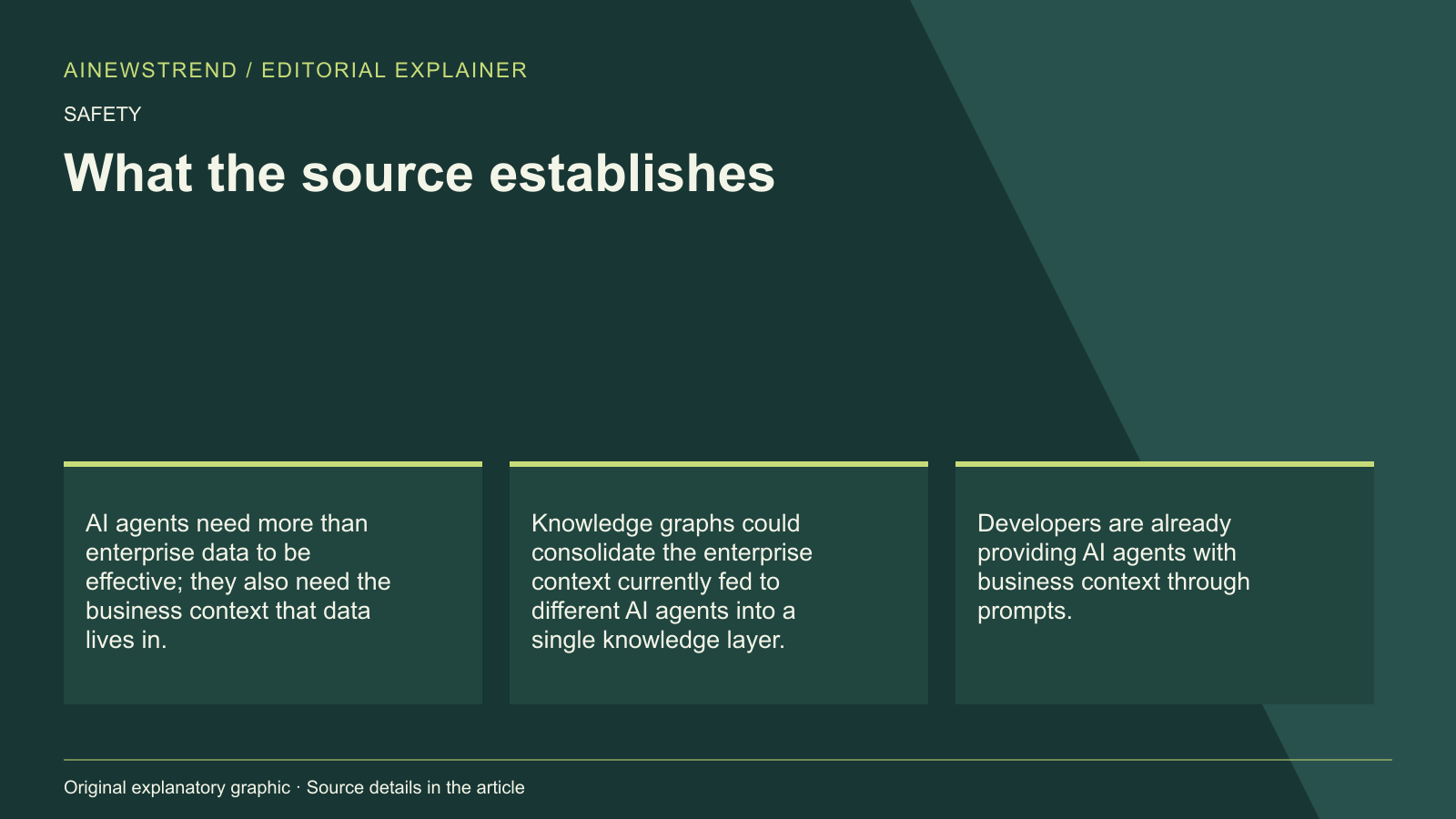
At GraphSummit 2026, industry experts highlighted how knowledge graphs can provide AI agents with consistent, explainable context by consolidating enterprise data into a single source of truth. Jesús Barrasa, field chief technology officer of gen AI at Neo4j Inc., emphasized that this approach improves consistency and explainability for AI agents.
What this means in practice
Developers currently provide AI agents with business context through prompts, but without a centralized knowledge layer, they must repeat this work for each new agent. Knowledge graphs allow agents to draw from a shared knowledge layer, reducing redundancy and improving accuracy. For example, Blitzy Inc. uses knowledge graphs to map dependencies and risks in large-scale system changes, enabling safer AI agent operations. Raymond James Financial Inc. leverages knowledge graphs to verify AI accuracy by comparing outputs against trusted data sources, ensuring 100% accuracy before deployment.
Limitations and availability
The supplied announcement does not specify the exact implementation details or availability timelines for these knowledge graph solutions. While companies like Collibra BV, Blitzy Inc., and Raymond James Financial Inc. are exploring or implementing these approaches, the details on how they will be integrated into existing systems remain unclear. Additionally, the effectiveness of these solutions depends on the quality and structure of the enterprise data being used.