
What changed
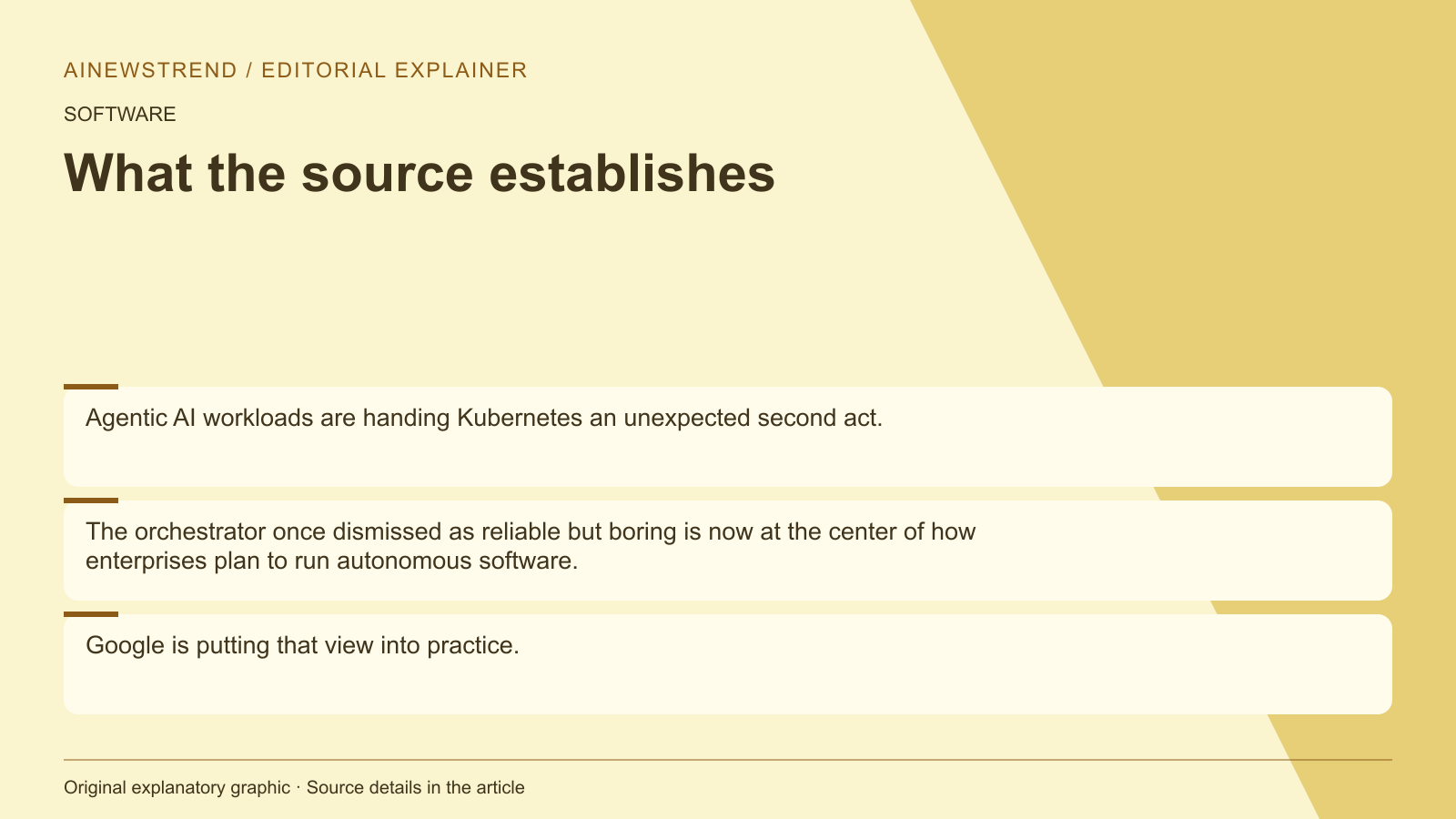
Kubernetes, once seen as a reliable but unexciting orchestrator, is now central to how enterprises plan to run autonomous software. This shift is driven by the rise of agentic AI workloads, which spend significant time idle while waiting for human input. Google Cloud’s Bobby Allen highlighted that Kubernetes can now reclaim these idle resources, offering a new use case for the platform.
What this means in practice
The change allows companies to optimize resource usage without needing to rebuild their entire infrastructure. Allen explained that Kubernetes is being tuned specifically for agents rather than replacing the existing stack. Google is also contributing open-source projects like Agent Substrate, gVisor, and OpenRL to the Cloud Native Computing Foundation to support this shift. These efforts aim to create an open, flexible, and collaborative environment for running agentic workloads efficiently.
Limitations and availability
The supplied announcement does not specify exact performance benchmarks or licensing terms for the new Kubernetes features. It also does not mention specific hardware requirements or the exact scope of resource recovery. The focus is on the strategic shift toward using Kubernetes for agentic AI workloads, with Google emphasizing collaboration and open-source contributions. The availability of these features is tied to ongoing development and integration efforts within the Kubernetes ecosystem.