
What changed
Phison detailed two new enterprise SSD designs at Supercomputer 2026 (SC26). The first design includes a built-in NPU and 64GB of memory with a bandwidth of 130 GB/s, supporting frameworks like PyTorch, vLLM, OpenVINO, and llama.cpp directly on the drive. The second design merges fast pSLC cache with large QLC capacity under a single controller, aiming to reduce system complexity by eliminating dedicated cache drives.
What this means in practice
The computational-storage design allows servers to offload AI processing to the SSD, where data resides, reducing data transfer and freeing up host CPU resources. Phison claims this could result in 10 to 100 times less data transferred for applicable workloads. The pSLC-QLC design, by placing cache inside each drive, enables every drive bay to contribute usable capacity, simplifying infrastructure.
Limitations and availability
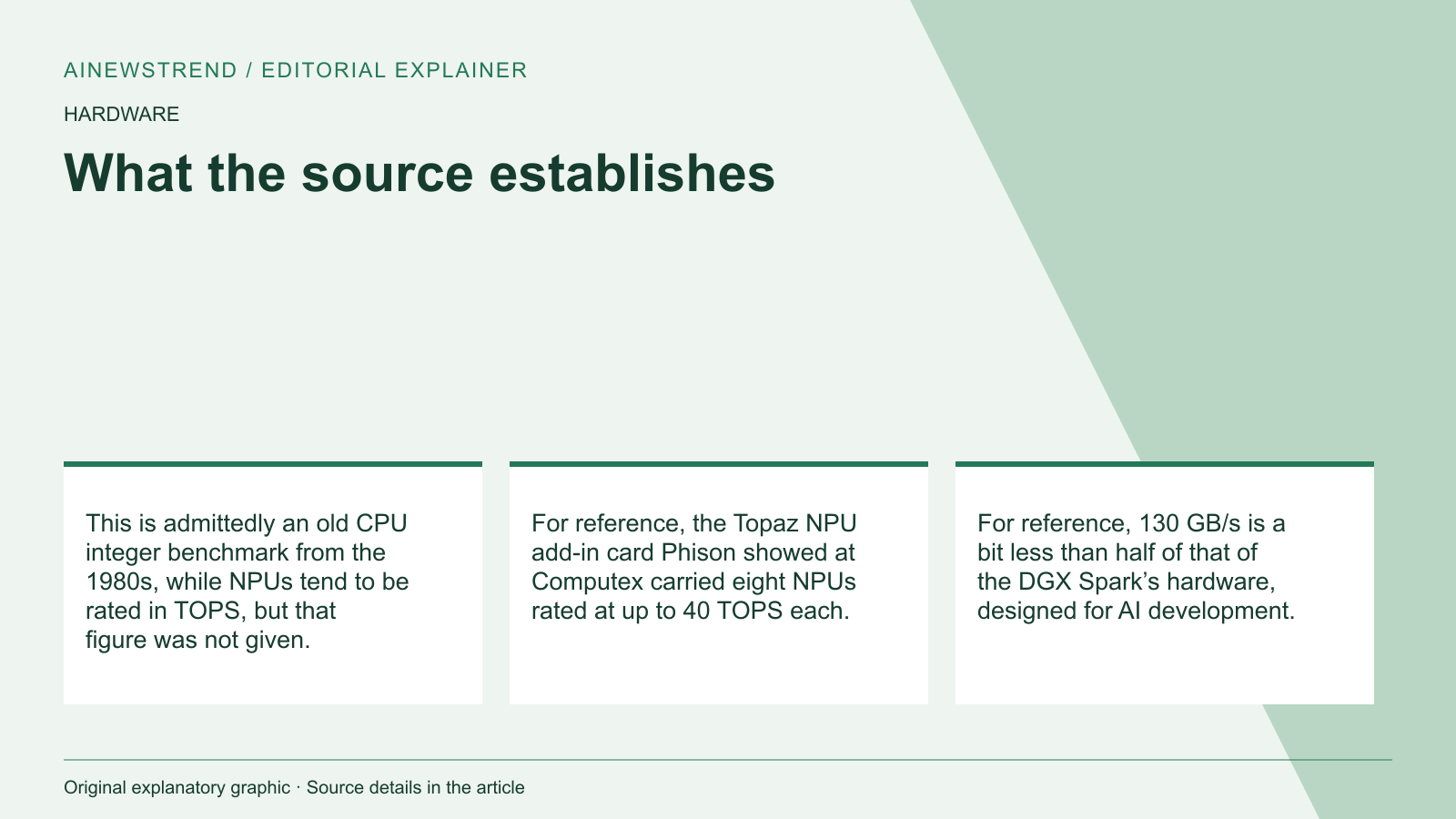
Phison notes that "many of the products and features mentioned are still in development" and will arrive once finalized. The integrated NPU is expected to deliver 36,800 DMIPS, though this is an older CPU benchmark, and the company does not specify the NPU's TOPS rating. The memory and bandwidth are more relevant for AI workloads, with LPDDR5X being a likely option. Developers can build on the drive without specialized programming tools, but details on how the host accesses the drive's compute remain undisclosed. The Mixed Media solution uses standard NVMe interfaces and fits into existing infrastructure without requiring specialized host software.