
What changed
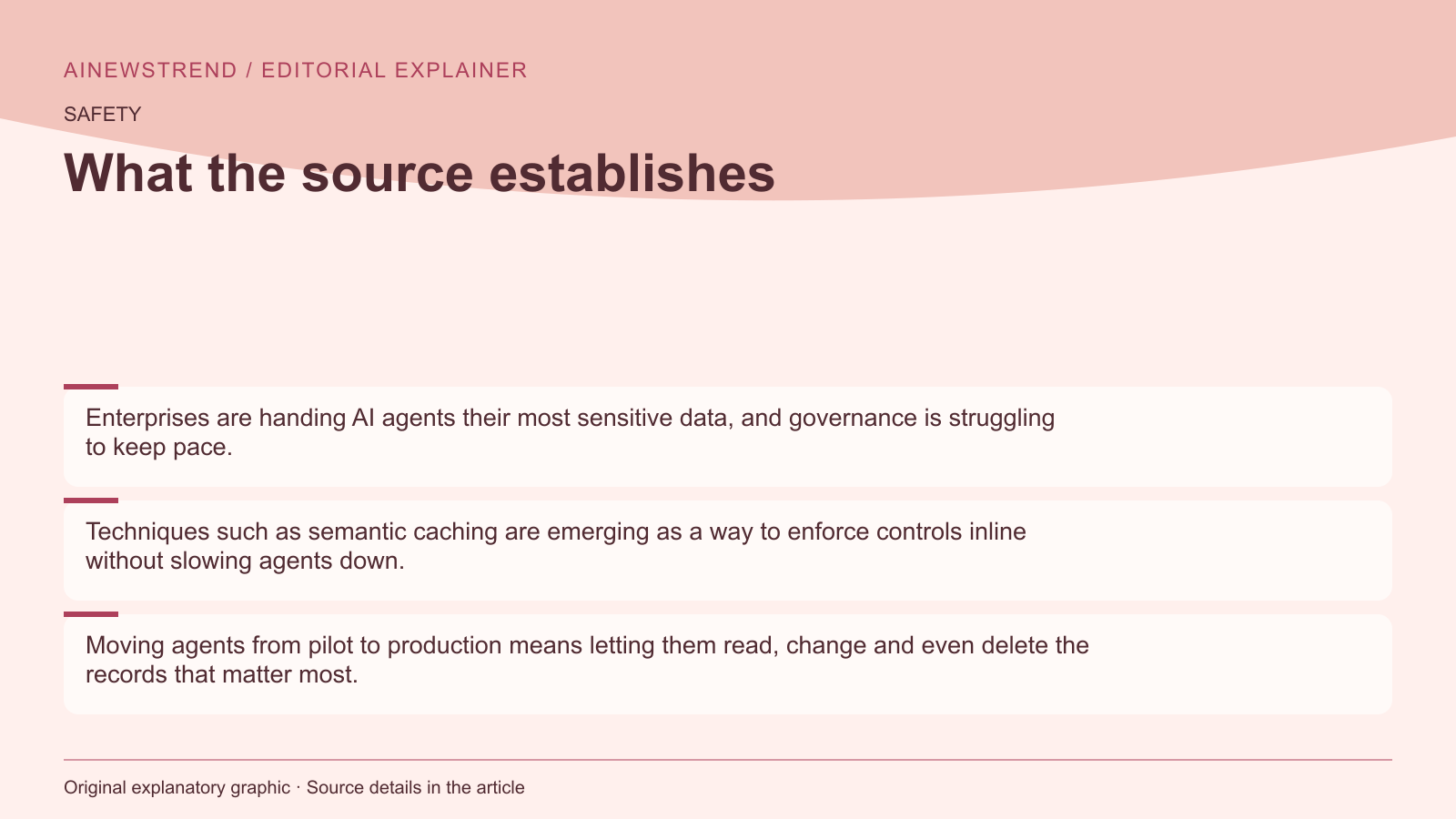
Daxa Inc. and Hewlett Packard Enterprise Co. are using semantic caching to enforce governance for AI agents accessing sensitive enterprise data. This approach allows agents to interact with critical data, such as intellectual property and customer records, while maintaining control over their actions.
What this means in practice
The shift from pilot to production environments requires AI agents to read, modify, and delete enterprise data, which introduces new security challenges. Huseni Saboowala, co-founder and CEO of Daxa, emphasized that agents must be trusted with sensitive data to deliver value, but this creates significant risk due to their ability to manipulate data at scale.
Semantic caching enables governance to be enforced inline with agent workflows, rather than relying on traditional tools like firewalls or identity management systems. These tools were designed for users and applications, not for software that reasons over data. Saboowala explained that agents operate at the cognitive layer, where prompts, responses, and tool calls occur, making traditional governance methods ineffective.
HPE integrates governance into its Private Cloud AI stack from the start, according to Robin Braun, vice president of AI business development at HPE. This approach allows enterprises to understand governance workflows early, rather than adding them later. A regional bank that deployed Daxa with HPE has connected its agents to source code and regulated customer data.
Limitations and availability
The supplied announcement does not specify the exact technical implementation of semantic caching or the specific conditions under which it operates. It also does not mention the availability of the technology beyond the mentioned partnership with HPE. The approach is still in development and being tested in enterprise environments, with no indication of general availability yet.